
Beny BCPP-A1-16 Portable EV Charger User Manual
Content
Beny BCPP-A1-16 Portable EV Charger: Complete Product Manual and Review
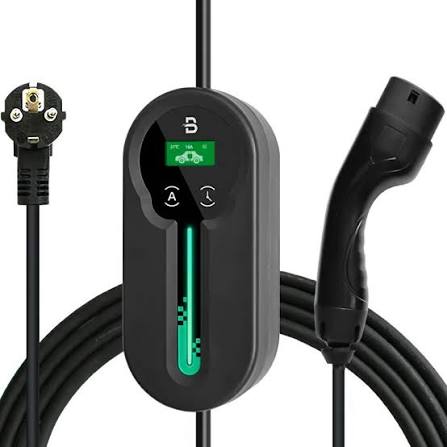
The Beny BCPP-A1-16 Portable EV Charger is a compact, travel-friendly charging solution designed for EV owners who want dependable charging at home, at work, or on the road. Built for single-phase 230V systems, it delivers up to 3.7 kW of power with adjustable current settings from 8A to 16A, making it a practical choice for daily top-ups and emergency charging. Its IP66-rated enclosure, wide operating temperature range, and strong safety protections make it suitable for indoor and outdoor use in demanding conditions.
This portable EV charging cable is especially useful for drivers who need a flexible backup charger for plug-in hybrid or battery electric vehicles. It is commonly used by commuters, apartment residents, fleet drivers, and travelers who want a simple charging setup without installing a fixed wallbox. The Beny BCPP-A1-16 Portable EV Charger also appeals to users seeking a lightweight alternative to more expensive 7.4 kW or 22 kW charging stations.
Typical pricing varies by market and retailer, but the estimated price range is around €250 to €400, depending on connector type, cable length, and bundle options. Availability is generally broad through EV equipment distributors, regional retailers, and online marketplaces, though stock can vary by country and plug standard. For buyers comparing portable EV chargers, this model stands out for its balance of safety, portability, and value for money.
Detailed Specifications and Key Features
- Model: Beny BCPP-A1-16 Portable EV Charger
- Input/Output Voltage: AC 230V, single-phase
- Charging Current Range: 8A, 10A, 13A, 16A
- Maximum Power Output: 3.7 kW
- Frequency: 50Hz / 60Hz
- Protection Rating: IP66 for dust and water resistance
- Operating Temperature: -30°C to 50°C
- Operating Humidity: 5% to 95%
- Standby Power Consumption: Less than 1.5W
- Safety Protections: Over-voltage, under-voltage, over-current, leakage, over-temperature, relay adhesion, ground protection, and CP abnormal protection
- Compliance: IEC 62752 and IEC 61851-21-2
- Cable Length: Commonly supplied in 7m configurations
Compared with higher-power portable EV chargers, the BCPP-A1-16 is optimized for everyday convenience rather than rapid charging. In practical use, it is a strong fit for overnight charging and destination charging, while 7.4 kW and 22 kW portable chargers are better for users who need faster replenishment and have compatible electrical infrastructure.
Troubleshooting Beny BCPP-A1-16 Portable EV Charger Issues
If the charger does not start, first check the power supply, plug connection, and vehicle-side connector. Ensure the EV is unlocked and the charging session is enabled in the vehicle settings. If charging stops unexpectedly, reduce the current setting and confirm that the circuit is not overloaded.
- No power: Verify the outlet is live, the breaker is on, and the plug is fully inserted.
- Charging interrupted: Check for heat buildup, loose connections, or unstable supply voltage.
- Error or protection trigger: Inspect for leakage, grounding issues, or vehicle communication faults.
- Over-temperature warning: Move the unit to a cooler area and allow it to reset before reuse.
- Current limited too low: Increase the setting only if the household circuit supports it safely.
Common protection alerts on portable EV chargers often relate to CP abnormality, over-voltage, under-voltage, and grounding problems. Preventive maintenance includes keeping connectors clean and dry, avoiding extension cords, and storing the charger in a protective bag when not in use. Warranty coverage and support options vary by seller and region, so buyers should confirm terms before purchase. For assistance, contact the retailer, authorized BENY distributor, or the official BENY support channel listed with the product documentation.
Pros and Cons of the Beny BCPP-A1-16 Portable EV Charger
Pros
- Portable and easy to carry for home, travel, and backup use
- IP66 protection adds confidence for outdoor charging
- Adjustable current settings improve flexibility on different circuits
- Strong safety package supports reliable daily operation
- Good value for buyers who do not need a fixed wall charger
Cons
- 3.7 kW output is slower than 7.4 kW and 22 kW alternatives
- Best suited for single-phase charging only
- Not ideal for drivers needing very fast turnaround times
- Feature set is more practical than premium, with limited smart functions
Overall, the Beny BCPP-A1-16 Portable EV Charger offers excellent practicality for cost-conscious EV owners. It is a better value than many higher-powered portable units if charging speed is not the top priority.
Customer Reviews and User Feedback on the Beny BCPP-A1-16 Portable EV Charger
User feedback is generally positive, with many owners giving it about 4.4 out of 5 stars for portability, solid construction, and dependable charging performance. Buyers frequently praise the straightforward setup, useful current adjustment, and rugged design for everyday use.
Common complaints focus on charging speed, which is expected at 3.7 kW, and occasional confusion about connector compatibility. One typical testimonial reads: “Reliable, compact, and easy to keep in the car as a backup charger.” Another says: “Perfect for overnight charging, but not as fast as a wallbox.” For most commuters and occasional travelers, it is a recommended purchase, especially if the goal is a durable portable EV charger rather than the fastest available charging solution.
Frequently Asked Questions
Is the Beny BCPP-A1-16 Portable EV Charger suitable for outdoor use?
Yes, its IP66 protection rating makes it suitable for outdoor environments when used correctly and kept in proper condition.
How fast does the charger work?
At maximum output, it delivers up to 3.7 kW on a single-phase 230V supply, which is ideal for overnight and routine charging.
Who should buy this charger?
It is best for EV drivers who want a reliable portable charger for home charging, travel, or emergency backup use.
Faqs
How do I set up the beny BCPP-A1-16 Portable EV Charger for the first time?
What should I do if the beny BCPP-A1-16 Portable EV Charger is not charging my car?
Which EVs are compatible with the beny BCPP-A1-16 Portable EV Charger?
How can I optimize charging speed with the beny BCPP-A1-16 Portable EV Charger without causing problems?
Why does the beny BCPP-A1-16 Portable EV Charger stop charging after a few minutes?
What safety checks should I perform before using the beny BCPP-A1-16 Portable EV Charger outdoors?
How do I troubleshoot error lights or warning codes on the beny BCPP-A1-16 Portable EV Charger?
How should I clean and maintain the beny BCPP-A1-16 Portable EV Charger for long-term reliability?
Leave a Comment