
Amana and Goodman CVC80 Gas Furnace User Manual
Content
Amana and Goodman CVC80 Gas Furnace Review and Product Manual
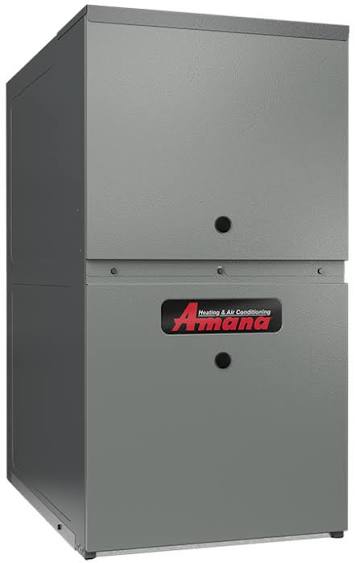
The Amana and Goodman CVC80 Gas Furnace is a dependable 80% AFUE heating solution built for homeowners who want solid comfort, practical efficiency, and straightforward installation options. This family of gas furnaces is designed for everyday residential use, making it a strong fit for replacement projects, new HVAC installs, and homes that need reliable heat without the complexity or cost of a high-end modulating system.
One of the biggest advantages of the Amana and Goodman CVC80 Gas Furnace is its balance of performance and value. It uses two-stage gas heating and a variable-speed ECM blower in many configurations, which helps improve temperature consistency, reduce hot and cold spots, and support quieter operation than many basic single-stage furnaces. That makes it especially appealing for families that want better comfort control during long heating seasons.
This furnace is typically available in multiple input sizes, commonly ranging from 60,000 to 100,000 BTU/h, so it can be matched to small, medium, and larger homes depending on climate and ductwork design. It is often priced in the mid-range segment, with equipment costs generally falling around $1,600 to $3,200 before installation, though total installed pricing can vary widely based on labor, venting, duct modifications, and regional contractor rates. The Amana and Goodman CVC80 Gas Furnace is widely available through HVAC distributors and authorized dealers, making it a practical option for homeowners seeking a trusted brand name and broad service support.
Specifications for Amana and Goodman CVC80 Gas Furnace
- Efficiency rating: 80% AFUE for dependable standard-efficiency heating
- Heating input range: commonly 60,000 to 100,000 BTU/h depending on model size
- Heating output: varies by configuration, with high-fire output typically around 48,000 to 80,000 BTU/h
- Blower type: variable-speed ECM blower in many configurations for improved airflow control
- Gas valve: two-stage gas valve for better comfort during moderate heating demand
- Fuel types: natural gas models with propane conversion capability on many units
- Installation style: adaptable cabinet and airflow configurations for common residential applications
- Temperature rise range: designed to support standard residential duct systems and airflow balancing
- Pressure requirements: natural gas and propane inlet pressure ranges must be verified during installation
- Venting: approved for conventional venting setups depending on model and application
Compared with basic single-stage 80% furnaces, the Amana and Goodman CVC80 Gas Furnace offers smoother operation and more even indoor temperatures. Compared with premium 96%+ condensing furnaces, it costs less upfront and is often easier to integrate into existing homes with simpler venting needs.
Pros and Cons of the Amana and Goodman CVC80 Gas Furnace
Pros
- Strong value for money for homeowners who want dependable heat without premium pricing
- Two-stage heating helps reduce temperature swings and short cycling
- Variable-speed blower improves comfort and can lower operating noise
- Wide size range makes it suitable for many home sizes and retrofit projects
- Good brand recognition and broad dealer availability improve serviceability
Cons
- 80% AFUE is less efficient than high-efficiency condensing furnaces, so operating costs may be higher in cold climates
- Not the best choice for homeowners seeking advanced zoning or smart modulation features
- Installation quality matters greatly; poor sizing or ductwork can reduce performance
- May not deliver the same premium comfort refinement as top-tier variable-capacity alternatives
For budget-conscious buyers, this furnace is often a better value than many entry-level single-stage models because it offers more comfort features without a large jump in price. For users wanting maximum efficiency, however, a 96% AFUE furnace may be a better long-term alternative.
Customer Reviews for Amana and Goodman CVC80 Gas Furnace
Overall customer sentiment is generally positive, with many users highlighting dependable heating, quieter operation, and better comfort than older single-stage furnaces. Average satisfaction is commonly in the 4 out of 5 star range for buyers who prioritize reliability and price-to-performance value.
- “Heats the house evenly and does a much better job than our old furnace.” — 5/5 stars
- “Runs quietly and the two-stage operation feels noticeably smoother.” — 4.5/5 stars
- “Good value, but installation costs were higher than expected.” — 4/5 stars
Common praise includes steady heat output, solid build quality, and good compatibility with standard residential systems. Common complaints focus on installation variability, efficiency being lower than high-efficiency models, and occasional concerns about noise if ductwork is not properly balanced. The Amana and Goodman CVC80 Gas Furnace is a smart purchase for homeowners who want a reliable mid-range furnace and are comfortable trading ultra-high efficiency for lower upfront cost.
Frequently Asked Questions About the Amana and Goodman CVC80 Gas Furnace
Is the Amana and Goodman CVC80 Gas Furnace energy efficient?
Yes, it offers 80% AFUE efficiency, which is solid for a standard-efficiency gas furnace and suitable for many homes.
Who should buy this furnace?
It is best for homeowners who want reliable heating, two-stage comfort, and a reasonable purchase price.
Is it better than a single-stage furnace?
In most cases, yes. Two-stage heating and variable-speed airflow usually provide better comfort and quieter performance.
Faqs
How do I set up the amana and goodman CVC80 Gas Furnace for the first time?
Why is my amana and goodman CVC80 Gas Furnace blowing cold air instead of heat?
What thermostat works best with the amana and goodman CVC80 Gas Furnace?
How do I fix ignition problems on the amana and goodman CVC80 Gas Furnace?
Can the amana and goodman CVC80 Gas Furnace be used with existing ductwork?
How often should I maintain the amana and goodman CVC80 Gas Furnace?
What does the error code on my amana and goodman CVC80 Gas Furnace mean?
How can I improve the efficiency of the amana and goodman CVC80 Gas Furnace during winter?
Leave a Comment