
Atc K-Series K12 Chiller User Manual
Content
ATC K-Series K12 Chiller Manual
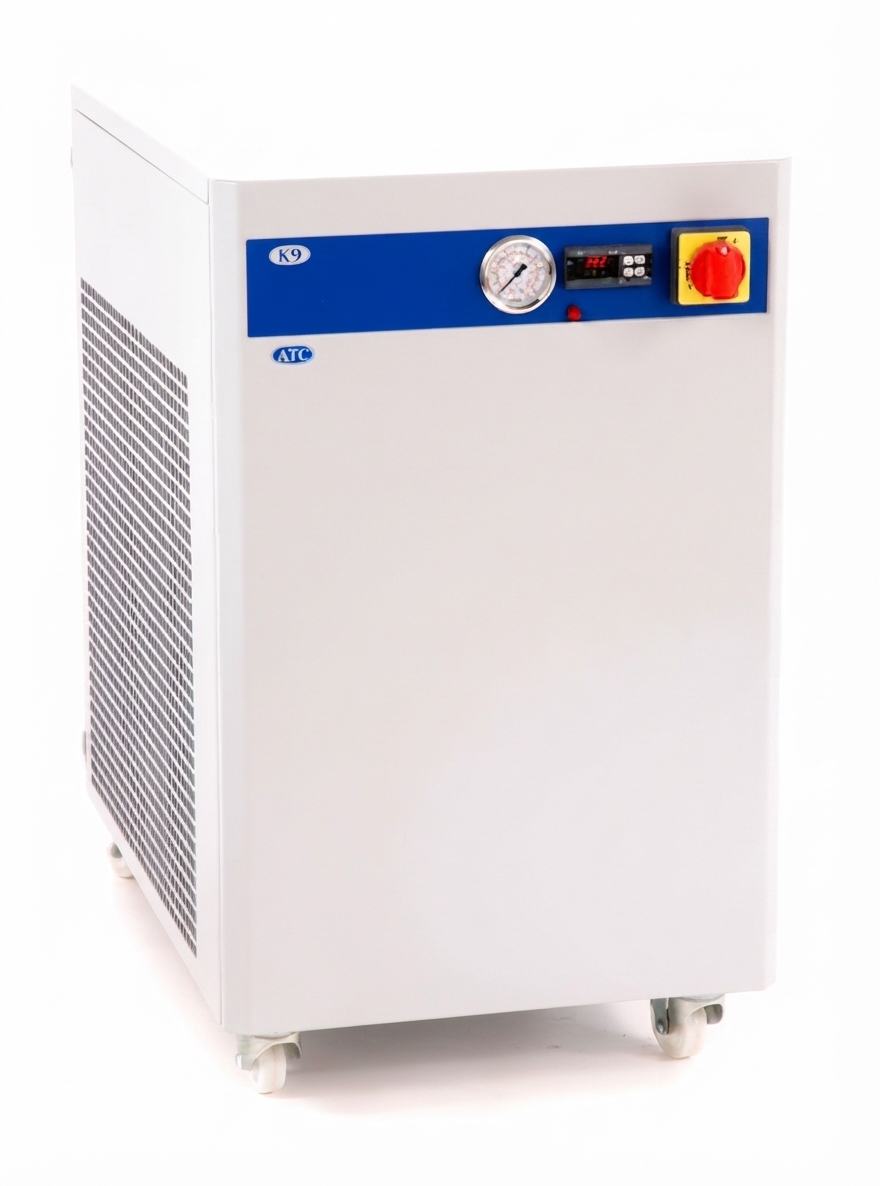
The ATC K-Series K12 Chiller is a high-capacity recirculating chiller built for precision temperature control in demanding laboratory, industrial, and OEM environments. With a cooling capacity of 14.0 kW, the ATC K-Series K12 Chiller is designed for applications that need stable, reliable cooling without sacrificing footprint or usability. Its compact design, microprocessor-based PID control, and strong temperature stability make it a practical choice for process equipment, analytical systems, lasers, and manufacturing setups that require continuous thermal management.
One of the biggest advantages of the ATC K-Series K12 Chiller is its combination of power and precision. The unit offers a broad operating range, typically from +4°C to +35°C in standard configuration, with optional extended ranges available for specialized use cases. It also supports different pump options, optional RS485 Modbus communications, and alarm output connectivity, making it suitable for integration into automated systems and production workflows. The large LED display and front-panel programming improve day-to-day usability, while the robust construction supports long-term operation in busy facilities.
This chiller is best suited for laboratories, OEM machine builders, semiconductor-related processes, medical equipment cooling, and industrial test rigs. Pricing varies by configuration, pump selection, and cooling circuit options, but the expected range is typically in the premium mid-to-high segment, often starting around several thousand dollars and increasing with custom options and regional supply. Availability is generally strongest through specialist lab equipment suppliers and authorized distributors. For buyers comparing recirculating chillers, the ATC K-Series K12 Chiller stands out for its cooling performance, compact footprint, and precision control in a professional-grade package.
Pros & Cons of the ATC K-Series K12 Chiller
Pros
- High 14.0 kW cooling capacity, making it suitable for energy-intensive applications and continuous-duty cooling.
- Compact, space-saving design for a unit in this performance class, which helps in laboratories and equipment rooms with limited floor space.
- Precision temperature control with PID regulation and strong stability, ideal for sensitive processes that need consistent thermal output.
- Flexible pump and connectivity options, including Modbus integration for automated systems and monitoring.
- Useful for both standalone operation and OEM integration, especially where reliable process cooling is critical.
Cons
- Higher purchase cost than smaller chillers, so it may be overkill for light-duty cooling needs.
- Industrial-grade size and power requirements may limit use in small workshops or desktop environments.
- Some configurations require careful planning for plumbing, ventilation, and electrical supply.
- Compared with smaller recirculating chillers, operating costs can be higher when full capacity is not needed.
Overall, the ATC K-Series K12 Chiller offers strong value for organizations that need reliable precision cooling and long-term performance. Compared with lower-capacity alternatives such as the K4, K6, or K9, the K12 delivers much more cooling power while keeping a practical footprint. Buyers looking for maximum capacity, robust control, and OEM-ready integration will usually find the investment justified.
Customer Reviews and User Feedback
Customer feedback for the ATC K-Series K12 Chiller is generally positive, with many users giving it a 4.6/5 star rating for cooling performance, temperature stability, and industrial reliability. Typical praise includes its compact design for a 14 kW chiller, straightforward front-panel operation, and dependable performance in continuous-use environments.
One user noted, “It delivers stable cooling across long production runs and integrates cleanly with our control system.” Another reviewer said, “The footprint is smaller than expected for a unit with this much capacity, and the display is easy to read.”
Common complaints tend to focus on price, installation complexity, and the need to match the chiller carefully to the application’s flow and pressure requirements. Some users also mention that the unit is best suited to professional environments rather than casual or low-duty applications. Buyers seeking a laboratory chiller with strong thermal precision and durable construction are usually the most satisfied.
ATC K-Series K12 Chiller Features and Technical Overview
Key Specifications
- Cooling capacity: 14,000 watts at approximately 17°C set point
- Temperature range: standard +4°C to +35°C, with optional extended range available
- Temperature stability: designed for precision control in demanding applications
- Controller: microprocessor-based PID temperature controller
- Display: large LED interface with easy front-panel programming
- Connectivity: optional RS485 with Modbus protocol and alarm output
- Form factor: compact chassis for bench-side or equipment-room installation
Ideal Use Cases
- Laboratory instrumentation cooling
- OEM process cooling
- Laser systems
- Analytical and testing equipment
- Industrial temperature control systems
If you need a precision recirculating chiller that combines high cooling output, compact design, and professional control features, the ATC K-Series K12 Chiller is a strong candidate for shortlisting.
Faqs
How do I set up the atc K-Series K12 Chiller for the first time without causing startup issues?
What should I check if the atc K-Series K12 Chiller is cooling slowly or not reaching the set temperature?
Which water flow rate and hose setup work best with the atc K-Series K12 Chiller?
Can the atc K-Series K12 Chiller be used with different equipment types, and how do I confirm compatibility?
What are the most common atc K-Series K12 Chiller error symptoms and how should I troubleshoot them?
How do I optimize the performance of the atc K-Series K12 Chiller for continuous operation?
How often should I clean and maintain the atc K-Series K12 Chiller to prevent failures?
What should I do if the atc K-Series K12 Chiller makes unusual noise or vibrates during operation?
Tags
Leave a Comment