
Atlas Copco G-18 Oil-Injected Rotary Screw Compressor User Manual
Content
Atlas Copco G-18 Oil-Injected Rotary Screw Compressor Manual Overview
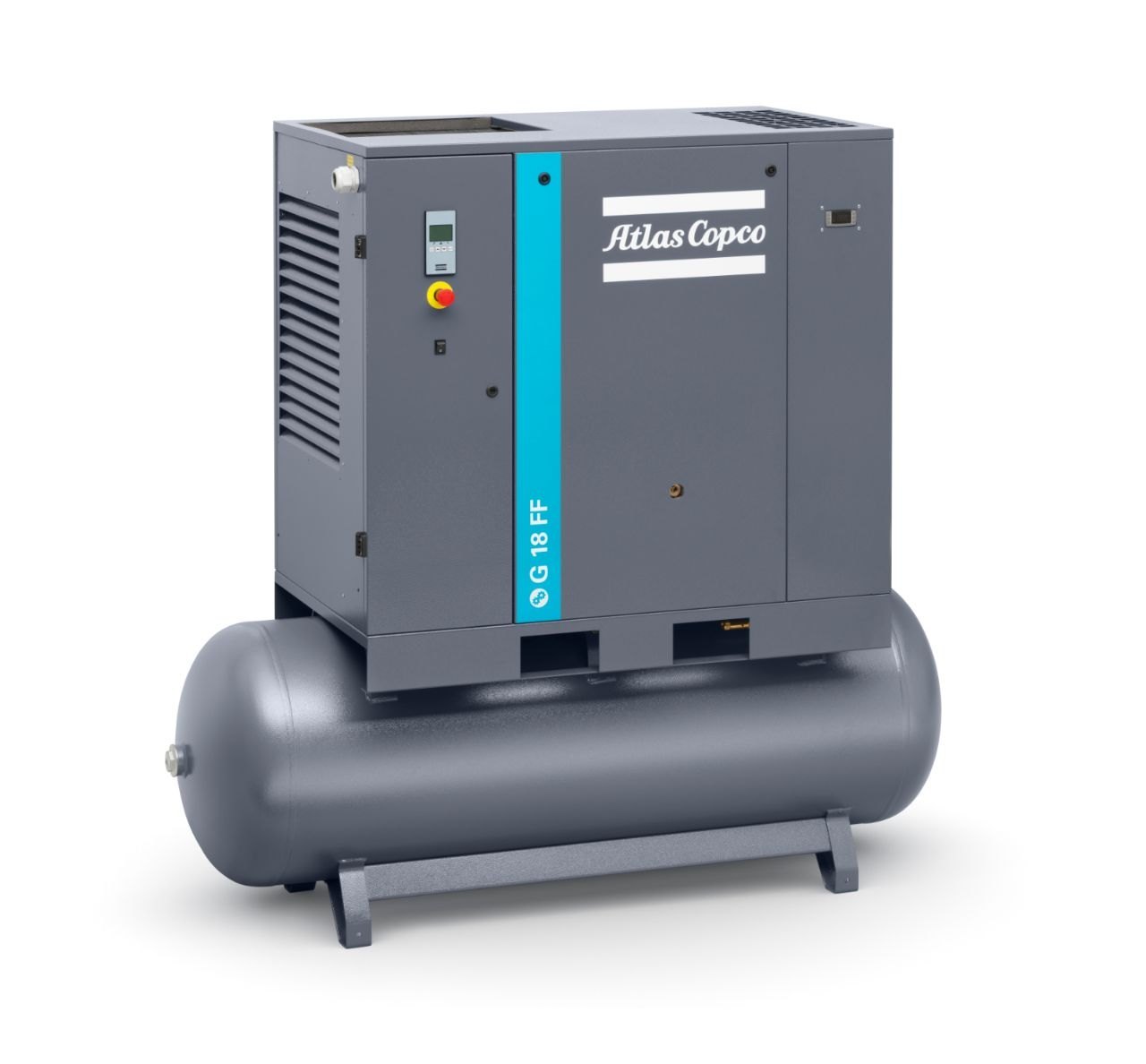
The atlas copco G-18 Oil-Injected Rotary Screw Compressor is a 25 HP industrial air compressor built for reliable, continuous-duty compressed air delivery in demanding facilities. It is designed for workshops, manufacturing lines, automotive repair shops, fabrication plants, and general industrial applications that need consistent airflow, stable pressure, and lower maintenance than many piston compressors. With oil-injected rotary screw technology, the G-18 delivers smoother operation, strong efficiency, and dependable performance for users who need air all day rather than in short bursts.
Key benefits include quiet operation for its class, robust belt-driven construction, integrated dryer options on select models, and flexible configurations such as tank-mounted and floor-mount versions. The unit is commonly used where compressed air quality, uptime, and pressure stability matter more than initial purchase cost. Typical pressure ratings range from 100 to 175 PSI depending on the configuration, with capacity around 92 to 110 CFM in commonly listed variants. The estimated price range for a new unit is often around $20,000 to $25,000+, depending on tank, dryer, and pressure options. Availability is generally through industrial distributors, Atlas Copco dealers, and online equipment sellers, though exact stock can vary by configuration and region. For buyers comparing the Atlas Copco G-18 oil-injected rotary screw compressor with smaller shop compressors, the G-18 stands out as a professional-grade solution for continuous compressed air supply and long service life.
Technical Specifications and Performance Features
Below is a practical specification summary for the atlas copco G-18 Oil-Injected Rotary Screw Compressor, based on commonly listed configurations and package variants.
- Motor power: 25 HP, three-phase electric motor
- Voltage: 208-230/460V, 3-phase, 60Hz
- Pressure options: 100 PSI, 125 PSI, 150 PSI, and select 175 PSI configurations
- Air delivery: Approximately 92 to 110 CFM depending on model and pressure setting
- Tank options: Tankless, floor-mount, and 132-gallon tank-mounted versions
- Dryer options: Integrated dryer available on select package units
- Pump type: Oil-injected rotary screw, belt-driven
- Noise level: Commonly listed around 69 dBA on tank-mounted models
- Oil system: Roto-Xtend oil system on many package configurations
- Safety features: Low-oil shutoff, oil sight glass, electric start, manual tank drain valve
Compared with smaller rotary screw compressors, the G-18 offers a stronger balance of airflow and package flexibility. Compared with larger Atlas Copco models, it is more compact and easier to place in mid-size facilities while still supporting continuous industrial use. For businesses needing a rotary screw air compressor with dryer and tank options, the G-18 is a popular middle-ground choice.
Troubleshooting Guide for the Atlas Copco G-18 Oil-Injected Rotary Screw Compressor
Common issues with the atlas copco G-18 Oil-Injected Rotary Screw Compressor usually relate to airflow, pressure control, heat, oil management, or electrical supply. If the compressor fails to start, check incoming voltage, phase balance, overload protection, and the emergency stop circuit. If pressure is low, inspect for air leaks, clogged filters, worn belts, or incorrect pressure settings. Excessive temperature often points to poor ventilation, dirty coolers, low oil, or restricted airflow around the compressor package.
- Low pressure output: Clean or replace intake filters, inspect belts, and verify demand does not exceed capacity.
- High temperature alarm: Check oil level, clean the cooler, and improve room ventilation.
- Won’t start: Confirm power supply, overload reset, and motor protection status.
- Oil carryover: Inspect separator elements and oil quality.
- Moisture in air line: Drain the tank regularly and verify the dryer is functioning on integrated dryer models.
Visible error codes vary by controller version, but common alarms typically relate to high temperature, motor overload, pressure sensor faults, or service intervals. Preventive maintenance includes changing oil on schedule, replacing filters, checking belt tension, draining condensate, and keeping the compressor room clean and cool. Warranty coverage and technical support are typically provided through Atlas Copco authorized dealers and service partners. For help, contact the local Atlas Copco compressor distributor or the service department listed on your sales documentation.
Pros and Cons of the Atlas Copco G-18 Compressor
Pros
- Strong continuous-duty performance for industrial and shop environments
- Flexible package choices, including tank-mounted and dryer-equipped versions
- Stable airflow and pressure compared with many piston compressors
- Quiet operation for a 25 HP rotary screw compressor
- Good long-term value for businesses that use compressed air daily
Cons
- Higher upfront cost than reciprocating air compressors
- Requires three-phase power, which limits some small-shop installations
- Needs scheduled maintenance and proper ventilation
- Replacement parts and service are best handled through dealer channels
For value for money, the atlas copco G-18 Oil-Injected Rotary Screw Compressor is strongest in facilities that need reliable air for production, paint, or multiple tools running at once. Compared with cheaper alternatives, it offers better uptime and smoother operation. Compared with higher-capacity rotary screw compressors, it is more affordable and easier to fit into medium-sized operations.
Customer Reviews and User Feedback
Typical customer feedback for the atlas copco G-18 Oil-Injected Rotary Screw Compressor is generally positive, especially among users who need dependable air all day. Average user sentiment is often around 4.5 out of 5 stars in industrial buyer discussions. Users commonly praise the steady airflow, reduced noise, and professional build quality.
- “Runs smoothly and keeps pressure steady throughout the shift.”
- “Much quieter than our old piston compressor.”
- “Pricey upfront, but the reliability is worth it.”
The most common complaints involve installation cost, three-phase power requirements, and the need for routine service. Buyers who need a rotary screw compressor for a manufacturing shop, auto body facility, or maintenance department usually recommend it. Customers looking for the lowest-cost compressor often choose another model, but users prioritizing uptime and air consistency tend to rate the G-18 highly.
Faqs
How do I set up the atlas copco G-18 Oil-Injected Rotary Screw Compressor for first-time operation?
What should I check if the atlas copco G-18 Oil-Injected Rotary Screw Compressor is losing pressure or not building air properly?
Which maintenance tasks are most important for the atlas copco G-18 Oil-Injected Rotary Screw Compressor?
What power and site requirements does the atlas copco G-18 Oil-Injected Rotary Screw Compressor need?
How can I improve the energy efficiency of the atlas copco G-18 Oil-Injected Rotary Screw Compressor?
What are the common causes of overheating in the atlas copco G-18 Oil-Injected Rotary Screw Compressor?
Is the atlas copco G-18 Oil-Injected Rotary Screw Compressor compatible with common compressed-air systems and accessories?
How should I troubleshoot unusual noise or vibration from the atlas copco G-18 Oil-Injected Rotary Screw Compressor?
More atlas copco manuals
Leave a Comment