
Atosa ATSP-18-1 Stock Pot Stove User Manual
Content
Atosa ATSP-18-1 Stock Pot Stove Review and Product Manual
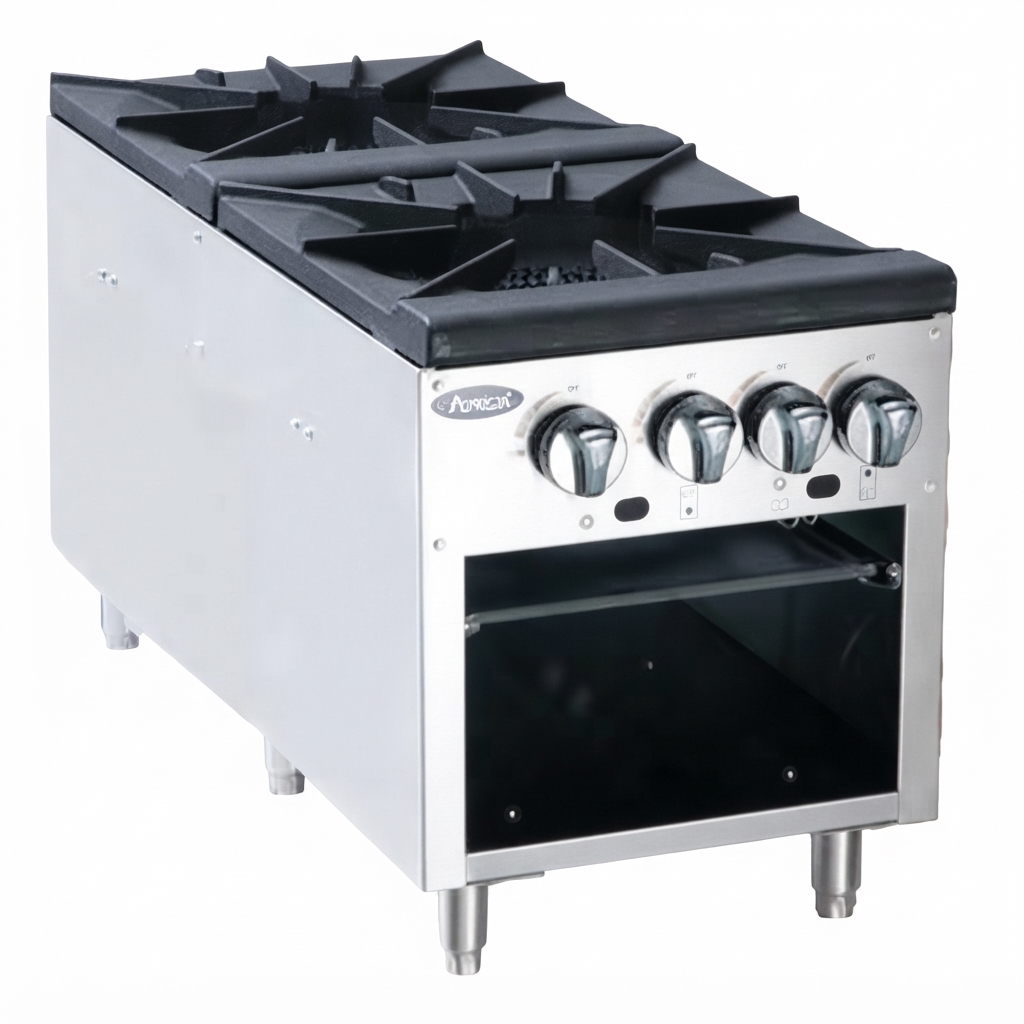
The atosa ATSP-18-1 Stock Pot Stove is a heavy-duty commercial gas range designed for high-volume cooking environments that need fast, consistent heat for large stock pots, soups, sauces, broths, and boiling applications. Built with stainless steel sides and a front valve cover, it combines durability with a clean, professional appearance that fits well in restaurant kitchens, catering operations, hotels, commissaries, and institutional foodservice spaces. Its cast iron three-ring burner delivers up to 80,000 BTU per hour, while independent manual controls let operators adjust the inner and outer rings separately for better heat management and fuel efficiency.
This model is especially useful for kitchens that prepare large batches throughout the day and need a compact footprint without sacrificing power. The removable stainless steel drip pan supports easier cleanup, and the heavy-duty cast iron top grate provides stable support for oversized cookware. Standard stainless steel legs and a rear gas connection make installation straightforward in many commercial layouts. The atosa ATSP-18-1 Stock Pot Stove is available in natural gas and is commonly found through restaurant supply dealers, online commercial equipment stores, and foodservice distributors. Estimated pricing typically falls in the mid-range commercial category, often around $1,000 to $1,800 depending on seller, shipping, and availability. For operators comparing commercial stock pot burners, this model offers strong value for money thanks to its robust build, independent burner control, and reliable output for demanding kitchen workflows.
Pros and Cons of the atosa ATSP-18-1 Stock Pot Stove
Pros
- High heat output with an 80,000 BTU rating, making it ideal for fast boiling and large-batch cooking.
- Independent manual controls for the inner and outer burner rings, which helps save fuel during lighter cooking tasks.
- Durable stainless steel sides, front valve cover, and cast iron burner components for commercial durability.
- Full-width removable drip pan simplifies maintenance and helps reduce mess during busy shifts.
- Compact single-burner footprint makes it easier to fit into tight kitchen spaces than larger stock pot ranges.
- Strong value for money compared with premium commercial alternatives that cost significantly more for similar output.
Cons
- Natural gas configuration may limit flexibility for kitchens that need propane without a conversion setup.
- Single-burner design is best for one-pot production, so it may not suit operations needing multiple stock pots at once.
- At roughly 106 to 119 pounds depending on listing, it is not especially portable.
- Compared with multi-burner stock pot stoves, it offers less throughput for larger production kitchens.
For buyers comparing commercial gas stock pot burners, this model sits in a practical middle ground: more affordable than many premium high-output units, yet more robust than basic countertop burners. The atosa ATSP-18-1 Stock Pot Stove is a smart choice when durability and steady heat matter more than multi-pot capacity.
Customer Reviews and Real-World Feedback
Customer feedback for the atosa ATSP-18-1 Stock Pot Stove is generally positive, with many users giving it around 4.4 to 4.7 out of 5 stars in commercial equipment listings. Buyers frequently praise its solid construction, fast heating, and reliable performance for soups, pasta water, and broth production. One common testimonial style comment is that it feels “built like a true restaurant burner” and handles heavy pots without flexing.
Common complaints usually focus on installation and gas compatibility, especially for kitchens that expected an easier propane setup or needed more detailed setup instructions. Some users also note that, like most commercial burners, it can run hot and requires proper ventilation and staff training. Overall, the atosa ATSP-18-1 Stock Pot Stove is a strong purchase recommendation for restaurants, food trucks with commercial hookups, and catering teams that need dependable stock pot performance. Buyers looking for a simple, powerful, single-burner commercial stock pot stove will likely be satisfied, while operations needing multiple burners may want to compare larger Atosa stock pot range models.
Key Features and Specifications
- Product type: Single stock pot stove
- Fuel type: Natural gas
- Burner style: Heavy-duty cast iron three-ring burner
- Total output: 80,000 BTU per hour
- Controls: Two manual controls for independent inner and outer ring operation
- Construction: Stainless steel sides and front valve cover
- Cleaning: Full-width removable stainless steel drip pan
- Support: Heavy-duty cast iron top grate
- Connection: 3/4-inch rear gas connection with regulator
- Typical dimensions: 18 inches wide, about 20.9 inches deep, and about 22.8 inches high
- Typical weight: About 106 to 119 pounds depending on listing and shipping configuration
Who Should Buy the atosa ATSP-18-1 Stock Pot Stove?
This commercial stock pot stove is a strong fit for restaurants, catering kitchens, banquet operations, commissaries, and institutional foodservice teams that cook in large-volume batches. It is especially useful for menu items that require sustained heat, such as soups, chili, pasta water, seafood boils, sauces, stocks, and beverage prep. If your kitchen needs dependable high-output heating in a compact footprint, this model is worth serious consideration.
Buying Tips for Commercial Stock Pot Burners
- Confirm your gas type before ordering, since this model is commonly sold for natural gas.
- Measure your installation space carefully to ensure clearance for ventilation and service access.
- Check local commercial kitchen code requirements before installation.
- Compare single-burner output against multi-burner alternatives if your production volume is very high.
- Look for included regulator, rear connection details, and warranty coverage when comparing sellers.
Faqs
How do I set up the atosa ATSP-18-1 Stock Pot Stove for the first time in a commercial kitchen?
What gas connection and utility requirements does the atosa ATSP-18-1 Stock Pot Stove need?
Why is the flame on my atosa ATSP-18-1 Stock Pot Stove weak or uneven, and how can I fix it?
What size stock pots work best with the atosa ATSP-18-1 Stock Pot Stove?
How can I optimize cooking performance on the atosa ATSP-18-1 Stock Pot Stove for faster boiling?
What should I do if the atosa ATSP-18-1 Stock Pot Stove will not ignite?
How do I clean and maintain the atosa ATSP-18-1 Stock Pot Stove to prevent buildup and damage?
What common installation mistakes should I avoid with the atosa ATSP-18-1 Stock Pot Stove?
Tags
More atosa manuals
Leave a Comment