
Setup: Babybjorn Baby Carrier Hold Owner Manual
Content
Overview
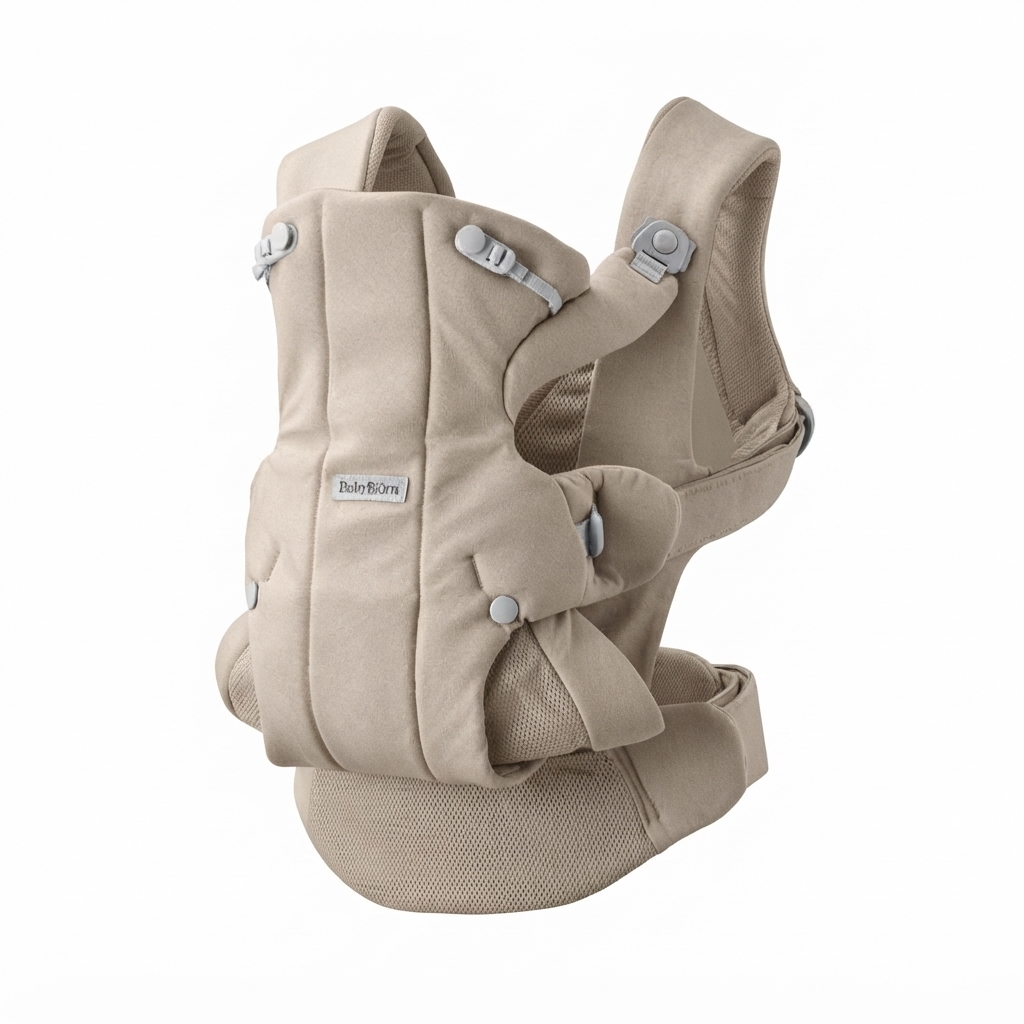
Baby Carrier Hold is a front baby carrier designed for newborns through toddlerhood, with use starting at 3.2 kg and continuing up to 13.5 kg, or about 18 months. It supports three carrying positions: newborn facing in, older baby facing in, and facing out once the child can hold the head upright unaided.
This guide is written for parents and caregivers who want a structured, easy-to-follow Baby Carrier Hold manual with the most important setup, safety, and use information in one place.
Specifications
- Product: Baby Carrier Hold
- Use range: from birth, starting at 3.2 kg and 53 cm, up to about 18 months
- Maximum child weight: 13.5 kg
- Carrying positions: facing in for newborns, facing in for older babies, facing out for older babies who can hold the head up independently
- Leg straps: required for smaller babies under 4.5 kg to reduce leg-opening size
- Wearer fit: adjustable through waist and shoulder straps for a snug body fit
- Support features: head support, newborn adjustment, shade, and waist belt pocket
- Safety standard: meets EN 13209-2:2015 or ASTM F2236, depending on market
Detailed description
Baby Carrier Hold uses a wraparound front-carry design with a waist belt, shoulder straps, side buckles, and head support so the child sits close to the adult’s body. The main parts include the head support buckle, neck and head support, side buckle, waist belt buckle, leg straps, back yoke, waist and hip belt adjustment, shoulder strap adjustment, newborn adjustment, shade pocket with button, shade buttons, and a waist belt pocket.
The carrier is built to keep the child upright and supported while allowing the adult to tighten the fit around the waist and shoulders. For smaller babies, the newborn adjustment helps maintain a compact seated position, while the head support can be raised, lowered, or folded as the child grows.
The integrated shade stores inside a shoulder pocket and attaches to buttons on the shoulder pockets and head support. It is intended for facing-in use and helps create a covered, airy space while still allowing visibility of the child.
Safety
Baby Carrier Hold is intended only for adults and only for walking, sitting, or standing. It should not be used for sports, driving, cooking, cleaning, or any activity where balance, heat, or chemicals create extra risk.
Always check that buckles, straps, snaps, and adjustments are secure before each use. Inspect the carrier for torn seams, damaged fabric, or missing parts, and stop using it if anything is damaged.
Keep the baby facing inward until the child can hold the head upright on their own. The child’s face must remain visible and unobstructed at all times, and the nose and mouth must have enough space for free breathing.
Do not strap the baby too tightly. The carrier should feel snug, but there must still be enough room to slide a flat hand between the child’s belly and your body. This helps reduce the risk of suffocation, especially for babies under 4 months.
Use the leg straps for smaller babies between 3.2 kg and 4.5 kg to help prevent slipping through the leg openings. Bend at the knees rather than the waist when leaning or walking, and pay extra attention to your balance.
If nursing in the carrier, reposition the child afterward so the face is not pressed against your body. Never sleep or lie down with the baby in the carrier, and never use it as a back carrier.
Store the carrier out of reach of children when not in use because straps and loops can create a strangulation hazard.
Setup and operation
Put on the carrier
Open all buckles first. To open the side and waist buckles, press the button and pull upward. Put the carrier on like a vest, close the waist belt button, and fasten the waist buckle.
If the waist area feels too tight, lift the edge of the side buckles and pull the waist straps until the fit feels secure. Then tighten the shoulder straps until the carrier sits close to your body.
Newborn facing-in carry
For newborns and younger babies, place the waist belt above the belly button or adjust it until you reach a comfortable “kissing height,” where you can lower your head and kiss the top of the child’s head without straining your neck.
Keep the baby facing inward. Close the second side buckle and both head support buckles before letting go of the child. For babies under 4.5 kg, attach the leg straps on both sides to make the leg openings smaller.
Slide your hands under the child’s bottom, lift gently, and fold the thighs into a natural seated position rather than letting the legs hang straight down. Adjust the newborn straps until the back is upright and supported, and set the head support so the head stays upright and protected.
The child’s elbows should stay above the indicated line so the chin remains off the chest and the airway stays open.
Facing-in carry for older babies
For babies around 5 to 18 months who still ride facing inward, use the same waist placement and secure both side and head support buckles. Lift the child into a natural seated position, then widen the seat by pulling fabric out on both sides so the legs are properly supported.
Keep the lower legs free to move and continue to use the upright, snug fit that supports the back and head.
Facing-out carry
Once the child can hold the head up independently, facing-out use becomes possible. Place the child facing away from you, close the second side buckle and the head support buckles, and fold the head support fully down until it stays in place.
Make sure the nose and mouth are never blocked. As with inward carry, the baby should sit in a natural position with free movement in the lower legs.
Shade use
The shade is designed for children from birth to about 12 months. It stores inside one of the shoulder pockets and attaches using loops and lower openings.
For younger babies, attach the openings to the lower shade buttons and form a triangular shape over the back of the child’s head by attaching one loop to an upper button inside a shoulder pocket and the second loop to a lower button on the head support.
For older babies, attach both loops to the upper shade buttons inside the shoulder pockets, then attach the openings to the lower shade buttons on the head support.
Use the shade only when the child is facing inward. Do not use it when the child faces out. Keep the child’s face visible, do not cover the shade with jackets or blankets, and monitor the child regularly to avoid overheating.
Remove the child
Always keep one hand on the child while unfastening the carrier. Remove the shade and leg straps first if they are being used, then unfasten the head support buckles, release one side buckle, and gently lift the child out.
Cleaning and maintenance
Wash the carrier separately using a gentle, eco-friendly, bleach-free detergent. A washing bag is recommended for added protection during laundering.
To help keep the carrier in good condition, check the straps, buckles, and fabric regularly before use and stop using it if damage appears.
Pros & Cons
- Pros: Supports newborns through toddler age in multiple front-carry positions.
- Pros: Includes head support, newborn adjustment, and a shade for added comfort.
- Pros: Waist and shoulder adjustments make it easier to achieve a snug, ergonomic fit.
- Pros: Clear safety guidance is built into the carrying positions and step-by-step setup.
- Cons: Requires careful adjustment, especially for newborns and smaller babies.
- Cons: The shade is for inward-facing use only.
- Cons: The carrier is not suitable for back carry, sports, or hands-free use in risky situations such as driving or cooking.
Faqs
How do I put on the Baby Carrier Hold correctly before placing my baby inside?
What is the safest newborn position in Baby Carrier Hold?
When should I use the leg straps on Baby Carrier Hold?
How do I know if my baby is positioned at the right height and airway angle?
When can I switch Baby Carrier Hold to the facing-out position?
How does the shade attach to Baby Carrier Hold, and when should it be used?
What safety checks should I do before every use of Baby Carrier Hold?
How do I remove my baby from Baby Carrier Hold safely?
Tags
Leave a Comment