
Beverage-Air STF School Milk Cooler Model User Manual
Content
Beverage-Air STF School Milk Cooler Model: Comprehensive Product Manual
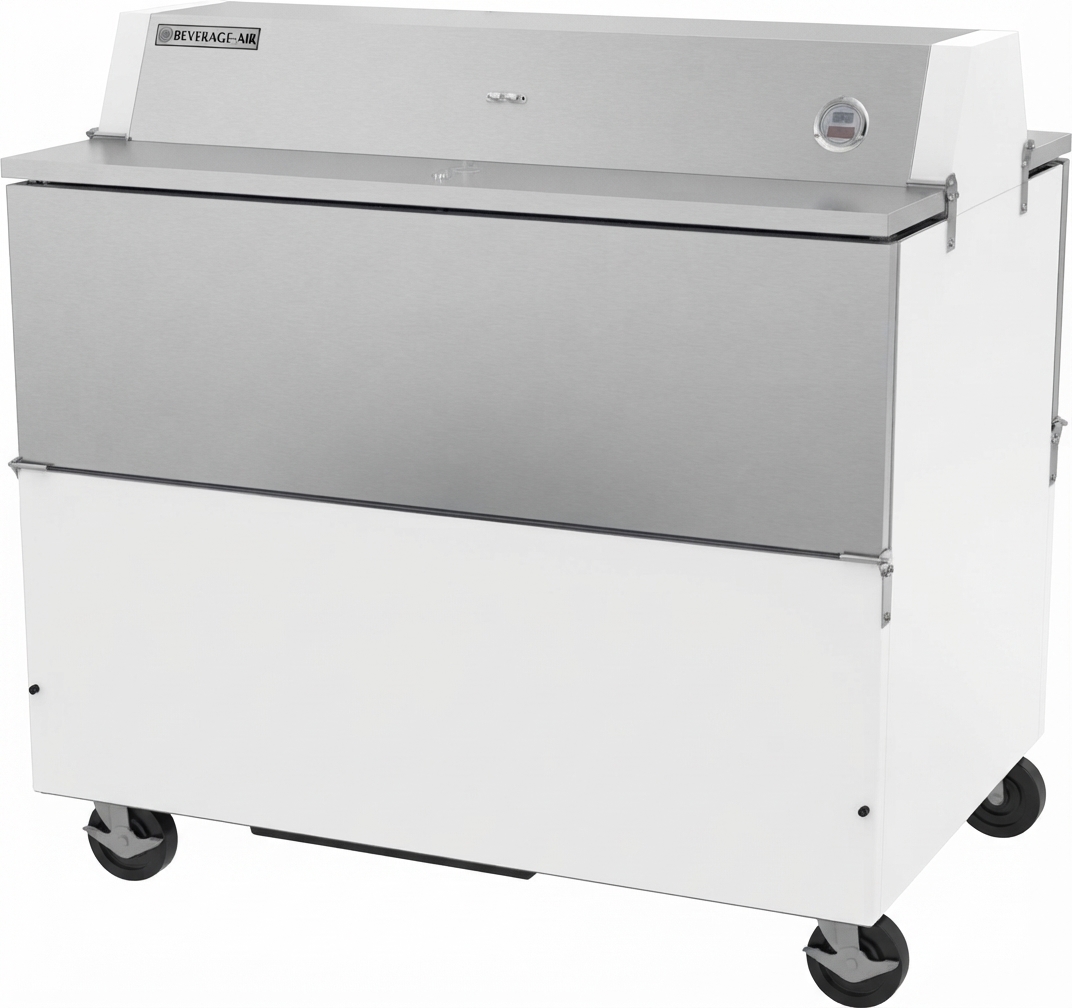
The Beverage-Air STF School Milk Cooler Model is a dual-access, forced-air milk cooler designed to keep dairy products at safe serving temperatures in schools, cafeterias, and foodservice environments. Built for high-volume daily use, this school milk cooler helps staff load, organize, and distribute milk efficiently while maintaining consistent cold storage. Its dual-sided access, durable stainless steel construction, and forced-air cooling make it a practical choice for busy educational facilities that need reliable refrigeration and easy access from both sides.
One of the biggest advantages of the Beverage-Air STF School Milk Cooler Model is its temperature performance. It is designed to hold milk between 36°F and 40°F, helping reduce spoilage and support food safety compliance. The model also uses energy-efficient R-290 refrigerant, which is widely favored for modern commercial refrigeration because of its lower environmental impact. Schools appreciate the heavy-duty casters, safety bumpers, and lockable design, while operators value the easy-to-clean interior and straightforward maintenance. Depending on size and configuration, the estimated price range typically falls around $5,500 to $7,000+, with availability varying by distributor, finish, and capacity options.
This model is a strong fit for school cafeterias, daycare centers, institutional kitchens, and any foodservice operation that serves milk in case quantities. If you are comparing school beverage refrigeration equipment, the Beverage-Air STF School Milk Cooler Model stands out for its combination of capacity, temperature control, and rugged build quality. It is especially useful where dual-service access and organized case storage can improve serving speed and reduce traffic at lunch lines.
Specifications and Key Features of the Beverage-Air STF School Milk Cooler Model
The Beverage-Air STF School Milk Cooler Model is available in multiple cabinet sizes, with the most common versions offering dual-access forced-air cooling and a stainless steel exterior and interior. Below is a quick technical overview of the core design and performance characteristics.
- Type: Dual-access, forced-air school milk cooler
- Refrigerant: R-290 environmentally friendly hydrocarbon refrigerant
- Temperature range: Maintains milk at approximately 36°F to 40°F
- Construction: Stainless steel exterior and interior
- Capacity options: Common configurations hold 12 to 16 milk cases, depending on model size
- Access: Dual-sided top openings for fast loading and serving
- Electrical: 115V operation, typically with a 5-15P plug
- Cooling system: Forced-air circulation for even temperature distribution
- Defrost: Cycle defrost system
- Mobility: Heavy-duty casters for repositioning and cleaning
- Safety features: Lock, safety bumpers, and a bottom drain on many configurations
In practical use, this cooler is comparable to other commercial school milk coolers in the same category, but it often offers stronger temperature consistency and a more premium stainless-steel build than basic cold-wall alternatives. Larger-capacity versions provide better throughput for schools with higher meal counts, while smaller models are ideal for compact serving lines.
Troubleshooting Guide for the Beverage-Air STF School Milk Cooler Model
Like most commercial refrigeration units, the Beverage-Air STF School Milk Cooler Model may occasionally experience performance issues. Below are common problems, likely causes, and simple corrective actions.
- Problem: Milk is warmer than expected - Check door/top access lids for proper closure, verify thermostat settings, confirm that air vents are not blocked, and make sure the cooler is not overloaded with warm product.
- Problem: Excess frost or ice buildup - Inspect for frequent lid opening, poor sealing, or drain issues. Allow the unit to complete a defrost cycle and ensure airflow is unobstructed.
- Problem: Unit is not cooling at all - Confirm power supply, inspect the plug and outlet, and check whether the circuit breaker has tripped. If the compressor is not running, contact a qualified technician.
- Problem: Strange noise or vibration - Level the cabinet, inspect the casters, and ensure the unit is not touching nearby equipment.
- Problem: Water pooling inside or around the unit - Check the bottom drain and verify that it is clear of debris.
Most Beverage-Air units do not use user-facing error codes in the way digital appliances do, so troubleshooting is typically based on symptoms rather than code readouts. Preventive maintenance should include cleaning condenser surfaces, checking door seals, keeping the cabinet level, and avoiding overloading. Beverage-Air typically offers a seven-year parts and labor warranty for eligible units, with compressor coverage also included under the warranty statement for qualifying products. For help, contact Beverage-Air customer support through the company’s service department or work with an authorized refrigeration service provider for diagnosis and repair.
Pros and Cons of the Beverage-Air STF School Milk Cooler Model
Pros
- Excellent temperature retention for school milk service, helping keep products in the safe 36°F to 40°F range.
- Dual-access design improves serving speed and reduces congestion in cafeteria lines.
- Stainless steel construction supports durability, sanitation, and long-term commercial use.
- Forced-air cooling delivers more even performance than simpler cold-wall designs.
- R-290 refrigerant is energy-efficient and environmentally preferable.
- Heavy-duty casters, lock features, and safety bumpers add convenience and protection.
Cons
- Higher upfront cost than entry-level school milk coolers.
- Requires regular maintenance to preserve airflow and cooling efficiency.
- Dual-access models may take up more floor space than compact single-access options.
- Best value is seen in high-volume operations; smaller schools may not fully use the larger capacity.
Overall, the Beverage-Air STF School Milk Cooler Model offers strong value for money for schools that need dependable daily performance and long service life. Compared with lower-priced alternatives, it delivers better construction quality and more consistent refrigeration, making it a smarter long-term investment for busy facilities.
Customer Reviews and Ratings for the Beverage-Air STF School Milk Cooler Model
Customer feedback for the Beverage-Air STF School Milk Cooler Model is generally positive, with many users giving it around 4.5 out of 5 stars for reliability and serviceability. School nutrition staff often praise the dual-access layout, saying it speeds up lunch service and keeps milk organized. One cafeteria manager noted, “The cooler holds temperature well all day, and the stainless steel body is easy to clean after busy service periods.” Another reviewer said, “It’s expensive, but the build quality and cooling performance justify the cost.”
Common complaints usually focus on the price, cabinet size, or the need for routine cleaning around the air system. Some users also mention that larger units are a better fit for high-volume schools than smaller programs. For buyers seeking a durable school milk cooler with dependable performance, this model is often recommended as a premium commercial option.
Faqs
How do I set up the beverage-air STF School Milk Cooler Model for the first time?
What should I do if the beverage-air STF School Milk Cooler Model is not cooling enough?
How much milk can the beverage-air STF School Milk Cooler Model hold without affecting performance?
What features make the beverage-air STF School Milk Cooler Model ideal for school cafeterias?
Why is condensation forming inside my beverage-air STF School Milk Cooler Model?
What maintenance does the beverage-air STF School Milk Cooler Model need to stay reliable?
Can the beverage-air STF School Milk Cooler Model be used with different milk carton sizes?
How can I improve energy efficiency on the beverage-air STF School Milk Cooler Model?
More beverage-air manuals
- Beverage-Air MT34-1B Glass Door Refrigerator Merchandiser User Manual
- Setup & Features: Beverage-Air Hydrocarbon GF Glass Freezers User Manual
- Beverage-Air UCF24AHC UCF Freezer User Manual
- Setup & Features: Beverage-Air Hydrocarbon TMF Freezer User Manual
- Beverage-Air FB12HC-1S Freezer User Manual
- Setup & Features: Beverage-Air HF Freezer User Manual
Leave a Comment