
Breville The Barista Express Espresso Machine User Manual
Content
Breville The Barista Express Espresso Machine: Complete Product Manual and Review
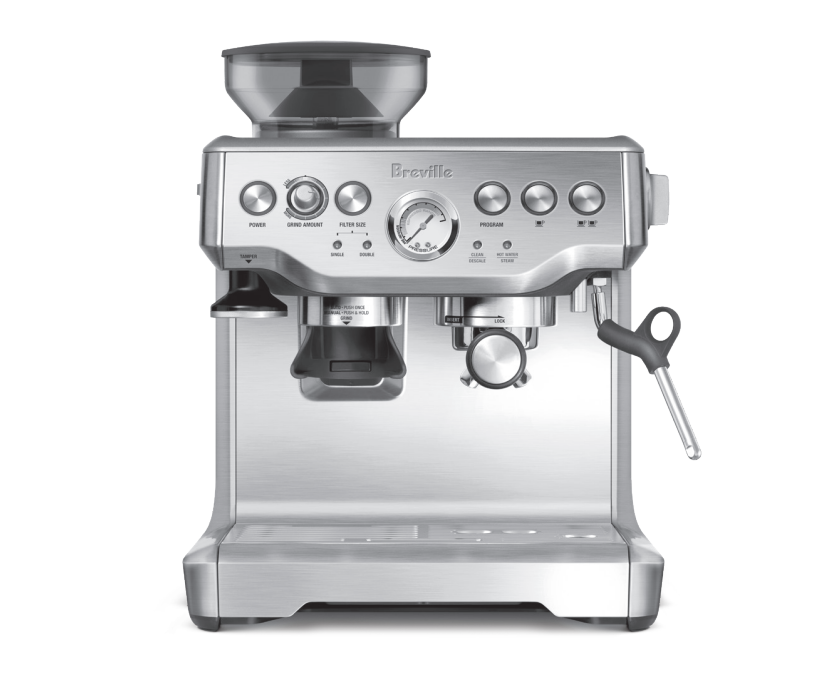
The Breville The Barista Express Espresso Machine is a popular all-in-one espresso solution designed to bring café-style coffee into the home without requiring a separate grinder. It combines a built-in conical burr grinder, precise temperature control, pre-infusion, and a manual steam wand, making it a strong choice for users who want hands-on control over espresso extraction and milk texturing. With its brushed stainless steel build, the machine delivers a premium look and durable construction that fits well in modern kitchens.
This espresso machine is especially well suited for beginners who want an easier entry into home espresso, as well as intermediate users who want more control than a fully automatic machine can provide. The integrated grinder simplifies setup and saves counter space, while the 54 mm portafilter, dose control, and adjustable grind settings help users dial in shots more precisely. It is commonly used for espresso, cappuccinos, lattes, and Americanos, making it versatile for daily coffee routines and weekend café-style drinks.
As of 2026, the Breville The Barista Express Espresso Machine typically falls in the mid-range premium category, with pricing often around $600 to $700 depending on retailer, color, and promotions. It is widely available through major appliance stores, department stores, and online marketplaces. For shoppers comparing espresso machines, it remains one of the most frequently recommended models for balancing performance, convenience, and value.
Specifications for Breville The Barista Express Espresso Machine
- Built-in stainless steel conical burr grinder with around 16 grind settings for dialing in espresso shots.
- 54 mm stainless steel portafilter with single and dual wall filter baskets for beginners and more experienced users.
- Thermocoil heating system with PID temperature control for more stable brewing temperature.
- 15-bar Italian pump with low-pressure pre-infusion to help improve flavor extraction.
- Manual steam wand for milk frothing and texturing for cappuccinos, lattes, and flat whites.
- Removable water tank around 67 oz capacity, which supports multiple drinks before refilling.
- Bean hopper capacity around 8 oz for fresh whole beans.
- Dimensions approximately 15.9 x 13.1 x 12.4 inches, making it compact for a machine with a grinder.
- Power draw generally around 1600W, with fast warm-up and strong steaming performance.
- Includes tamper, Razor dose trimming tool, milk jug, and cleaning accessories.
Compared with similarly priced espresso machines, the Breville The Barista Express Espresso Machine stands out because it includes an integrated grinder and manual controls in one unit. Many rivals in this price range require a separate grinder purchase, which raises total cost and takes up more counter space. Compared with the Barista Pro, this model is simpler and often better value; compared with entry-level machines like the Gaggia Classic Pro, it offers more convenience but less upgrade flexibility.
Pros and Cons of Breville The Barista Express Espresso Machine
Pros
- All-in-one design saves counter space and reduces the need for separate equipment.
- Built-in grinder makes it easier to go from whole beans to espresso quickly.
- Strong value for money for users who want semi-automatic espresso at home.
- PID temperature control and pre-infusion help produce more consistent shots.
- Manual steam wand gives users control over milk texture for latte art practice.
- Good entry point for learning espresso without jumping to commercial-level gear.
Cons
- The grinder can be noisy, especially in small kitchens or early-morning use.
- There is a learning curve for grind size, dosing, and tamping.
- Steam wand performance is good, but not as powerful as higher-end dual-boiler machines.
- Cleaning and maintenance take more effort than fully automatic coffee makers.
- Users who want more advanced control may prefer separate grinder and machine setups.
Overall, this machine offers excellent value for home espresso lovers who want quality and convenience in one package. Compared with pod machines, it delivers far better flavor and customization. Compared with more expensive prosumer espresso machines, it is less precise but far more affordable and easier to use.
Customer Reviews for Breville The Barista Express Espresso Machine
Customer feedback is generally very positive, with many buyers giving it around 4.7 to 4.8 out of 5 stars on major retail sites. Users frequently praise the espresso quality, the convenience of the integrated grinder, and the stylish stainless steel design. A common testimonial theme is that the machine feels like a serious upgrade from pod systems or basic drip coffee makers.
Typical praise includes comments such as “makes café-quality espresso at home” and “easy to use once dialed in.” Common complaints focus on the noise level, the need for regular cleaning, and occasional steam wand inconsistency. Some users also note that achieving the best results takes a little practice, especially when adjusting grind size and tamp pressure.
For buyers who want a capable home espresso machine with built-in grinding, the Breville The Barista Express Espresso Machine remains a strong recommendation. It is especially attractive for first-time espresso enthusiasts who want a well-rounded machine that can grow with their skills.
Frequently Asked Questions About Breville The Barista Express Espresso Machine
Is the Breville Barista Express good for beginners? Yes, it is one of the best beginner-friendly espresso machines because it combines grinding, brewing, and steaming in one system while still offering room to learn.
Does it make good espresso? Yes, when properly dialed in with fresh beans and the right grind size, it can produce rich, balanced espresso with good crema.
Is it worth the price? For users who want a reliable home espresso setup without buying separate equipment, it is widely considered worth the investment.
Faqs
How do I set up Breville The Barista Express Espresso Machine for the first time?
Why is Breville The Barista Express Espresso Machine not building pressure during espresso extraction?
How do I adjust the grinder on Breville The Barista Express Espresso Machine for better espresso shots?
What should I do if Breville The Barista Express Espresso Machine is not dispensing water?
Can I use Breville The Barista Express Espresso Machine with tap water, or should I use filtered water?
How do I get better crema from Breville The Barista Express Espresso Machine?
How often should I clean and descale Breville The Barista Express Espresso Machine?
Why does the steam wand on Breville The Barista Express Espresso Machine stop frothing milk properly?
More breville manuals
- Breville The Crepe Creations Electric Pancake Maker User Manual
- The Breville Sous Chef 16 Food processor User Manual
- Breville The Original 74 Jaffle Maker BSG1974 User Manual
- Breville The Bakery Chef Hub Stand Mixer LEM750 User Manual
- Breville The Precision Brewer Thermal BDC455 User Manual
- Breville The Multi Oven Air Fryer LOV600 User Manual
Leave a Comment