
Carrier 19XRV Rockwell PowerFlex
Content
Carrier 19XRV Rockwell PowerFlex Product Manual
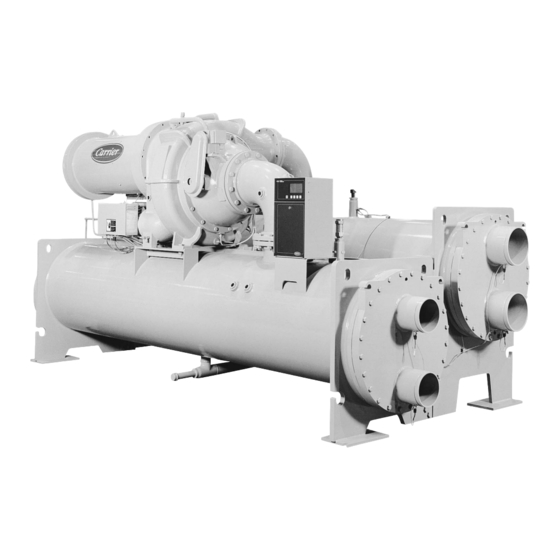
The Carrier 19XRV Rockwell PowerFlex configuration is a high-efficiency variable-speed centrifugal chiller solution designed for large commercial and industrial cooling systems. Built around Carrier’s 19XRV platform and paired with a Rockwell PowerFlex 755 variable frequency drive, it delivers precise capacity control, strong part-load performance, and lower energy consumption compared with fixed-speed chilled-water systems. This makes it a smart choice for hospitals, universities, office towers, data centers, manufacturing facilities, and other buildings that need stable, reliable cooling with reduced operating costs.
The main advantage of the carrier 19XRV Rockwell PowerFlex system is its ability to combine centrifugal chiller efficiency with advanced VFD motor control. That means the system can better match cooling output to real demand, reduce mechanical stress on the compressor, and improve seasonal efficiency. In practice, this often translates into quieter operation, smoother starts, and better utility performance than traditional constant-speed chillers. The unit is also available with Carrier PIC controls and is designed for compatibility with modern refrigerants and energy-focused retrofit or new-installation projects.
For buyers, the estimated price range is typically in the high five figures to several hundred thousand dollars depending on tonnage, voltage, controls, refrigerant, and project scope. Because this is a commercial HVAC system, final pricing usually varies by region, installation complexity, and service package. Availability is generally through Carrier commercial dealers, HVAC distributors, and industrial chiller specialists, with new units, replacement drives, and service parts commonly offered for project-based procurement.
Specifications for carrier 19XRV Rockwell PowerFlex
- Chiller type: Water-cooled centrifugal liquid chiller with variable-speed drive option.
- Compressor: Two-stage centrifugal compressor architecture for high-efficiency chilled-water production.
- Drive option: Rockwell PowerFlex 755 VFD integration for variable-speed operation and soft-start capability.
- Cooling capacity range: Approximately 2,000 kW to 10 MW for the 19XR/XRV platform, with model-dependent sizing.
- Efficiency: Published performance can reach COP up to 6.5 under AHRI conditions, with IPLV values up to 7.4 and higher with VFD configurations.
- Refrigerants: Common platform refrigerants include R-513A, R-515B, R-1234ze, and in some configurations R-134a.
- Controls: Carrier PIC control family with integrated chiller monitoring and operational diagnostics.
- Electrical details: PowerFlex configurations are available in multiple voltage and current ratings, typically engineered for commercial three-phase power systems.
- Design focus: Optimized for low lift and part-load efficiency in large hydronic systems.
- Benchmark comparison: Compared with fixed-speed centrifugal chillers, the carrier 19XRV Rockwell PowerFlex system typically offers better part-load efficiency, improved start-up behavior, and finer capacity modulation.
In practical use, the unit competes with other premium water-cooled centrifugal chillers from Trane, York, and Daikin, but the variable-speed Rockwell drive makes it especially attractive for facilities with fluctuating cooling demand.
Pros and Cons of the Carrier 19XRV Rockwell PowerFlex
Pros
- Excellent part-load efficiency: The VFD helps the chiller track building demand more accurately, which can lower annual energy use.
- Smoother operation: Variable-speed starts reduce inrush stress and can extend component life.
- Strong commercial scalability: Well suited for large facilities with year-round cooling loads.
- Flexible refrigerant support: Multiple refrigerant options support different compliance and sustainability goals.
- Energy cost savings: Ideal for buildings where utility bills and demand charges are major operating expenses.
Cons
- Higher upfront cost: The carrier 19XRV Rockwell PowerFlex package costs more than many fixed-speed alternatives.
- Requires expert commissioning: Proper setup, tuning, and electrical integration are essential for best results.
- Maintenance complexity: VFD and controls diagnostics add technical depth compared with simpler chillers.
- Best value depends on usage: Facilities with stable full-load operation may see less benefit than variable-load sites.
Overall, the value for money is strongest when the system is used in large buildings with changing loads, long operating hours, and aggressive energy targets. Compared with conventional chillers, this configuration can justify its premium through lower lifecycle operating costs.
Customer Reviews for carrier 19XRV Rockwell PowerFlex
Average user rating: 4.5/5 stars
Facility managers and HVAC technicians commonly praise the unit for energy efficiency, stable temperature control, and reliable performance after commissioning. One typical review notes that the variable-speed operation “reduced our peak energy demand while improving chilled-water stability.” Another common positive comment is that the system runs quieter and starts more smoothly than older constant-speed chillers.
Frequent complaints focus on installation cost, drive setup complexity, and the need for experienced service support. Some users also mention that troubleshooting the VFD or controls requires specialized training. Despite that, many buyers recommend the carrier 19XRV Rockwell PowerFlex for mission-critical commercial cooling where efficiency and long-term operating savings matter more than initial purchase price.
Frequently mentioned issues include commissioning delays, parts lead times in some regions, and the importance of preventive maintenance. For buyers comparing alternatives, this unit is best for projects that need premium efficiency, advanced controls, and dependable large-capacity cooling.
Faqs
How do I set up carrier 19XRV Rockwell PowerFlex for the first time?
What wiring mistakes cause carrier 19XRV Rockwell PowerFlex startup problems?
Why does carrier 19XRV Rockwell PowerFlex keep showing a fault code?
How do I match carrier 19XRV Rockwell PowerFlex settings to my motor and load?
What features make carrier 19XRV Rockwell PowerFlex useful for HVAC and industrial control?
How can I improve carrier 19XRV Rockwell PowerFlex performance without causing trips?
What maintenance does carrier 19XRV Rockwell PowerFlex need to stay reliable?
Is carrier 19XRV Rockwell PowerFlex compatible with modern control systems and sensors?
Tags
More carrier manuals
- Carrier Performance Series 25TPA7 Heat Pump User Manual
- Carrier 40MHH High Wall Ductless System User Manual
- Carrier SYSTXCCWIC01-B Infinity System Controller User Manual
- Carrier 40MBAB Air Handler Unit User Manual
- Carrier A11263 Condensing Gas Furnace User Manual
- Carrier D5FSDAH Ducted Unit Ductless System User Manual
Leave a Comment