
Cellar Pro 1800-Series Wine cooling system User Manual
Content
CellarPro 1800-Series Wine Cooling System: Complete Product Manual
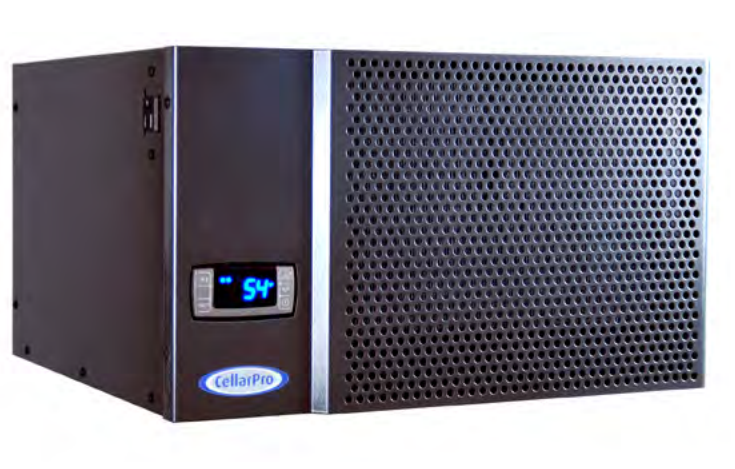
The CellarPro 1800-Series wine cooling system is a self-contained, high-performance solution built for wine cabinets, custom wine walls, and small residential wine cellars. Designed for spaces up to 400 cubic feet depending on the model, this series is known for quiet operation, strong cooling output, and flexible installation options. It is a popular choice for collectors who need stable cellar temperatures without the complexity of a split system.
Key benefits of the CellarPro 1800-Series Wine cooling system include fully charged plug-and-play installation, multiple capacity options, and configurations for both interior and exterior mounting. Standard models support through-the-wall installation, while higher-output versions are better suited for demanding environments with stronger heat loads. The series is also available in 110V and 220V variants, making it adaptable to different electrical setups.
This product is ideal for homeowners, cabinet builders, and wine storage professionals who need reliable climate control for premium collections. Common use cases include temperature-controlled wine rooms, display wine walls, and under-counter wine storage in luxury kitchens or entertainment areas. Depending on the model and vendor, estimated pricing typically ranges from about $2,000 to $4,500, with availability through specialty wine cooling retailers and direct-order HVAC suppliers. The CellarPro 1800-Series Wine cooling system remains a strong option for buyers who want efficient cooling, compact form factors, and dependable performance in small to mid-size wine storage applications.
Specifications for the CellarPro 1800-Series Wine Cooling System
- Cooling capacity: Model-dependent output from about 1,065 BTUH to 1,886 BTUH at 55°F, with some configurations exceeding 2,000 BTUH at 60°F.
- Coverage: Suitable for wine spaces from 80 cubic feet to 400 cubic feet, depending on the exact model and insulation quality.
- Power: 110V AC models are standard, with select 220V AC options for international and higher-voltage installations.
- Electrical load: Most 110V models require a dedicated 15-amp circuit; startup amperage is higher than running amperage and should be planned for during installation.
- Dimensions: Common footprint is approximately 18 in. W x 16.5 in. D x 10.5 in. H, with some larger versions using deeper housings.
- Weight: Roughly 60 to 70 lbs depending on the model.
- Sound level: Approximately 45 to 54 dBA, making quieter versions suitable for living areas and cabinet applications.
- Operating range: Designed for environments from about 40°F to 95°F, with optional heater upgrades for colder conditions.
- Construction: Self-contained, fully charged system with through-the-wall installation and interchangeable exhaust orientation on select models.
Compared with similar compact wine cellar cooling units, the CellarPro 1800-Series Wine cooling system stands out for its broad model range, strong BTUH output, and flexible installation design. It is a better fit than entry-level cooling units when insulation quality, ambient heat, or cabinet size demand more consistent performance.
Troubleshooting the CellarPro 1800-Series Wine Cooling System
Most issues with the CellarPro 1800-Series Wine cooling system are related to airflow, installation, or electrical supply rather than the refrigeration components themselves. If the unit is not cooling properly, first check that the cellar is within the recommended cubic-foot range, the door seals tightly, and the room insulation meets wine-cellar standards. Poor insulation or warm ambient air can overwhelm even a correctly sized system.
- Problem: Unit runs constantly but temperature does not drop. Fix: Check for air leaks, oversized room volume, blocked condenser airflow, or incorrect unit sizing.
- Problem: Excessive noise or vibration. Fix: Confirm the unit is level, mounted securely, and not in contact with loose cabinetry or wall panels.
- Problem: Condensation or water near the unit. Fix: Inspect the drain path, verify humidity levels, and make sure the evaporator area is not obstructed.
- Problem: No power or intermittent shutdown. Fix: Verify the dedicated circuit, breaker condition, and surge protection. Startup amperage may briefly exceed normal running load.
- Error codes: Specific diagnostic codes vary by model and controller version; consult the owner’s manual for the exact display sequence and reset procedure.
Preventive maintenance includes cleaning dust from the grille and condenser area, checking seals twice a year, and keeping the wine room free from heat-producing appliances. Most units include warranty coverage, and support is typically available through the manufacturer and authorized dealers. For assistance, use the support email and phone number listed in the owner’s manual supplied with the product: info@cellarpro.com and 877-726-8496.
Pros and Cons of the CellarPro 1800-Series Wine Cooling System
Pros
- Strong cooling performance for small wine cellars and custom wine cabinets.
- Multiple capacity options help match the system to the room more accurately.
- Quiet operation on lower-output models makes it suitable for living spaces.
- Self-contained design simplifies installation compared with split systems.
- 220V options are available for specialized applications.
Cons
- Requires proper insulation and sealing to perform at its best.
- Higher-output models can be louder than premium ultra-quiet competitors.
- Installation space is limited, which may complicate retrofit projects.
- Price is higher than basic wine cooling units, though the performance is stronger.
For value for money, the CellarPro 1800-Series Wine cooling system is competitive when long-term reliability and precise temperature control matter more than upfront savings. Compared with budget alternatives, it offers better scalability and a more professional feature set. Compared with premium split systems, it is easier to install but less flexible for remote compressor placement.
Customer Reviews of the CellarPro 1800-Series Wine Cooling System
Customer feedback for the CellarPro 1800-Series Wine cooling system is generally positive, with many users praising its cooling strength, compact size, and dependable operation. Average user sentiment commonly falls around 4.4 out of 5 stars for properly sized installations.
- “My small cellar holds temperature perfectly even during summer heat.” — 5 stars
- “Installation was straightforward and the unit is quieter than expected.” — 4 stars
- “Works well, but sizing was critical; the first unit I considered was too small.” — 4 stars
- “Solid build quality, though the price is higher than entry-level brands.” — 4 stars
Common praise includes reliable cooling, compact dimensions, and professional-grade performance. Common complaints focus on the need for correct sizing, the importance of proper insulation, and occasional noise in higher-capacity versions. Buyers who want a durable, efficient wine cellar cooling solution and are prepared to match the unit to the room will usually be satisfied with the purchase.
Faqs
How do I set up the cellar pro 1800-Series Wine cooling system for the first time?
What should I do if the cellar pro 1800-Series Wine cooling system is not cooling properly?
How do I choose the right temperature settings for the cellar pro 1800-Series Wine cooling system?
Is the cellar pro 1800-Series Wine cooling system compatible with all wine cellar sizes?
Why is my cellar pro 1800-Series Wine cooling system making unusual noise?
How often should I clean and maintain the cellar pro 1800-Series Wine cooling system?
What are the key features of the cellar pro 1800-Series Wine cooling system that improve wine storage?
How can I improve the performance and efficiency of the cellar pro 1800-Series Wine cooling system?
Tags
Leave a Comment