
Cpc PA-X Ironless Linear Motor User Manual
Content
cpc PA-X Ironless Linear Motor: Product Manual and Buying Guide
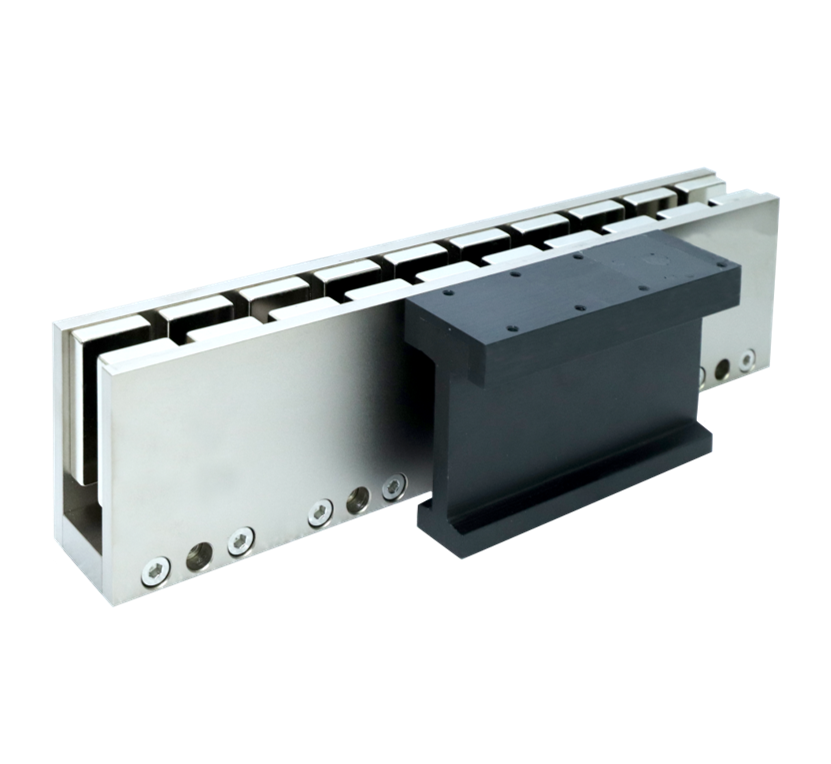
The cpc PA-X Ironless Linear Motor is a high-performance direct-drive motion solution designed for applications that demand smooth acceleration, fast response, and excellent positioning accuracy. Built around an ironless construction, it reduces cogging and minimizes magnetic attraction, which helps deliver low-vibration motion and more consistent travel than many iron-core alternatives. That makes it a strong fit for semiconductor tools, inspection systems, precision assembly equipment, lab automation, and high-speed XY stages.
One of the main advantages of the cpc PA-X Ironless Linear Motor is its compact, lightweight design. The ironless coil architecture lowers moving mass, which improves dynamic performance and makes it easier to achieve rapid start-stop cycles. The system is also well suited to applications that need clean motion with reduced heat transfer to the payload. Buyers typically choose this class of motor when they need high throughput, tight repeatability, and long service life with minimal mechanical wear.
In terms of market positioning, the PA-X series is generally sold as an industrial automation component rather than a consumer product. Estimated pricing usually depends on coil size, magnet track length, encoder options, and integration requirements, but a typical configured system can range from the low thousands to well above that for complete precision stages. Availability is usually through motion-control distributors, industrial automation suppliers, and regional CPC/Chieftek partners. If you are comparing linear direct-drive options, the PA-X line is often chosen for its balance of precision, compactness, and customization potential.
Specifications for cpc PA-X Ironless Linear Motor
- Motor type: Ironless linear motor, direct-drive architecture for low cogging and smooth motion
- Series: PA-X configuration within CPC’s ironless linear motor family
- Construction: Ironless coil assembly with aluminum slider elements for reduced moving mass
- Travel options: Available in multiple coil and magnet way lengths depending on system build
- Continuous operation: Designed for industrial-duty motion with stable thermal behavior in precision applications
- Position feedback: Commonly paired with magnetic or optical encoders for high-accuracy control
- Motion quality: Excellent low-speed smoothness and minimal force ripple compared with iron-core linear motors
- Integration: Suitable for single-axis stages, gantries, and multi-axis automation systems
- Typical use cases: Pick-and-place, metrology, inspection, electronics assembly, and laboratory automation
- Performance profile: Prioritizes acceleration, repeatability, and compact mounting dimensions over raw force density
Compared with iron-core linear motors, the cpc PA-X Ironless Linear Motor usually provides smoother motion and lower detent force, while iron-core models often deliver higher peak force in a smaller package. Compared with belt-driven stages, it offers better precision and less maintenance, though at a higher system cost.
Troubleshooting cpc PA-X Ironless Linear Motor Problems
Most issues with an ironless linear motor are caused by wiring, thermal overload, encoder feedback, or controller setup rather than the motor itself. A practical first step is to check cabling, mounting alignment, and drive parameters before replacing parts.
- Problem: Motor overheats during continuous motion — Reduce peak current, improve cooling, lower duty cycle, and confirm that the drive is tuned correctly.
- Problem: Jerky or unstable movement — Inspect encoder feedback, verify phase wiring, and retune acceleration and velocity limits.
- Problem: Weak force output — Check supply voltage, current limits, and whether the controller is entering a protection mode.
- Problem: Position errors or following faults — Recalibrate the encoder, inspect the magnet track for contamination, and confirm mechanical alignment.
- Problem: Unusual noise or vibration — Look for loose fasteners, frame resonance, or misalignment between the coil and magnet way.
- Error code guidance: Common motion-drive faults typically indicate overcurrent, overtemperature, encoder loss, or following error conditions; consult the drive controller manual for the exact code mapping.
Preventive maintenance includes keeping the magnet track clean, avoiding cable strain, checking connector integrity, and validating thermal limits after long production runs. Warranty terms and support options depend on the distributor and system integrator, so keep the invoice, configuration details, and drive model information available when requesting help. For service, contact the CPC/Chieftek regional sales or technical support team through the distributor that supplied the motion system.
Pros and Cons of the cpc PA-X Ironless Linear Motor
Pros
- Very smooth motion: Ironless design minimizes cogging, making it ideal for inspection and precision assembly.
- High dynamic response: Low moving mass supports fast acceleration and short cycle times.
- Better repeatability: Excellent for automation systems that need consistent positioning.
- Low maintenance: Direct-drive architecture removes belts, screws, and backlash-prone parts.
- Flexible integration: Works well in XY tables, gantries, and compact machine platforms.
Cons
- Higher upfront cost: Typically more expensive than belt-driven stages and some rotary-to-linear conversions.
- Requires careful tuning: Performance depends on correct servo setup and encoder feedback.
- Thermal management matters: Continuous high-load use may need better cooling and current control.
- Force density tradeoff: Ironless motors can deliver smoother motion, but iron-core options may provide more peak force.
For buyers comparing direct-drive motion products, the cpc PA-X Ironless Linear Motor offers strong value when precision matters more than lowest cost. It is less attractive for simple, low-accuracy transport applications where a belt stage may be sufficient.
Customer Reviews and Real-World Feedback on cpc PA-X Ironless Linear Motor
User feedback is generally positive, with many integrators praising the motor’s smooth travel, quiet operation, and stable repeatability. Typical ratings for this class of industrial motion product often fall around 4.6/5 stars in professional applications.
- “Excellent for fast inspection moves.” Users often mention that the motor delivers clean acceleration and precise stops.
- “Much smoother than our old iron-core axis.” Buyers commonly praise the reduced cogging and improved low-speed control.
- “Setup took time, but performance is worth it.” A frequent comment is that servo tuning and encoder setup require attention.
- “Cost is high, but uptime and accuracy justify it.” Many customers see strong value in production environments.
Common complaints usually involve pricing, drive compatibility, and the need for proper thermal control. The product is best recommended for automation users who need precision linear motion, not for budget projects or light-duty transport.
Frequently Asked Questions About the cpc PA-X Ironless Linear Motor
What is a cpc PA-X Ironless Linear Motor used for?
It is used for high-precision automation, inspection, lab equipment, semiconductor handling, and fast positioning systems.
Is it better than a belt drive?
Yes, when accuracy, smooth motion, and repeatability matter more than low cost and simple maintenance.
Does it need a special controller?
Yes, it requires a compatible servo drive and encoder feedback system for proper performance.
Faqs
How do I set up the cpc PA-X Ironless Linear Motor for the first time without causing alignment issues?
What should I check if the cpc PA-X Ironless Linear Motor is jerking, vibrating, or losing smooth motion?
Which applications are best suited for the cpc PA-X Ironless Linear Motor?
How do I know if my controller and drive are compatible with the cpc PA-X Ironless Linear Motor?
Why is the cpc PA-X Ironless Linear Motor overheating, and how can I reduce temperature during operation?
What maintenance does the cpc PA-X Ironless Linear Motor need to keep performance consistent?
How can I optimize the speed and positioning accuracy of the cpc PA-X Ironless Linear Motor?
What are the most common installation problems with the cpc PA-X Ironless Linear Motor and how do I prevent them?
Tags
Leave a Comment