
Fieldking Hobby Rotary Tiller User Manual
Content
Fieldking Hobby Rotary Tiller: Complete Product Manual and Buyer’s Guide
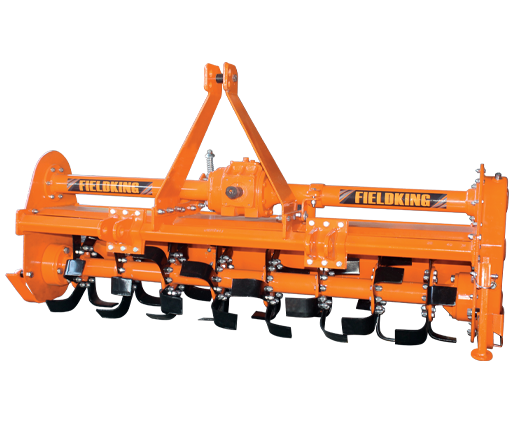
The Fieldking Hobby Rotary Tiller is a compact, PTO-driven rotary tiller designed for small farms, orchards, vegetable plots, nurseries, and garden maintenance. It is built for users who need reliable soil preparation without moving to a heavy-duty commercial rotavator. With a single-speed gearbox, 540 RPM PTO compatibility, and small L- and C-type blades, it is engineered to break clods, mix organic matter, and create a fine seedbed efficiently. The machine is especially useful for farmers working in lighter to medium soil conditions where maneuverability and consistent tilling matter more than extreme working depth.
One of the biggest advantages of the Fieldking Hobby Rotary Tiller is its balance of performance and simplicity. It is offered in multiple working widths, making it easy to match with different tractor horsepower ranges and field sizes. Users typically choose this model for hobby farming, inter-row cultivation, orchard floor management, and nursery bed preparation. The tiller’s chain-drive or gear-drive options, depending on the variant, help improve durability and soil-working consistency. It also appeals to buyers looking for a practical alternative to larger rotary tillers that may be too expensive or oversized for small-acreage use.
In India, the estimated price range generally falls around ₹1,04,961 to ₹2,15,000, with some listings extending slightly above or below depending on width, configuration, and dealer location. Availability is broad through agricultural equipment dealers and online tractor-implement marketplaces. For growers seeking a dependable small-farm rotary tiller, the Fieldking Hobby Rotary Tiller offers strong value, straightforward operation, and wide compatibility with common tractors.
Specifications of Fieldking Hobby Rotary Tiller
The Fieldking Hobby Rotary Tiller is available in several width and power configurations, allowing farmers to select the right model for their tractor and field size. Common variants include working widths from about 80 cm to 225 cm, with PTO speed set at 540 RPM and rotor speed around 190 RPM for many standard models. Overload protection is typically provided by a shear bolt or slip clutch, which helps protect the drivetrain during hard impact conditions.
- Power requirement: Approximately 15 HP to 55 HP, depending on model size
- PTO speed: 540 RPM
- Rotor speed: Around 190 RPM on common variants
- Gearbox: Single-speed gearbox
- Blade type: Small L and C type blades
- Drive type: Chain drive or gear drive, depending on model
- Working width: Approximately 80 cm, 100 cm, 120 cm, 140 cm, 160 cm, 180 cm, 200 cm, and 225 cm options
- Approximate weight: Roughly 170 kg to 360 kg, depending on width and build
- Best use depth: Suitable for soil loosening, mixing, and seedbed preparation in small to medium plots
Compared with standard heavy-duty rotary tillers, this hobby series is lighter, easier to handle, and better suited for orchard lanes and gardens. Against entry-level competitors, it stands out for offering multiple sizes and a strong dealer footprint. For buyers comparing options, the main trade-off is that it is not meant for the toughest hard-pan conditions or very large commercial acreage.
Pros and Cons of Fieldking Hobby Rotary Tiller
The Fieldking Hobby Rotary Tiller delivers a practical mix of usability, soil-finishing quality, and tractor compatibility. It is especially attractive to owners who want a compact rotavator for routine land prep rather than high-intensity commercial tillage.
Pros
- Versatile for small farms: Works well for orchards, vegetable beds, nurseries, and gardening applications.
- Multiple size options: Buyers can choose a width that matches tractor horsepower and field layout.
- Good value for money: The pricing is competitive for a branded rotary tiller with several configuration choices.
- Simple operation: Single-speed gearbox design keeps maintenance and operation straightforward.
- Strong soil finishing: L- and C-type blades help create a fine, uniform tilth for seeding.
Cons
- Not for heavy commercial workloads: Larger farms may need a heavier-duty tiller with deeper cutting power.
- Limited advanced features: It lacks the flexibility of multi-speed premium rotavators.
- Performance depends on soil condition: Very rocky or compacted land can reduce efficiency and increase wear.
- Alternatives may suit tough soil better: Heavy-duty gear-drive rotary tillers may outperform it in demanding terrain.
For buyers focused on affordability and everyday utility, this model offers excellent value. For tougher soil profiles or larger acreage, a heavier alternative may be the better long-term investment.
Customer Reviews of Fieldking Hobby Rotary Tiller
Customer feedback for the Fieldking Hobby Rotary Tiller is generally positive, especially among small farmers and orchard owners. Most users rate it around 4.2/5 stars for ease of use, soil preparation quality, and practical sizing. Many buyers praise its ability to break soil evenly and prepare a clean seedbed in fewer passes.
Common praise includes smooth tractor compatibility, reliable blade action, and good performance in vegetable plots and nursery work. One typical comment is: “Strong performer for my 20 HP tractor and perfect for my orchard rows.” Another user notes: “Easy to operate, and it saves time during seasonal land prep.”
Frequent complaints usually involve price sensitivity, replacement part costs, and reduced effectiveness in hard or stony ground. Some users also mention that the lighter-duty variants are not ideal for deep tillage on compacted soil. Buyers looking for a dependable small-farm rotary tiller usually recommend it, while those needing aggressive tilling often prefer a heavier model.
Is the Fieldking Hobby Rotary Tiller Worth Buying?
If you need a compact, dependable, and easy-to-use rotary tiller for orchards, gardens, nurseries, or small agricultural plots, the Fieldking Hobby Rotary Tiller is a strong choice. It offers practical features, multiple size options, and solid soil-preparation performance at a price that remains competitive in the small-farm segment. For farmers comparing compact rotavators, this model stands out as a balanced option with good brand support and broad availability.
Faqs
How do I set up the fieldking Hobby Rotary Tiller for the first time?
What tractor horsepower is needed to run the fieldking Hobby Rotary Tiller efficiently?
Why is my fieldking Hobby Rotary Tiller leaving uneven soil or missed strips?
How deep can the fieldking Hobby Rotary Tiller cut, and how do I adjust tilling depth?
What should I do if the fieldking Hobby Rotary Tiller vibrates or makes unusual noise?
Can the fieldking Hobby Rotary Tiller be used on hard, dry, or compacted soil?
What maintenance does the fieldking Hobby Rotary Tiller need after regular use?
How do I choose the right forward speed and PTO speed for the fieldking Hobby Rotary Tiller?
Tags
More fieldking manuals
Leave a Comment