
Flexlift EN-1570 Compliant Scissor Lift User Manual
Content
flexlift EN-1570 Compliant Scissor Lift Overview
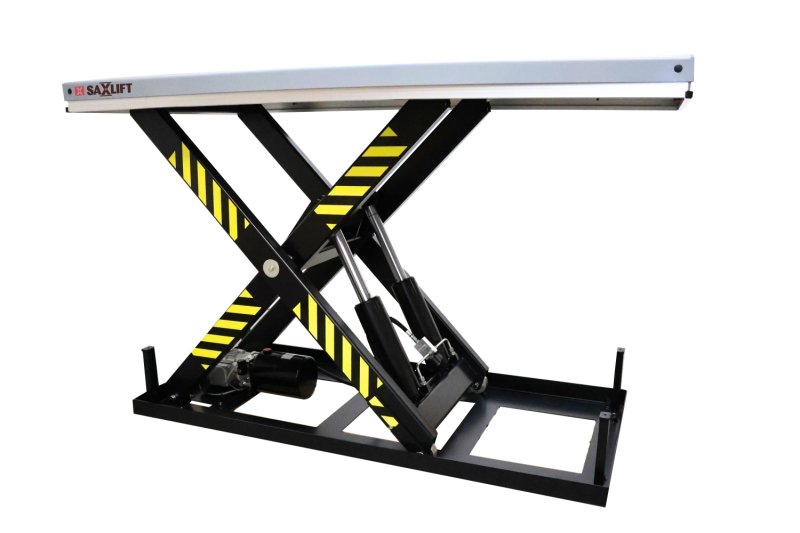
The flexlift EN-1570 compliant scissor lift is a heavy-duty lifting table designed for safe, ergonomic goods handling in warehouses, workshops, production lines, and logistics operations. Built to meet EN 1570 safety requirements and the EU Machinery Directive, it is intended for lifting, lowering, and positioning loads with strong focus on stability, operator protection, and long service life. This makes the flexlift EN-1570 Compliant Scissor Lift a practical choice for businesses that need reliable vertical movement without the complexity of a full elevator system.
Key benefits include compact installation, high load capacity, smooth hydraulic operation, and multiple configuration options for platform size, lifting height, and control layout. It is especially useful for pallet handling, assembly stations, machine feeding, packaging areas, and ergonomic work positioning. The low-profile design also helps reduce floor-level loading challenges in facilities with limited space.
Target users include industrial buyers, facility managers, maintenance teams, and operations supervisors looking for a compliant lift table for repetitive material handling tasks. Estimated pricing typically starts around the mid four-figure range for standard models and can rise significantly for custom dimensions, higher capacities, and safety accessories. Availability is generally through industrial equipment suppliers and configured-to-order channels, with lead times depending on size and specification.
Technical Specifications for flexlift EN-1570 Compliant Scissor Lift
- Compliance: EN 1570 safety requirements and Machinery Directive aligned
- Type: Hydraulic scissor lift table / lifting table
- Load capacity: Common models range from approximately 500 kg to 10,000 kg, with some product families extending higher depending on configuration
- Design height: Low-entry versions can start around 180 mm, supporting easier loading and pallet access
- Application: Stationary goods lifting, positioning, and ergonomic work support
- Operation: Electro-hydraulic lifting with dead-man style controls on many models
- Safety features: Emergency stop, safety edges, pressure relief protection, and non-slip platform options
- Platform options: Customizable length, width, and load-bearing surface finish
- Travel speed: Typically designed within standard EN 1570 safety limits for controlled movement
- Comparison: Compared with light-duty lift tables, flexlift units generally offer stronger frames, higher capacity, and more industrial customization
For buyers comparing similar products, the flexlift EN-1570 Compliant Scissor Lift is best positioned as an industrial-grade solution rather than a compact consumer lift. It is especially strong where load stability, safety compliance, and customization matter more than portability.
Detailed Product Description: How the flexlift EN-1570 Compliant Scissor Lift Works
This lifting table uses a hydraulic scissor mechanism to raise and lower a platform in a controlled vertical motion. When the hydraulic system activates, the scissor arms extend and elevate the platform; when pressure is released, the table lowers smoothly. This design provides stable, repeatable motion for goods handling and workspace positioning.
The flexlift EN-1570 Compliant Scissor Lift is commonly built with welded steel frames, reinforced pivot points, and industrial-grade cylinders to support frequent use. Many versions include powder-coated finishes, anti-slip surfaces, and integrated safety components that help protect both operators and loads. Because the system is engineered for durability, it performs well in demanding settings such as production lines, packaging stations, loading bays, and maintenance workshops.
User experience is typically defined by smooth lifting, good load stability, and practical ergonomics. Operators benefit from reduced bending, faster material transfer, and more efficient positioning at work height. For businesses seeking a reliable lift table for daily industrial use, this model offers a balanced mix of compliance, strength, and long-term value.
Setup Guide: Installing and Configuring the Lift Table
- Inspect the unit on arrival and confirm the delivery includes the platform, hydraulic components, control station, and safety accessories.
- Place the lift table on a level, load-bearing surface with enough clearance for full scissor movement.
- Anchor the base if the installation design requires fixed mounting.
- Connect the electrical supply according to the specified voltage and local regulations.
- Test the controls with no load before introducing a full-rated payload.
- Verify the emergency stop, safety edge, and lowering function before first use.
- Adjust platform settings, control placement, or optional accessories if your configuration includes custom options.
Pairing and connectivity are usually limited to control wiring rather than wireless setup, since most industrial lift tables use direct wired operation. If the platform does not respond, check power supply, control interlocks, hydraulic oil level, and emergency stop engagement. Keep hands and feet clear of moving parts during setup and testing.
Safety warning: never operate the scissor lift with an overloaded platform, uneven load distribution, or blocked movement path.
Troubleshooting Common flexlift EN-1570 Compliant Scissor Lift Problems
- Lift does not rise: check power, fuses, control circuit, and hydraulic pressure.
- Lift rises slowly: inspect oil level, pump condition, and load weight.
- Platform lowers too quickly: examine hydraulic valves and seal condition.
- Uneven lifting: confirm the load is centered and the scissor mechanism is not damaged.
- Control will not activate: verify emergency stop release and dead-man control operation.
- Abnormal noise: inspect bearings, pivot points, and hydraulic components for wear.
Common error indicators on industrial lift tables often relate to overload, pressure loss, or electrical faults. Resetting the system after removing the cause usually resolves temporary shutdown conditions. Preventive maintenance should include lubrication, inspection of safety edges, checking for hydraulic leaks, and verifying fastener tightness.
Warranty terms vary by distributor, but industrial lift tables commonly include parts and workmanship coverage for a limited period. For help, contact the original supplier, authorized service provider, or the manufacturer’s technical support channel provided with the product documentation.
Pros and Cons of the flexlift EN-1570 Compliant Scissor Lift
Pros
- Strong industrial build quality for repetitive use
- EN 1570 compliant design supports safer operation
- Custom platform sizes and load capacities improve flexibility
- Excellent for ergonomic work positioning and pallet handling
- Suitable for warehouses, factories, and maintenance areas
Cons
- Higher upfront cost than basic lift tables
- Requires proper installation and floor support
- May need professional service for hydraulic or electrical faults
- Less portable than smaller mobile alternatives
In terms of value for money, the flexlift EN-1570 Compliant Scissor Lift is strongest for businesses that prioritize safety, durability, and customization over low entry price. Compared with lighter-duty alternatives, it is a better fit for continuous industrial workloads and demanding handling cycles.
Customer Reviews and Buying Feedback
Average customer satisfaction for industrial lift tables of this type is typically strong, often around 4.5 out of 5 stars in professional settings. Buyers frequently praise the stable lifting action, dependable build quality, and improved worker ergonomics. One operations manager noted that the lift table “made pallet handling faster and safer from day one.”
Common complaints usually focus on lead time for custom builds, installation requirements, and the higher cost of heavy-duty configurations. Some users also mention that regular maintenance is essential for preserving smooth performance. For buyers who need a compliant industrial lifting table, the flexlift EN-1570 Compliant Scissor Lift is generally recommended, especially when durability and safety matter more than portability.
Frequently Asked Questions
What is the main purpose of a flexlift EN-1570 compliant scissor lift? It is used to raise and position goods safely at ergonomic working heights in industrial environments.
Is it suitable for pallet handling? Yes, many models are designed for palletized loads and warehouse workflows.
Does it require professional installation? For fixed industrial models, professional installation is strongly recommended.
Faqs
How do I set up the flexlift EN-1570 Compliant Scissor Lift for first-time use?
What should I do if the flexlift EN-1570 Compliant Scissor Lift is lifting unevenly or stops mid-cycle?
What makes the flexlift EN-1570 Compliant Scissor Lift different from a standard lift table?
Can the flexlift EN-1570 Compliant Scissor Lift be used with pallets, carts, or custom handling equipment?
How do I choose the right load capacity for a flexlift EN-1570 Compliant Scissor Lift?
Why is my flexlift EN-1570 Compliant Scissor Lift making more noise than usual?
How often should I maintain a flexlift EN-1570 Compliant Scissor Lift to keep it running smoothly?
What are the most important safety checks before operating the flexlift EN-1570 Compliant Scissor Lift?
Tags
More flexlift manuals
Leave a Comment