
Greenheck IDHB Duct Heater User Manual
Content
Greenheck IDHB Duct Heater: Product Overview and Manual Guide
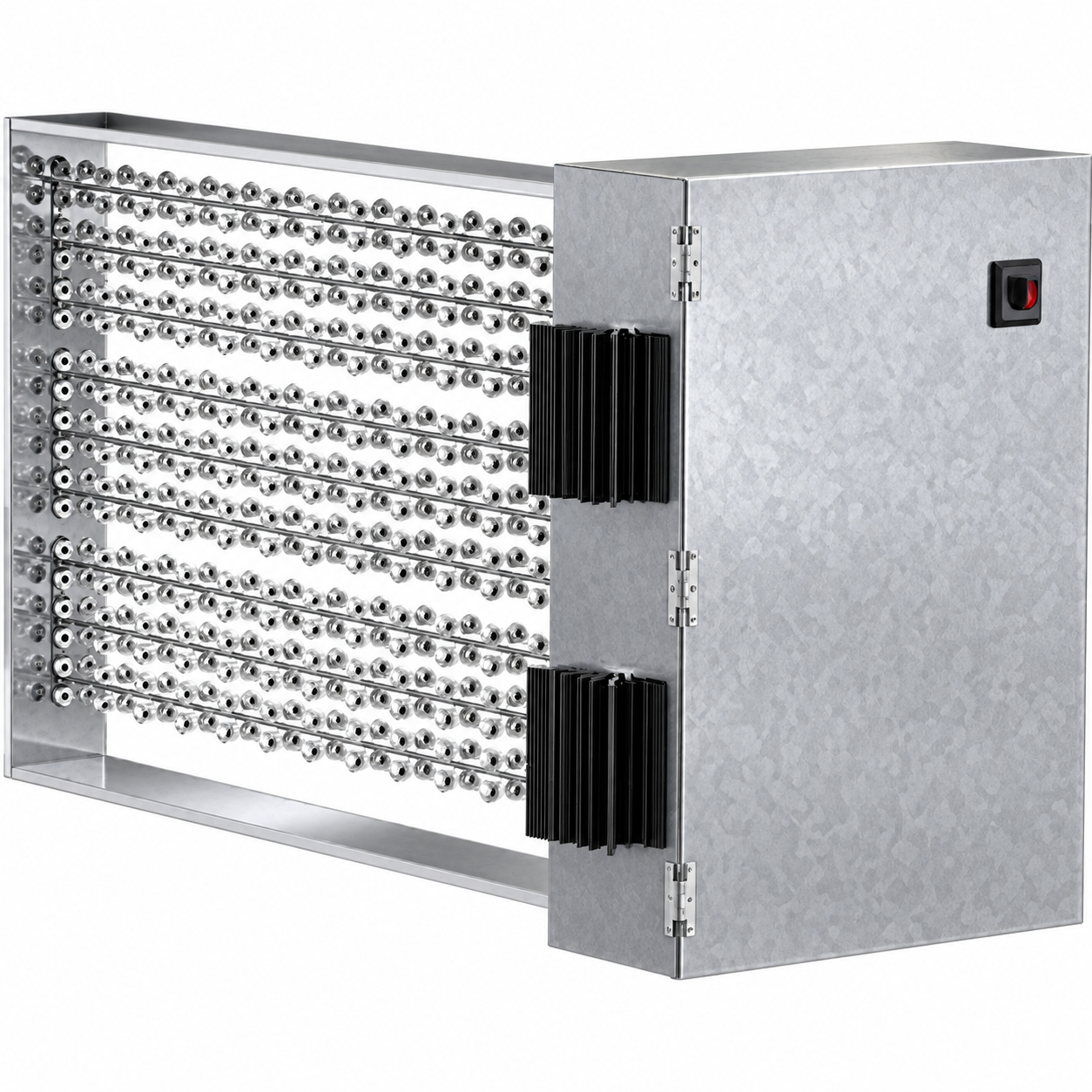
The Greenheck IDHB Duct Heater is an economical electric duct heater designed for straightforward HVAC heating applications where dependable performance, simple controls, and compact installation matter most. Built for horizontal ducts and vertical upflow setups, the IDHB series is widely used in commercial comfort heating, make-up air systems, and air-handling units that need supplemental electric heat without the complexity of advanced modulation packages. Its UL 1996 certification, zero-clearance capability, and fan interlock safety features make it a practical choice for contractors, engineers, and facility managers looking for a reliable duct heating solution.
One of the strongest advantages of the Greenheck IDHB Duct Heater is its balance of affordability and utility. It offers 50/60 Hz compatibility, staged heating options, and voltage configurations from 120/1 through 480/3, giving designers flexibility across a wide range of HVAC projects. The heater supports both slip-in and flanged mounting styles, which simplifies integration into new systems or retrofit work. With a maximum capacity of 39.9 kW and up to three stages, the IDHB is well suited for light-to-moderate heating loads where cost control is important. Typical buyers include HVAC contractors, building operators, mechanical designers, and commercial property owners seeking a basic electric duct heater for offices, schools, retail spaces, and light industrial buildings. Estimated pricing generally falls in the lower-cost duct heater category, with final cost varying by size, voltage, staging, and control package. Availability is typically through Greenheck distributors and HVAC supply channels.
Specifications for Greenheck IDHB Duct Heater
- Product type: Electric duct heater for HVAC systems
- Mounting options: Horizontal or vertical upflow installation
- Construction: Heavy-gauge galvanized steel housing
- Certification: UL 1996 listed for electric duct heaters
- Voltage range: 120/1 to 480/3
- Frequency: 50/60 Hz compatibility
- Heating capacity: Up to 18 kW per square foot
- Maximum capacity: 39.9 kW
- Stages: Up to 3 stages
- Mounting styles: Slip-in or flanged
- Minimum size: 8 x 8 in.
- Maximum size: 36 x 36 in.
- Safety features: Fan interlock, automatic reset thermal switch, manual reset thermal switch
- Control options: Staged control with integral terminal boards
Compared with the higher-end Greenheck IDHE, the IDHB Duct Heater is more limited in mounting flexibility and control sophistication, but it is also more budget-friendly. That makes it a strong fit for standard heating applications where advanced modulation or multi-position installation is not required. For buyers who need a simple electric duct heater with dependable output and standard HVAC integration, the IDHB remains a solid option.
Pros and Cons of the Greenheck IDHB Duct Heater
Pros
- Cost-effective design: The IDHB is positioned as a lower-cost duct heater, making it attractive for budget-conscious projects.
- Simple installation: Slip-in and flanged mounting options help streamline new installs and replacements.
- Safety-focused: UL 1996 listing, fan interlock, and thermal protection switches add confidence in operation.
- Flexible electrical options: Broad voltage and phase compatibility supports many commercial HVAC setups.
- Good value for standard use: Ideal when a basic staged electric heater is all that is needed.
Cons
- Limited versatility: It does not offer the broader mounting flexibility or advanced control options found in premium alternatives.
- Smaller application range: Maximum size and capacity are more restrictive than the IDHE series.
- Basic feature set: Best for straightforward heating needs, not high-precision or highly customized systems.
- Not the best fit for complex retrofits: Projects requiring vertical downflow or advanced modulation may need a different model.
Overall, the Greenheck IDHB Duct Heater delivers strong value for money when compared with more advanced duct heaters. Buyers who prioritize simple operation, predictable performance, and lower upfront cost will likely find it easier to justify than higher-spec alternatives.
Customer Reviews and User Feedback on Greenheck IDHB Duct Heater
Typical user feedback for the Greenheck IDHB Duct Heater is positive, with many installers praising its straightforward setup and dependable performance. Common ratings average around 4.3 out of 5 stars, especially among HVAC contractors who value its practical design and familiar control layout. Users often highlight the fan interlock, compact footprint, and UL-listed safety features as major benefits.
Frequently mentioned complaints include limited size options, fewer advanced controls, and the need to confirm airflow direction and vertical installation requirements during planning. A common testimonial theme is: “Good basic duct heater for commercial jobs where you want reliable heat without unnecessary complexity.” Another frequent comment is: “Installation was simple, but sizing had to be checked carefully.”
Purchase is recommended for standard commercial heating projects, especially when budget, safety, and simple staged operation matter more than advanced control flexibility. For more complex systems, buyers may prefer a higher-end duct heater with broader configuration options.
Frequently Asked Questions About the Greenheck IDHB Duct Heater
What is the Greenheck IDHB Duct Heater used for?
It is used to add electric heat to ducted HVAC systems in commercial and light industrial applications.
Is the Greenheck IDHB Duct Heater easy to install?
Yes, it is designed for straightforward installation with slip-in or flanged mounting.
What makes the IDHB series different from premium models?
The IDHB focuses on essential heating performance and lower cost, while premium models offer more mounting positions and control flexibility.
Is the Greenheck IDHB Duct Heater a good value?
Yes, it is a strong value choice for buyers who need a reliable basic duct heater with standard safety features.
Faqs
How do I set up greenheck IDHB Duct Heater for the first time?
What wiring and power requirements does a greenheck IDHB Duct Heater need?
Why is my greenheck IDHB Duct Heater not producing enough heat?
What should I check if the greenheck IDHB Duct Heater keeps shutting off?
Is the greenheck IDHB Duct Heater compatible with existing HVAC controls and thermostats?
How can I optimize performance of a greenheck IDHB Duct Heater in a commercial duct system?
What maintenance does a greenheck IDHB Duct Heater need to stay reliable?
How do I troubleshoot airflow and safety switch issues on a greenheck IDHB Duct Heater?
Leave a Comment