
Setup: Hot Start TPS Thermosiphon Heater User Manual
Content
Hot Start TPS Thermosiphon Heater Manual and Product Overview
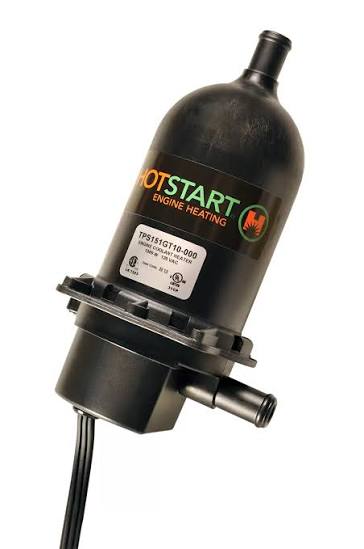
The hot start TPS Thermosiphon Heater is a compact engine coolant preheater designed to keep engines warm, reduce cold-start wear, and improve starting reliability in demanding environments. Built around thermosiphon circulation, it heats coolant without a pump, allowing warm fluid to rise naturally through the engine while cooler fluid returns to the heater. This passive design makes it a dependable choice for generators, heavy equipment, marine engines, standby power systems, and industrial machinery that must start quickly in low temperatures.
One of the biggest advantages of the hot start TPS Thermosiphon Heater is its simple, low-maintenance operation. It uses single-phase AC power and is available in multiple wattages and voltages, making it easy to match to different engine sizes and climates. Typical operating temperatures are regulated by a fixed thermostat in the 100–120°F range, which helps maintain coolant readiness while avoiding unnecessary overheating. The unit is also built with durable materials such as a PPS tank and Incoloy 800 heating element for long service life.
This heater is aimed at fleet operators, construction contractors, generator owners, marine users, and anyone who relies on diesel or gas engines in cold weather. Estimated market pricing generally ranges from about $190 to $375 USD depending on wattage, configuration, and seller availability. The product is commonly available through industrial equipment dealers, online parts suppliers, and global Hotstart distributors, though stock varies by model and voltage.
Technical Specifications for Hot Start TPS Thermosiphon Heater
- Heating power: 500 W, 1 kW, 1.5 kW, 1.8 kW, and 2 kW options
- Electrical input: AC, single-phase, 50/60 Hz
- Voltage options: 120 V, 240 V, and 277 V on selected models
- Thermostat range: Fixed control at 100–120°F (38–49°C)
- Fluid type: Water or 50/50 water-glycol coolant mix
- Maximum pressure: 90 psi (620 kPa)
- Fluid capacity: Approximately 0.42 L / 0.11 gal
- Inlet/outlet connections: 0.625 in. hose barb (15.9 mm)
- Tank material: Polyphenylene sulfide (PPS)
- Heating element: Incoloy 800
- Ingress protection: IP41
- Ambient operating range: -40°F to 104°F (-40°C to 40°C)
- Power cord length: 48 in. on many models
Compared with electric circulating heaters, the thermosiphon design is quieter and simpler because it does not require a pump. Compared with block heaters, it can offer more even coolant warming across the engine loop. For users searching for a reliable engine preheater, the hot start TPS Thermosiphon Heater stands out for durability, broad voltage options, and flexible wattage selection.
Troubleshooting Common Hot Start TPS Thermosiphon Heater Problems
If the heater does not warm the engine, first confirm that power is reaching the unit and that the correct voltage model is installed. A common issue is an undersized circuit, damaged plug, or loose connection. If the heater feels warm but the engine stays cold, check hose routing, coolant level, and air pockets in the system. Thermosiphon heaters depend on natural circulation, so trapped air or incorrect mounting can stop coolant flow.
- No heat output: Check supply voltage, breaker, cord condition, and plug fit.
- Poor engine warming: Verify coolant level, bleed air from the system, and confirm proper hose orientation.
- Frequent breaker trips: Inspect for short circuits, moisture intrusion, or incorrect amperage load.
- Coolant leaks: Tighten hose clamps and inspect 0.625 in. connections for wear or cracking.
- Overheating concern: Confirm thermostat operation and make sure the heater is mounted per installation guidance.
Error codes are not typically used on this type of heater because it is a simple fixed-thermostat system. Instead, symptoms are usually electrical or fluid-flow related. Preventive care includes checking coolant quality, inspecting hoses before winter, keeping electrical contacts dry, and ensuring the heater is not installed below the engine coolant circuit in a way that blocks circulation.
Warranty terms vary by seller, but many retail listings offer a 1-year warranty on new units. For help, contact the dealer where you purchased the product or Hotstart technical support through the official company website and distributor network. Keep the model number, voltage, and wattage ready when requesting service.
Pros and Cons of the Hot Start TPS Thermosiphon Heater
Pros
- Simple thermosiphon design with no pump to maintain
- Reliable cold-start assistance for generators, trucks, and industrial engines
- Multiple wattage and voltage choices for different applications
- Durable construction with PPS tank and Incoloy 800 heating element
- Helps reduce engine wear, battery strain, and startup smoke in cold weather
- Strong value for money when compared with more complex circulating heater systems
Cons
- Fixed thermostat offers less control than adjustable systems
- Thermosiphon performance depends on correct mounting and hose routing
- Some models can be harder to source than standard block heaters
- Pricing varies widely between distributors
- Not ideal for users who need advanced digital controls or smart diagnostics
For buyers comparing the hot start TPS Thermosiphon Heater with lower-cost block heaters, the TPS usually offers better coolant circulation and more consistent preheat performance. Against premium circulating heaters, it wins on simplicity but may lose on control features.
Customer Reviews and User Feedback on Hot Start TPS Thermosiphon Heater
Customer feedback is generally positive, with many users praising fast warm-up, dependable winter starts, and rugged build quality. Typical ratings from retail listings and distributor feedback trend around 4.4 to 4.7 out of 5 stars. Buyers often describe it as a “set it and forget it” solution that performs well on generators and diesel equipment in freezing conditions.
Common praise includes quiet operation, steady coolant temperature, and easy integration into existing hose layouts. Frequent complaints focus on pricing differences between sellers, limited stock for certain voltage configurations, and the need for careful installation to avoid air locks. A typical testimonial is: “Once installed correctly, it keeps the engine ready every morning and eliminates hard cold starts.”
For most users, this is a strong purchase recommendation if reliable winter preheating matters more than advanced controls. The hot start TPS Thermosiphon Heater is especially well suited to fleet maintenance teams, generator owners, and equipment operators who need dependable cold-weather starting performance.
Faqs
How do I set up hot start TPS Thermosiphon Heater for the first time?
Why is my hot start TPS Thermosiphon Heater taking too long to heat up?
What are the main features of hot start TPS Thermosiphon Heater and how does it work?
Is hot start TPS Thermosiphon Heater compatible with closed-loop and open-loop systems?
What should I do if hot start TPS Thermosiphon Heater is not circulating fluid properly?
How can I optimize the performance of hot start TPS Thermosiphon Heater in cold weather?
What maintenance does hot start TPS Thermosiphon Heater need to stay reliable?
How do I troubleshoot overheating or temperature swings in hot start TPS Thermosiphon Heater?
Tags
Leave a Comment