
Impaq EI3 Battery Charger
Content
Impaq EI3 Battery Charger Manual and Product Overview
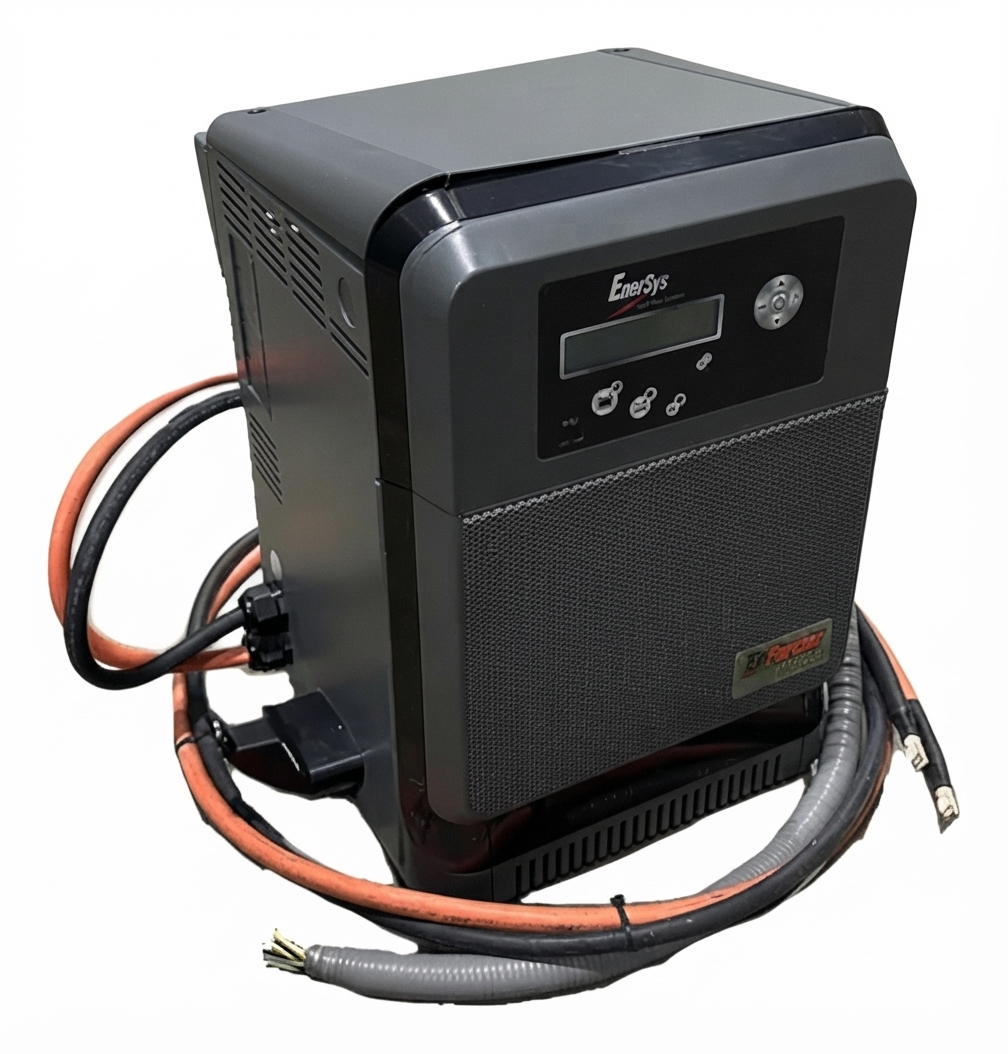
The impaq EI3 Battery Charger is a heavy-duty industrial battery charging solution designed for lead-acid traction batteries used in forklifts and material handling equipment. Built for warehouses, distribution centers, and fleet operations, the impaq EI3 Battery Charger is known for its multi-voltage capability, smart charging control, and dependable performance in demanding daily use. It supports common industrial battery systems, including 24V, 36V, 48V, 60V, 64V, 72V, and 80V configurations depending on the model, making it a flexible choice for mixed fleets and high-duty-cycle applications.
One of the main advantages of the Impaq EI3 Battery Charger is its intelligent charging logic, which helps protect battery life by reducing overcharging risk and improving charge consistency. This makes it especially useful for warehouse managers, forklift operators, and maintenance teams that need reliable uptime and predictable battery maintenance. The charger is typically used with electric forklifts, pallet trucks, and other industrial vehicles that require regular charging throughout the workday. Depending on the exact configuration, the charger may support 3-phase AC input and high-output DC charging for larger battery packs.
Estimated pricing varies widely based on condition, configuration, and whether the unit is new, used, or surplus. A typical price range for an impaq EI3 Battery Charger is about $1,000 to $7,000, while industrial surplus or refurbished units may fall outside that range. Availability is generally strongest through industrial equipment dealers, surplus marketplaces, and authorized service channels. The impaq EI3 Battery Charger is best suited for businesses that need a durable forklift battery charger with strong compatibility, efficient operation, and long-term value.
Troubleshooting impaq EI3 Battery Charger Problems
If the impaq EI3 Battery Charger does not start, first confirm that AC power is present, the input breaker is on, and the battery is connected correctly. If charging stops unexpectedly, check for loose DC cables, damaged connectors, or an incompatible battery voltage setting. A common issue is the charger refusing to begin a cycle when the battery voltage is outside the expected range or when the battery temperature is abnormal.
Common error codes on industrial charger systems usually indicate input power faults, battery connection faults, over-temperature conditions, or communication problems between the charger and battery. If the display shows an input fault, verify phase supply and voltage. If it shows a battery fault, inspect the battery pack, terminals, and cable ends for corrosion or damage. If an over-temperature warning appears, allow the unit to cool, improve ventilation, and make sure the charger is not blocked by dust or stored materials.
Preventive care helps avoid most failures. Keep the charger clean, maintain good airflow around the cabinet, and inspect cables regularly for wear. Use only the recommended lead-acid battery types and avoid charging damaged batteries. Warranty coverage and support options depend on the seller and whether the unit is new or used, so buyers should confirm service terms before purchase. For product support, service routing, and technical assistance, contact EnerSys or the dealer that supplied the charger.
Pros and Cons of the impaq EI3 Battery Charger
Pros
- Supports industrial lead-acid forklift batteries with strong compatibility across multiple voltage ranges.
- Designed for heavy-duty warehouse and fleet operations where uptime matters.
- Smart charging control helps improve battery life and reduce misuse.
- Good value for money when purchased as a refurbished or surplus unit.
- Suitable for businesses that need a dependable replacement for an existing forklift battery charger.
Cons
- Primarily designed for lead-acid batteries, so it is not ideal for lithium battery systems unless specifically configured.
- Industrial 3-phase power requirements may limit use in small facilities.
- Used units can vary in condition and may require inspection or recalibration.
- Replacement parts and service may be less convenient than consumer-grade chargers.
Compared with lower-cost alternatives, the impaq EI3 Battery Charger offers stronger industrial build quality and better fleet-level reliability, but it may cost more upfront than basic universal chargers. For companies that prioritize durability and controlled charging, it is often a better long-term investment.
Customer Reviews of the impaq EI3 Battery Charger
Customer feedback for the impaq EI3 Battery Charger is generally positive, especially among warehouse and maintenance teams that value stable performance. Many users rate it around 4.5 out of 5 stars for reliability, efficient charging, and compatibility with common forklift battery setups. One recurring praise is that the charger is straightforward to integrate into an industrial workflow and performs consistently under daily use.
Common complaints usually involve the weight and size of the unit, the need for proper electrical infrastructure, and occasional confusion around model-specific settings. A typical customer comment is: “It charges our fleet reliably and has been a solid replacement for our older unit.” Another frequent note is: “Great performance, but make sure the voltage and phase match your facility.” Buyers who need a forklift battery charger for a multi-shift operation generally recommend the impaq EI3 Battery Charger for its durability and long-term value.
Faqs
How do I set up impaq EI3 Battery Charger for the first time?
What battery types are compatible with impaq EI3 Battery Charger?
Why is my impaq EI3 Battery Charger not charging the battery?
How long does impaq EI3 Battery Charger usually take to charge a battery?
What do the indicator lights on impaq EI3 Battery Charger mean?
How can I improve charging performance on impaq EI3 Battery Charger?
What should I do if impaq EI3 Battery Charger gets warm during use?
How do I maintain and store impaq EI3 Battery Charger safely?
Tags
Leave a Comment