

Mediana Hearton Automated External Defibrillator A15 User Manual
Content
Introduction
The Mediana HeartOn Automated External Defibrillator A15 is a semi-automatic device designed for both adult and pediatric use, ensuring effective response during cardiac emergencies. This user-friendly AED features pre-connected pads for immediate application and automatically powers on when the lid is opened, providing clear voice prompts to guide users through the process. With its compact design and advanced safety features, it is ideal for public spaces and organizations. The price of the Mediana HeartOn A15 is approximately $1,198.80.
SPECIFICATION
Defibrillation Electric Shock
- Waveform: Biphasic Truncated Exponential (BTE) waveform (impedance compensation)
- Energy
- Adult: 185 to 200J (±5%)
- Pediatric: 45 to 50J (±5%)
- Operating mode Semi-Auto
ECG
- Lead II: (RA, LL)
- Patient impedance: 25 to 175 ohm
- Heart Rate: 20 to 300 per min
- Accuracy: 1 per min
- Detection
- V/F more than 200 μV
- V/T more than 160 per min
- Lead connection: Confirm the connection and emit voice prompt
- Filter: 0.5 to 30 Hz
Indication
Controls
- Standard: Slide button, Shock button, Patient mode switch
Indicators
- Visible: ICON Indicator, Status LCD(Unit status, Battery status, Temperature status), LED (Patient mode switch LED)
- Audible: Audio speaker (Voice prompt), Beep (CPR indication)
Physical
- Dimensions: 240 × 294 × 95 (mm) (W×H×D)
- Weight: Approx. 2.65 kg including the battery excluding pads
Environmental Conditions
Operation
- Temperature: 0 to 43°C (32 to 109.4°F)
- Relative Humidity: 5 to 95% RH (Non-condensing)
- Altitude: 0 to 4,575 m
- Shock
- Acceleration: 100 G (+/- 10%)
- Time: 6 msec
- The number of shocks: 3 times/axis (6 axes (+/- X, Y, Z)
- Vibration
- Frequency: 10Hz to 2000Hz
- Acceleration
- 10 Hz to 100 Hz: 5,0 (m/s²)²/Hz
- 100 Hz to 200 Hz: -7 dB per octave
- 200 Hz to 2000 Hz: 1,0 (m/s²)²/Hz
- Drop height: 1m
- Water and dust resistance: IP54 (IEC60529)
Storage (in shipping container)
- Temperature -20 to 60°C (-4 to 140°F)
- Relative Humidity 5 to 95% RH (Non-condensing)
- Altitude 0 to 12,192 m
Mediana HeartOn Automated External Defibrillator A15 Self Test
- Cycle: Every 24 hours, 1 week, 1 month Power on self test, Battery insertion self test
- Test result: Status LCD displays “O”/ “X”.
Data Backup and Communication
- Standard: SD card, Infrared communication port
Accessories Specifications
Pads
Adult / Pediatric Pads
- Standby life: 2 years from manufacture date
- Electrodes: Disposable pads
- Placement Adult: Anterior-lateral
- Pediatric: Anterior-posterior
- Minimum active gel area: 80 cm2 +/-5%
- Cable length: About 1.8 m
Environmental Conditions
- Temperature
- Operation: 0 to 43°C (32 to 109.4°F)
- Storage: 0 to 43°C (32 to 109.4°F)
- Relative Humidity: 5 to 95% RH (Non-condensing)
Battery
- Type: LiMnO2, Disposable, Long-Life Primary Cell
- Voltage/Capacity: 15V, 4200 mAh
- Shelf Life (in the original packaging): 2 years from manufacture date
- Standby Life (inserted in the AED): 5 years from manufacture date
- Discharge: A minimum of 200 shocks (excepting the CPR period between the defibrillation therapy) or 10 hours of operating time at 20°C
Environmental Conditions
- Temperature
- Operation: 0 to 43°C (32 to 109.4°F)
- Storage: 0 to 43°C (32 to 109.4°F)
- Relative Humidity: 5 to 95% RH (Non-condensing)
SAFETY INFORMATION
General Safety Information
This section contains important safety information related to general use of the HeartOn A15®. Other important safety information appears throughout the manual. The HeartOn A15® will be referred to as the AED throughout this manual.
Before use, carefully read operator’s manual, accessory directions for use, all precautionary information and specifications.
Warning
Warnings are identified by the WARNING symbol shown above. Warnings alert you to potential serious outcomes (death, injury, or adverse events) to the patient or user.
- WARNING: As a user of an AED it is essential that you inform Mediana of any incident where your AED is suspected to have caused a death, serious injury or illness. If you have any suspicions that this is the case inform Mediana directly or through your authorized Mediana dealer.
- WARNING: The AED has the capability to deliver therapeutic electrical shocks. The shock can cause serious harm to either operators or bystanders. Caution must be taken to ensure that neither the operators nor bystanders touch the when a shock is to be delivered.
- WARNING: The AED has not been evaluated or approved for use in hazardous locations as defined in the National Electrical Code (Articles 500-503). In accordance with the IEC/EN 60601-1 Classifications, the AED is not to be used in the presence of flammable substance/air mixtures.
- WARNING: The AED has been designed to work on unresponsive, non-breathing and pulseless* patients. If the patient is conscious or breathing and regain a pulse, do not use the AED to provide treatment. (*checking pulse corresponds to health care provider)
- WARNING: Touching the patient during the analysis phase of treatment can cause interference with the diagnostic process. Avoid contact with the patient and keep the patient as motionless as possible while ECG analysis is being carried out. The AED will instruct you when it is safe to touch the patient.
- WARNING: Always stand clear of patient when delivering treatment. Defibrillation energy delivered to the patient may be conducted through the patient’s body and cause a lethal chock to those touching the patient.
- WARNING: It has been determined that the AED is safe to use in conjunction with oxygen mask delivery systems. However, due to the danger of explosion it is strongly advised that the AED should not be used in the vicinity of explosive gases. This includes flammable anesthetics, concentrated oxygen and gasoline.
- WARNING: The identical pad is used for both Adult and Pediatric. The Adult mode must be used on patients over 8 years old. The Pediatric mode must be used on patients less than 8 years old or less than 25 kg (55lb). Do not use the AED on patient less than 1 year old.
- WARNING: Proper placement of the pads is critical. Strict observance of pad positioning instructions, as indicated on the labeling and in training, is essential. Care must be taken to ensure pads are adhered to the patients' skin properly. Air pockets between the adhesive pad and skin must be eliminated. Failure in pad adhesion may hinder effectiveness of therapy or cause excessive skin burns to the patient if a shock is applied. Reddening of the skin may appear after use, this is normal.
Cautions
Cautions are identified by the CAUTION symbol shown above. Caution statements identify conditions or practices that could result in damage to the equipment or other property.
- CAUTION: The AED may not operate properly if it is operated or stored at conditions outside the ranges stated in this manual.
- CAUTION: The AED was designed to be sturdy and reliable for many different use conditions. Ho wever, handling the AED too roughly can damage it or its accessories and will invalidate the warranty. Check the AED and accessories regularly for damage, according to directions.
- CAUTION: Before delivering a shock, it is important to disconnect the patient from non-defibrillation protected electronic devices, such as blood-flow meters, that may not incorporate defibrillation protection. In addition, make sure the pads are not in cont act with metal objects such as a bed frame or stretcher.
- CAUTION: The pads pouch shall not be opened until immediately prior to use.
- CAUTION: Do not use or place the AED in service until you have read the AED Operator’s manual.
- CAUTION: Do not use or stack the AED with other equipment. If the AED is used or stacked with other equipment, verify proper operation prior to use.
- CAUTION: Handling or transporting the patient during ECG analysis can cause incorrect or delayed diagnosis. If the AED gives a SHOCK ADVISED prompt during such handling or transport, stop the vehicle and keep the patient as still as possible for at least 15 seconds before pressing the Shock button, to allow the AED to reconfirm the rhythm analysis.
- CAUTION: Periodic checks of this AED must be undertaken to ensure among other things that the AED is not damaged in any way.
- CAUTION: The pads are a single use item and must be replaced after each use or if pouch that seals pads has been broken/compromised in any way. If damage is suspected the pads must be replaced immediately.
- CAUTION: Do not use training pads with this AED.
- CAUTION: Carefully observe pacemaker patients. Patient history and physical examination are important in determining the presence of implanted pacemaker. Patient pacemakers may reduce the sensitivity of the AED analysis and errors in detecting shockable rhythms.
- CAUTION: If the pads are attached to the chest firmly, the AED can analyze the exact ECG and prevent the skin burns. But if the pads are overlapped on the patient chest, the pads will not deliver defibrillation energy properly.
DESCRIPTION OF THE AED
Top and Right Panel Components
Figure 1. HeartOn A15: Top and Right Panel Components

Figure 2. HeartOn A15-G4: Top and Right Panel Components

Table 1. Top and Right Panel Components
| Component | Description |
|---|---|
| Cover | Protects the action icon, patient mode switch, and shock button. |
| Status Indicator | Displays the unit status, temperature status, and battery status. |
| Pad Connector | Links the pads. |
| Action Icon | LED indicator flashes red under the relevant action icon. |
| Patient Mode Switch | Allows selection between adult and pediatric patient mode based on the patient type. |
| Shock Button | Flashes when preparation for an electric shock is complete. Push to deliver the shock. |
| Slide Button | Used to open the cover and turn on the device by sliding to the right. |
| SD Card Port | Used to save data and update the AED firmware. |
| Infrared Communication Port | Used for communication with a PC. |
Rear Panel Components
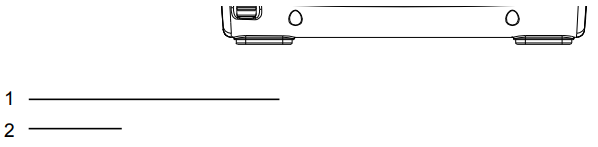
Figure 3. Rear Panel Components
- Handle/Battery
- Battery detachable button
Description
The Mediana Hearton AED A15 is a sleek and compact device that combines modern design with robust functionality. Its ergonomic shape makes it easy to carry and handle, even in high-stress situations. The device features a large LCD display that provides critical information such as the analysis of heart rhythm, shock delivery status, and battery level. The user interface is intuitive, with minimal buttons to reduce confusion during emergencies.
The AED includes pre-connected electrode pads that are easy to apply to the patient's chest. These pads are designed for single use and come in adult and pediatric versions, ensuring that the device can be used across different age groups.
BATTERY OPERATION
WARNING: Test battery regularly, when the voltage of battery is very low. A battery that does not pass its test might shut down expectedly.
WARNING: Do not use a battery that is damaged, leaking, or wet.
WARNING: Do not use or store the battery in a place that may be exposed to high temperature.
CAUTION: To ensure the availability of adequate power during an emergency, keep a fully charged spare battery pack with the AED at all times.
CAUTION: When the voltage of the battery is very low, it is a possibility of not operating.
CAUTION: If the battery shows any signs of damage, leakage or cracking, it must be replaced immediately.
CAUTION: Discarded batteries may explode during incineration. Dispose used batteries properly. Do not dispose of batteries in refuse containers.
CAUTION: Check battery capacity regularly. Replace the new battery if you need.
CAUTION: Except for inspection, if the AED is frequently turned on, turned off or discharged, battery standby life will not last longer than the intended standby life by manufacturer.
Operating the AED on Battery Power
The AED has an installed non-rechargeable battery. The battery status appears on the status indicator when the AED is on battery power. The battery of AED is the handle part and replace the new handle/battery if need arises.
Replacing the battery
- Handle/Battery connector
- AED connector
- Handle/Battery detachable button
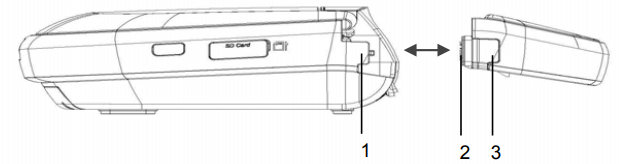
Figure 4. Replacing the handle/battery – Right Panel
- AED connector
- Hook
- Handle/Battery connector
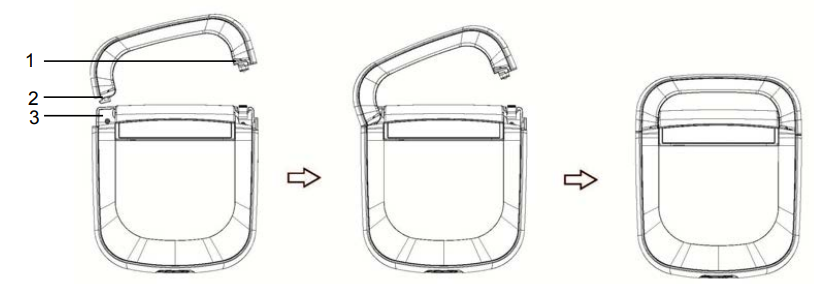
Figure 5. Replacing the handle/battery – Upper Panel
- Pull up while pushing the handle/battery detachable button, then disconnect the handle/battery.
- Tilt up the handle/battery and then keep the handle/battery detachable button and AED connector perpendicular as shown in the Figure 4.
- Connect the AED and handle/battery by using the hook as shown in the first figure of the Figure 5.
- With the handle/battery being connected to the AED by hook, connect handle/battery connector and hook of the AED as shown in the second figure of the Figure 5.
- When the both of the connection parts are fastened properly, the clink sound will be emitted.
The AED uses the non-rechargeable battery. Used battery is changed to new battery. Before turning on the AED with a battery that has been completely discharged, first replace the battery. When the new battery is installed, the AED is automatically turned on and then starts the battery insertion self test. After the battery insertion self test is completed, the AED may then be powered off.
Battery Status Indication
A new battery’s life time is as below;
- Shelf life (in the original packaging): 2 years from manufacture date when stored and maintained according to direction provided in the operator’s manual.
- Standby life (inserted in the AED): 5 years from manufacture date when stored and maintained according to direction provided in the operator’s manual.
- Discharge: A minimum of 200 shocks (excepting the CPR period between the defibrillation therapies) or 10 hours of operating time under the ambient temperature at 20 °C.
Mediana recommends that although the battery is used only one time, used battery is changed to new battery.
Note: After 200 times of shock, the voice prompt “Low battery, replace new battery” will be emitted.
Note: Due to the physical dimensions of the battery compartment, only batteries supplied by Mediana should be used. Using other types of replacement batteries may result in damage to the AED and void the limited warranty.
When operating on batteries, the battery status in the status indicator indicates the battery condition. See Table 4.
Table 4. The battery Status Icon
Battery Status Icons | Battery Status |
 | full charged (≤ 200 shocksor 10 hours of operating time) |
 |
used |
 |
used (≤ 9 shocks) |
 |
discharged (no shock) |
If you hear the voice prompt “low battery, replace new battery” when the AED is turned on or is being used, the AED would be available 9 shocks. If the last bar of the battery indicator is invisible, buzzer would be sounded 2 times and then turned off automatically.
Self Test
Before using the AED, confirm that the AED is working properly and is safe to use as described below.
WARNING: If the self test is not completed successfully, do not try to use the AED.
CAUTION: When power is applied, the AED automatically starts the self test, which tests the AED circuitry and functions. During performing Power On Self Test(POST), confirm that the AED status indicator turns on. If the AED status indicator does not function properly, do not use the AED. Instead, contact qualified service personnel or your local supplier.
Performing Power On Self Test (POST)
- Turn on the AED by pushing the Slide button.
- The AED automatically starts the Power On Self Test (POST).
- If the AED detects an error during POST, the status indicator will display “X”. Contact qualified service personnel or your local supplier for assistance.
- Upon successful completion of the POST, the AED sounds voice prompt “Unit ok” and the status indicator displays “O”.
- Turn off the AED by closing the cover.
Automatic Self Test
The AED includes an automatic self test which is performed on a daily basis. The self test will run automatically and requires no user interaction. If there is an error, the status indicator displays “X”.
The self test will test your AED and ascertain if its basic functions are running.
- Daily self test : MCU and Memory(RAM, ROM) integrity, Battery capacity, ECG algorithm.
- Weekly self test : Waveform delivery circuit low (2J) energy test, ECG circuit test in addition to the daily self test.
- Monthly self test : Waveform delivery circuit high (50J) energy test in addition to the weekly self test.
Note: When the battery is discharged, the status indicator will display “X”. Even if the new battery is replaced, the status indicator still displays “X”. Please contact qualified service personnel or your local supplier.
Note: Self test is not able to determine if the battery and the pads currently inserted in the AED are within their use by date. You must remember to check the use by date on the pads and standby life on the battery regularly.
Battery Insertion Self test
When the battery is installed or replaced, the AED automatically starts the battery insertion self test. After battery insertion self test is completed, the AED sounds voice prompt “Unit ok”, the status indicator displays “O” and power of the AED is automatically turned off. If the battery insertion self test is not completed successfully, the AED sounds voice prompt “Unit fail” and the status indicator displays “X”. If the AED does not function properly, do not use the AED. Instead, contact qualified service personnel or your local supplier.
You can also skip the battery insertion self test, try following procedure
- Closed: skip by opening the cover.
- Opened: skip by pressing the shock button.
After finishing this procedure, the AED will perform the power on self test as when user turns on the AED.
Note: Self test is not able to determine if the battery and the pads currently inserted in the AED are within their use by date. You must remember to check the use by date on the pads and standby life on the battery regularly.
Setup Guide
To set up and operate the Mediana Hearton AED A15, follow these steps:
- Unboxing: Carefully remove the AED from its box and ensure all components are included (device, electrode pads, battery pack).
- Power On: Insert the battery pack into the device. The AED will automatically turn on and perform a self-test.
- Application of Electrode Pads: If an emergency arises, turn on the AED and follow voice prompts to apply the electrode pads to the patient's bare chest.
- Analysis and Shock Delivery: The device will analyze the heart rhythm and advise if a shock is required. Follow voice instructions to deliver the shock if prompted.
Mediana HeartOn Automated External Defibrillator A15MAINTENANCE
WARNING: Improper maintenance which is provided in this manual may damage the AED or cause it to function improperly. Maintain the AED according to directions.
WARNING: Do not let fluids to get into the AED. Avoid spilling any fluids on the AED or its accessories. Spilling fluids into the AED may damage it or cause a fire or electric shock hazard. Do not sterilize the AED or its accessories.
WARNING: Do not immerse any part of the AED in water or any type of fluid. Contact with fluids may seriously damage the AED or cause fire or electric shock hazard.
WARNING: Do not attempt to warm the electrodes with a heat source greater than 35 (95 ).
WARNING: Do not clean the AED with abrasive materials, cleaners or solvents.
CAUTION: Follow local government ordinances and recycling instructions regarding disposal or recycling of AED components, including batteries.
CAUTION: Do not short-circuit the battery, as it may generate heat. To avoid short-circuiting, do not let the battery terminal come in contact with metal objects at any time, especially when transporting.
CAUTION: Do not solder the battery directly. Heat applied during soldering may damage the safety vent in the battery’s positive cover.
CAUTION: Do not deform the battery by applying pressure. Do not throw, hit, drop, fold or impact the battery.
CAUTION: Do not use the battery with other maker’s batteries, different types or models of batteries such as dry batteries, nickel-metal hydride batteries, or Li-ion batteries together, as they might leak electrolyte heat or explode.
CAUTION: Do not mistreat the battery, or use the battery in applications not recommended by Mediana.
CAUTION: Keep the battery out of reach of babies and children to avoid any accidents.
CAUTION: If there are any problems with the battery, immediately put the battery in a safe place and contact qualified service personnel or your local supplier.
CAUTION: Replacing new battery and placing the pads should carry out in environmental conditions described in this manual. If the AED is operated in out-of-range for environmental conditions, the AED can’t be operated properly.
After using the AED, Mediana technical support recommend you perform the following actions:
- Use the HeartOn AED Event Review Software to download information about the therapy performed and store appropriately. (If you do not have the HeartOn AED Event Review Software, please contact your dealer who can arrange for the incident to be downloaded)
- Remove the used the pads from your AED and dispose of in a suitable manner. (For recommended disposal methods please refer to section the recycling and disposal)
- Check the exterior of the AED for cracks or other signs of damage. Contact your distributor or Mediana technical support immediately if any damage is found.
- Check the exterior of the AED for dirt or contamination. If necessary, clean the AED with approved cleaning products.
- Check supplies, accessories and spares for damage or expiration. Replace immediately if any damage or expiration is found. Contact your local Mediana approved dealer.
- Install the new pads or battery. Before installing the new pads check that its use by date has not been exceeded.
- After installation of the new battery. Check the status Indicator. If the status Indicator is not displaying “O” refer to the troubleshooting section of this manual. If the problem persists, contact Mediana or your local approved dealer for technical support.
- Turn on the AED and verify that the AED operates in the correct manner i.e. voice prompt “Unit OK” can be heard. Turn off the AED.
- Contacting Mediana after use. At Mediana we like to hear from our customers whenever they have any occasion to use any of our products, even if therapy is not delivered as part of the incident. This information is vital to the continued development and constant improvement we strive for in the treatment of sudden.
Periodic Safety Checks
It is recommended that the following checks be performed every year.
- Inspect the equipment for mechanical and functional damage.
- Inspect the external safety labels for legibility.
Cleaning
To clean the AED, wipe the AED with a soft cloth that has been dampened by one of the following:
- Soapy water.
- Isopropyl alcohol (70% solution).
For cables and pads, follow cleaning instructions in the directions for use shipped with those components.
Avoid spilling liquid on the AED, especially in connector areas. If liquid is accidentally spilled on the AED, clean and dry thoroughly before reuse. If in doubt about AED safety, refer the unit to qualified service personnel or your local supplier for checking.
Battery Maintenance
The new battery lifetime in use can be at least 10 hours monitoring or 200 shocks (excepting the CPR period between the defibrillation therapy) or a combination of both. The battery in the standby mode (inserted into the AED) has standby life (5 years from manufacture date). If the battery status is flashing one bar, you may need to replace the fresh battery. If the battery is not inserted into the AED, the battery has a shelf life. (2 years from manufacture date)
For diagnosis of the reason for status indicator display “X”, please refer to the troubleshooting section.
Pads Maintenance
Replacement of the pads must be carried out if:
- The use by date of the pads has been exceeded
- When the pads have been used (it is a single use item and must be replaced with new pads.)
- The package of new pads has been previously damaged
- The pads have been vent
Replacing Pads
- Take the replacement pads from its protective bag.
- Disconnect the pad connect from the AED.
- Push the pads firmly to ensure it is fully inserted.
- Turn on the AED.
- Check the status indicator. If the pads have been inserted correctly, the status Indicator displays “O” after approximately 6 seconds.
- If necessary inform relevant safety officer or person responsible for maintenance of the AED.
- Update the relevant information to show the date that the replacement of pads and battery was placed into service.
- Dispose of the old pads.
The AED Maintenance
Mediana recommends users perform regular maintenance checks. A suggested maintenance check would be.
- Check the status Indicator. If the status Indicator displays “X”, a problem has been detected. Refer to the troubleshooting section of this manual.
Check the use by date of the pads. If the pads have exceeded its use by date, remove it and replace with the pads. Contact qualified service personnel or your local supplier for replacements.
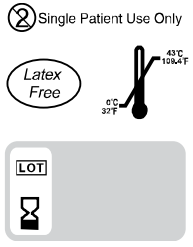
- Check the AED and accessories for damage or use by date. Replace any accessories found to be damaged or that have exceeded their use by date.
- Check the exterior of the AED for cracks or other signs of damage. Contact qualified service personnel or your local supplier if any damage is found.
- Check that trained user is aware of the AED location and that it is easily accessible for those Responders at all times.
- Ensure all trained user have up to date training for both CPR and AED use. For recommended retraining intervals please consult the organization or body used to provide the Training.
Troubleshooting
WARNING: If you are uncertain about the accuracy of any measurement, check the patient’s vital signs by alternate means; then make sure the AED is functioning correctly.
WARNING: To reduce the risk of electrical shock, do not attempt to remove the cover under any circumstances. There are no operator serviceable components and only a qualified technician should service the AED.
General
If the AED detects an error, it can display the “X” on the status indicator. Check the appropriate section or write down the description and contact qualified service personnel or your local supplier. Before calling to qualified service personnel or your local supplier, make sure it meets environmental conditions provided in the manual as temperature, humidity, altitude and so on.
Corrective Action
Check used by date the pads. Change the pads if use by date has been exceeded. Check shelf life or standby life of the battery. Change the battery if the shelf life or standby life has been exceeded. Following is a list of possible errors and suggestions for corrective action.
If the status indicator is still not displaying “X” or a warning message is heard when the AED is turned on or if for any reason, you have suspicions that your AED is not working correctly contact qualified service personnel or your local supplier or Mediana directly for support. info@mediana.co.kr
- There is no response to the opening the cover of the AED.
- A CPU module may be malfunctioned. Notify qualified service personnel or your local supplier to check and replace the CPU module.
- The battery may be missing or discharged. If the battery is missing, insert the battery (See Battery Operation section). If the battery is discharged, change the battery. (See Maintenance section)
- The beep tones do not sound during the operation.
- Do not use the AED; contact qualified service personnel or your local supplier.
- The beep tones sound but voice does not function properly.
- Reconnect the wire or replace the speaker.
- The voice prompt “Plug in pads. Insert connector firmly”.
- Reconnect the pad connector with pad socket firmly or replace the pad.
- The action icon does not flash.
- Do not use the AED, contact qualified service personnel or your local supplier.
- The voice prompt is unclearly heard.
- Do not use the AED, contact qualified service personnel or your local supplier.
- The battery status does not indicate 3 bar despite of replacing new battery.
- If the battery status still not displayed 3 bar despite of replacing new battery, do not use the AED and contact qualified service personnel or your local supplier.
Pros & Cons
Pros
- User-Friendly Design: Easy to use even for those without medical training.
- Advanced Algorithm: Accurate analysis of heart rhythm.
- Durable Construction: IP67 rating for dust and water resistance.
- Long Battery Life: Up to 4 years of standby time.
Cons
- Cost: Higher priced compared to some other models on the market.
- Weight: Although compact, it may still be considered heavy for some users.
- Maintenance Requirements: Regular checks are necessary to ensure the device remains operational.
Customer Reviews
Customers have praised the Mediana Hearton AED A15 for its ease of use and robust design. Many reviewers have noted that the clear voice instructions and visual prompts make it less intimidating during emergency situations. However, some have mentioned that the device could be lighter and more affordable.
A common complaint is the cost, with some users finding it slightly expensive compared to other models available in the market.
Faqs
What is the primary function of the Mediana Hearton Automated External Defibrillator A15?
How do I know if the AED needs a battery replacement?
Can the Mediana Hearton AED A15 be used on children?
How often should I perform a self-test on the AED A15?
What does the IP67 rating mean for the Mediana Hearton?
How long does it take to deliver a shock after analyzing heart rhythm?
Can I use the Mediana Hearton AED in extreme temperatures?
What kind of maintenance does the Mediana require?
Is training required to use the Mediana External Defibrillator A15?
Where can I purchase replacement parts for the Mediana Hearton?
Tags
Leave a Comment