
Installtion: Midea Window Room Air Conditioner User Manual
Content
Midea Window Room Air Conditioner: Complete Product Manual and Buying Guide
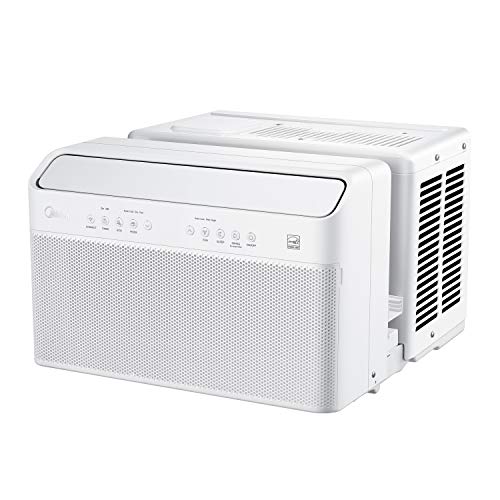
The Midea Window Room Air Conditioner is a popular choice for homeowners and renters who want efficient cooling without the complexity of a central HVAC system. Designed for bedrooms, apartments, offices, and small living spaces, it combines compact installation, practical temperature control, and energy-conscious operation in one easy-to-use window unit. Depending on the model, it may include cooling, dehumidifying, ventilating, and even heating functions, making it a versatile all-season solution for everyday comfort.
One of the biggest advantages of a Midea window AC is its broad lineup. Entry-level 5,000 BTU units are well suited for rooms around 100 to 150 sq. ft., while 8,000 BTU and 10,000 BTU models can handle larger bedrooms or medium-size spaces. Higher-capacity 12,000 BTU units are built for rooms up to about 550 sq. ft. Many models also feature smart control, quiet operation, washable filters, and inverter technology for better efficiency and more stable cooling. That makes the Midea Window Room Air Conditioner appealing to users who want a dependable window air conditioner with modern features at a practical price.
Estimated pricing typically ranges from about $150 to $500+ depending on BTU capacity, smart features, and whether the model includes heating. Availability is strong through major online retailers and Midea’s own store, with the most common options centered around 5,000, 8,000, 10,000, and 12,000 BTU configurations. For buyers comparing portable ACs, split systems, and other window air conditioners, Midea stands out for offering a strong balance of performance, compact design, and value for money.
Key Specifications of the Midea Window Room Air Conditioner
- Cooling capacity: Available in 5,000 BTU, 8,000 BTU, 10,000 BTU, and 12,000 BTU versions for different room sizes.
- Room coverage: Approximately 100 to 150 sq. ft. for 5,000 BTU units, 350 sq. ft. for 8,000 BTU units, 400 to 450 sq. ft. for 10,000 BTU units, and up to 550 sq. ft. for 12,000 BTU models.
- Operating modes: Cooling, dehumidify, ventilate, and on select models, heat for multi-season use.
- Smart features: Some versions include smart control for app-based operation and voice compatibility.
- Noise profile: Low-noise designs are available, especially in inverter and U-shaped models.
- Filter: Reusable and washable filter on many models for easier maintenance.
- Dimensions: Common compact footprint around 19 to 22 inches wide and 13 to 15 inches high, depending on model.
- Weight: Typically around 35 to 58 lbs, making installation manageable for most standard windows.
Compared with many basic window air conditioners, Midea models often offer better feature depth, especially in smart window AC and inverter categories. Compared with portable ACs, a window unit usually cools more efficiently and frees up floor space. Compared with premium brands, Midea tends to deliver competitive specifications at a lower price point, making it attractive for budget-conscious buyers seeking solid performance.
Pros and Cons of the Midea Window Room Air Conditioner
Pros
- Good value for money: Midea window units often include features like smart control, dehumidification, and multiple fan speeds at a lower cost than many premium competitors.
- Wide size selection: With models from 5,000 BTU to 12,000 BTU, it is easy to match the unit to the room size.
- Energy-conscious operation: Inverter and smart models help maintain steadier temperatures and can reduce power waste.
- Quiet operation on select models: U-shaped and inverter designs are especially useful for bedrooms and home offices.
- Useful multi-mode control: Cooling, fan, and dehumidification options improve comfort in humid climates.
Cons
- Installation can still be bulky: Even compact models require proper window mounting and support.
- Higher-capacity models cost more: A 12,000 BTU smart inverter unit is more expensive than basic mechanical models.
- Best fit is room-specific: Oversizing or undersizing can reduce efficiency and comfort.
- Not as flexible as portable ACs: A window unit is less easy to move from room to room once installed.
For buyers comparing alternatives, the Midea Window Room Air Conditioner is stronger than many budget window ACs in features and comfort, though some competing brands may offer simpler setup or more aggressive pricing on bare-bones models. Overall, it is a smart buy for users who want reliable performance without overspending.
Customer Reviews and User Feedback
Customer feedback for the Midea Window Room Air Conditioner is generally positive, with many users praising its cooling performance, low noise levels, and feature-rich design. Average ratings commonly land around 4 to 4.5 stars for popular models, especially among buyers who install the unit in bedrooms or medium-size living spaces.
- Typical praise: “Cools the room quickly and runs quieter than my old window AC.”
- Typical praise: “The smart controls make it easy to adjust from bed or when I’m away.”
- Common complaint: “Installation instructions could be clearer for first-time buyers.”
- Common complaint: “The unit is heavier than expected, so setup takes two people.”
- Purchase recommendation: Best for shoppers who want efficient cooling, a washable filter, and modern features in a window air conditioner.
Users most often recommend Midea for apartments, bedrooms, and offices where quiet performance and dependable cooling matter most. Buyers looking for the simplest low-cost unit may prefer a basic mechanical model, while those wanting stronger comfort and smarter controls usually find the Midea Window Room Air Conditioner worth the upgrade.
Faqs
How do I set up a midea Window Room Air Conditioner for the first time?
What window type and room size work best with a midea Window Room Air Conditioner?
Why is my midea Window Room Air Conditioner blowing air but not cooling effectively?
How can I reduce noise from a midea Window Room Air Conditioner in my bedroom?
What features should I look for in a midea Window Room Air Conditioner for energy savings?
How often should I clean and maintain a midea Window Room Air Conditioner?
Can a midea Window Room Air Conditioner be used safely with an extension cord?
What should I do if my midea Window Room Air Conditioner is leaking water indoors?
More midea manuals
- Setup: Midea MAW08V1QWT Window Type Air Conditioner User Manual
- Midea FP-78SCM015LDTL-B1 Coffee Maker User Manual
- Midea MAD20S1QWT Dehumidifier User Manual
- Setup: Midea MSW-6008P Twin Tub Washing Machine User Manual
- Midea MF200W70B-E Washing Machine User Manual
- Midea MY-CS5039P Electric Pressure Cooker User Manual
Leave a Comment