
Setup & Features: Milwaukee M18TM Fuel™ 7-1/4" Circular Saw User Manual
Content
Milwaukee M18 FUEL 7-1/4" Circular Saw Manual
Introduction
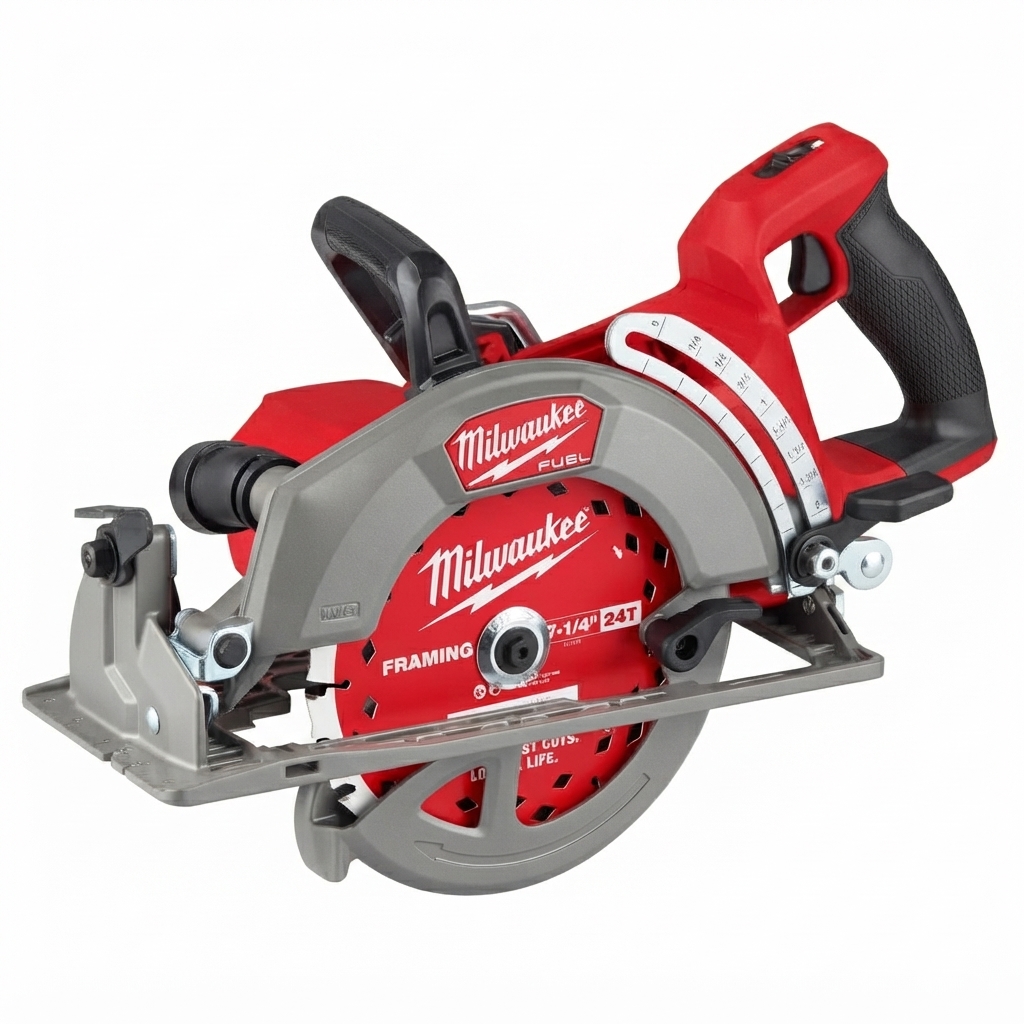
The Milwaukee M18 FUEL 7-1/4" Circular Saw is a cordless framing saw built for contractors, remodelers, and serious DIY users who need corded-level power in a battery-powered platform. Designed around Milwaukee’s brushless motor technology, this saw delivers fast cutting performance, strong torque, and jobsite durability in a compact, portable package. It is a strong choice for ripping sheet goods, cutting dimensional lumber, framing walls, and handling everyday site work where mobility matters.
One of the biggest advantages of the Milwaukee M18 FUEL 7-1/4" Circular Saw is its ability to combine high output with practical features like an electric brake, integrated dust port, magnesium shoe, and easy bevel and depth adjustments. These features improve safety, accuracy, and comfort during repeated cutting tasks. The tool is especially appealing to professionals already invested in the M18 battery ecosystem, since it runs on Milwaukee’s 18V platform and is typically sold as a tool-only option.
Estimated pricing for the bare tool generally falls in the mid-range cordless saw category, often around the $250 to $350 range depending on the retailer, bundle, and battery promotion. It is widely available through major tool dealers, home improvement stores, and online marketplaces. If you need a reliable cordless circular saw with pro-grade performance and broad jobsite versatility, this model remains a popular option.
Specifications
- Blade size: 7-1/4 inches for standard framing and construction cuts
- Motor type: POWERSTATE brushless motor for efficient high-output performance
- Platform: M18 18V cordless battery system
- No-load speed: Up to 6,000 RPM for fast cutting through lumber and plywood
- Maximum cut depth at 90°: 2-5/8 inches, allowing 3x material cuts in one pass
- Maximum cut depth at 45°: About 2-1/16 inches for bevel applications
- Bevel capacity: Up to 57 degrees for angled cuts
- Bevel detents: Common stops at 22.5° and 45° for repeatable setup
- Depth detents: Quick stops for 1/2 inch, 3/4 inch, and 1-1/2 inch settings
- Safety feature: Electric brake stops the blade quickly after trigger release
- Durability: Magnesium shoe and guards help reduce weight and improve toughness
- Dust control: Integrated dust port with vac adaptor for cleaner cuts
Compared with many standard cordless circular saws, this model offers a better balance of power, build quality, and ergonomic refinements. It is often positioned above entry-level brushless saws and competes directly with other pro-grade 7-1/4" cordless framing saws.
Setup Guide
Before first use, inspect the saw, blade, guard, and shoe for shipping damage or loose hardware. Install a fully charged M18 battery, then confirm the blade is seated correctly and tightened according to the tool instructions. If the saw is shipped without a blade, install a 7-1/4" carbide-tipped blade rated for the material you plan to cut. Always disconnect the battery before changing blades or making adjustments.
Set the cutting depth by loosening the depth lever and aligning the blade so it extends slightly below the workpiece. For most cuts, the blade should project just enough to clear the material. Use the bevel adjustment for angled cuts, and lock it firmly at the desired stop when using common settings like 22.5° or 45°. If you are using a dust extractor, attach the vac adaptor to the dust port for better visibility and less cleanup.
There is no wireless pairing or app connectivity on the standard model, so setup is purely mechanical and battery-based. If the saw will not start, check that the battery is fully seated, the trigger lock is disengaged, and the blade is free to rotate. Wear eye protection, hearing protection, and gloves when appropriate. Keep hands clear of the blade path, and never force the saw through a cut.
Troubleshooting
- Saw will not start: Reseat the battery, charge the pack, and confirm the trigger lock is released.
- Blade binds during cutting: Reduce feed pressure, verify correct depth setting, and check for warped material.
- Rough or burning cuts: Replace a dull blade, use the correct blade type, and clean resin buildup.
- Guard sticks or does not retract smoothly: Remove dust buildup and inspect the guard for damage.
- Weak runtime: Use a higher-capacity M18 battery pack and avoid overloading the motor.
- Excess vibration: Confirm the blade is tight, straight, and appropriate for the material.
Common cordless saw error messages are not typically displayed on this model, so most issues are resolved through battery, blade, or mechanical inspection. Preventive care includes cleaning the shoe and guard, keeping the blade sharp, and storing batteries in a cool, dry place.
Milwaukee tools generally include a limited warranty, and support is available through Milwaukee Tool customer service, authorized service centers, and the retailer where the saw was purchased. For help, check the official Milwaukee Tool support channels or your local dealer for repair and warranty processing.
Pros & Cons
Pros
- Strong cutting power: The brushless motor delivers performance close to a corded 15A saw for framing and rip cuts.
- Good cut capacity: The 2-5/8 inch depth handles 3x lumber in one pass.
- Durable build: Magnesium shoe and guards improve strength without making the tool feel bulky.
- Helpful safety features: The electric brake improves control and confidence on the jobsite.
- Excellent for M18 users: Great value if you already own Milwaukee batteries and chargers.
Cons
- Tool-only cost: Battery and charger are often sold separately, which raises the total purchase price.
- Heavier than compact saws: It is built for power, so it is not the lightest option for overhead work.
- No smart connectivity on standard model: Users who want app-based tracking must look at other versions.
- Premium pricing: It costs more than entry-level cordless circular saws, though the performance justifies it for many professionals.
For buyers comparing alternatives, this saw is best for users who want a pro-grade cordless framing saw rather than a lightweight homeowner model. It offers strong value for money when used regularly on construction or renovation projects.
Customer Reviews
Overall user feedback for the Milwaukee M18 FUEL 7-1/4" Circular Saw is typically very positive, with many buyers rating it around 4.5 out of 5 stars. Users frequently praise its power, cut speed, and cordless convenience, especially when working on framing, decking, and plywood breakdown. A common compliment is that it feels close to a corded saw while eliminating extension cords on the jobsite.
Typical testimonials mention smooth starts, accurate bevel adjustments, and strong battery performance with larger-capacity packs. Common complaints usually focus on the bare-tool pricing, added cost of batteries, and the fact that it is not the lightest saw available. Some users also note that dust collection is helpful but not perfect without a proper vacuum setup.
For most professionals and serious DIY users, this model is an easy recommendation if cordless portability matters more than the lowest upfront price. It is especially attractive for customers already invested in Milwaukee’s M18 battery ecosystem.
Faqs
How do I set up the Milwaukee M18 Fuel 7-1/4-inch Circular Saw for the first time?
What battery and charger compatibility does the Milwaukee M18 Fuel 7-1/4-inch Circular Saw require?
Why is my Milwaukee M18 Fuel 7-1/4-inch Circular Saw cutting slowly or struggling in wood?
How do I adjust the blade depth and bevel on the Milwaukee M18 Fuel 7-1/4-inch Circular Saw?
What should I do if the Milwaukee M18 Fuel 7-1/4-inch Circular Saw blade binds or stalls during a cut?
Can the Milwaukee M18 Fuel 7-1/4-inch Circular Saw handle framing, plywood, and bevel cuts?
How do I maintain the Milwaukee M18 Fuel 7-1/4-inch Circular Saw for long-term reliability?
What safety tips should I follow when using the Milwaukee M18 Fuel 7-1/4-inch Circular Saw on the jobsite?
More milwaukee manuals
- Milwaukee 49162748 Easy Load Trimmer Head User Manual
- Setup & Features: Milwaukee 28 Volt Sawzall Reciprocating Saw User Manual
- Milwaukee 6088-30 Heavy-Duty Grinder User Manual
- Setup & Features: Milwaukee M18 Fuel Compact Impact Tools Owner Manual
- Milwaukee M-12 Compact Inflator 2475-20 User Manual
- Setup & Features: Milwaukee M18 Fuel™ 1/4" Hex Impact Driver Owner Manual
Leave a Comment