
Pac PVG Industrial Vacuum Sealer User Manual
Content
pac PVG Industrial Vacuum Sealer: Complete Product Manual and Buying Guide
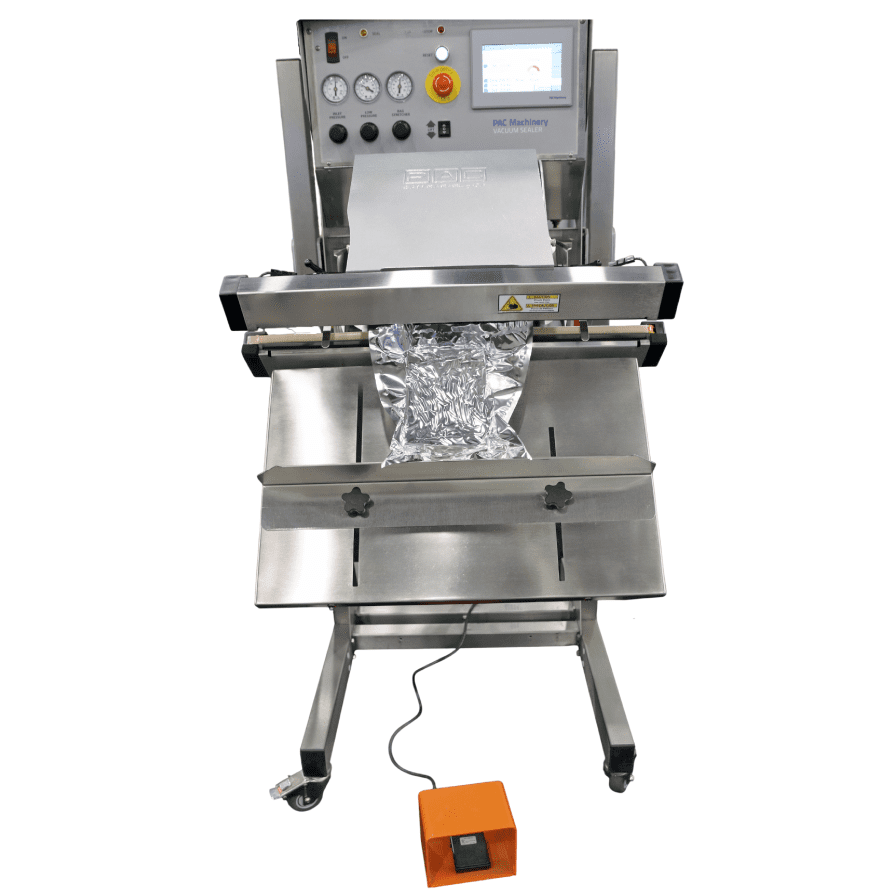
The pac PVG Industrial Vacuum Sealer is a rugged industrial vacuum impulse sealer built for demanding production environments that need consistent sealing, gas flush packaging, and dependable package integrity. It is widely used for modified atmosphere packaging, industrial parts, aerospace components, defense supplies, medical products, and other items that benefit from oxygen reduction and long-term protection. Designed as an industrial workhorse, the PVG model combines quality, durability, and economy, making it a practical choice for operations that need reliable throughput without moving into fully automated high-end systems.
One of the biggest advantages of the pac PVG Industrial Vacuum Sealer is its standard gas flush capability, which helps preserve product freshness and extend shelf life by replacing oxygen inside the bag. It also includes bi-active seal bars for top and bottom heat during sealing, along with independent vacuum, gas, seal, and cool timers for precise control. These features make it easier to achieve repeatable seals across different bag sizes and product types. Depending on configuration, the machine can be customized with options such as a venturi vacuum system, multi-stage vacuum, bag stretcher, vacuum sensor, and temperature controller.
Typical buyers include manufacturers, contract packagers, laboratories, and specialty packaging facilities that need a dependable vacuum packaging solution. The estimated price range for the PVG platform varies by configuration, seal length, and options, but industrial models in this class commonly start in the mid-thousands and can rise significantly with custom features. Availability is generally through PAC Machinery and authorized distributors, with refurbished and replacement-part markets also available for some components.
Specifications for the pac PVG Industrial Vacuum Sealer
- Machine type: Industrial vacuum impulse sealer with gas flush capability
- Sealing system: Bi-active seal bars with top and bottom heat for strong, uniform seals
- Controls: Independent vacuum, gas, seal, and cool timers for process tuning
- Seal width: Commonly listed at 5/16 inch for the standard PVG configuration
- Seal length options: Approximately 12 to 36 inches, with twin-head configurations available up to 60 inches
- Vacuum capability: Standard vacuum packaging with optional vacuum sensor and multi-stage control
- Gas flush: Standard modified atmosphere packaging support for oxygen reduction
- Optional upgrades: Venturi vacuum system, bag stretcher, SureTemp temperature controller, and multi-stage cycles
- Typical airflow setup: Dual vacuum/gas flush nozzles on some configurations for one or two bags per cycle
- Performance benchmark: Built for repeatable industrial sealing rather than tabletop consumer use
Compared with compact chamber vacuum sealers, the pac PVG Industrial Vacuum Sealer is better suited for larger bags, specialized industrial packaging, and custom production workflows. Compared with newer fully automated systems, it offers a more straightforward, lower-complexity platform that still delivers strong seal reliability and flexible gas-flush performance.
Troubleshooting the pac PVG Industrial Vacuum Sealer
Common problems usually involve weak seals, incomplete vacuum, inconsistent gas flush, or jaw closure issues. If the seal is weak, check bag compatibility, seal temperature, seal time, and whether the seal bars are clean and undamaged. If vacuum performance is low, inspect the nozzle area, vacuum lines, filters, and bag placement. If the bag shifts during sealing, a bag stretcher or better product positioning may solve the issue.
- Problem: Seal is not holding properly. Fix: Clean seal surfaces, increase seal time slightly, and verify correct bag material.
- Problem: Vacuum cycle is slow. Fix: Check for clogged filters, leaks, or worn seals.
- Problem: Gas flush seems inconsistent. Fix: Confirm gas supply pressure and inspect the gas line for restrictions.
- Problem: Jaw will not close or releases too early. Fix: Look for obstructions and verify low-pressure safety settings.
- Problem: Overheated or scorched seal. Fix: Reduce seal time or temperature and allow proper cool time.
Most industrial models like the PVG rely on timer-based operation rather than consumer-style error codes, so troubleshooting is usually symptom-based. Preventive maintenance includes daily cleaning, regular inspection of seal bars and nozzles, air-pressure checks, and prompt replacement of worn consumables. For warranty service, parts, or technical support, contact PAC Machinery or your authorized distributor directly using the support information on the manufacturer’s official product page and documentation package.
Pros and Cons of the pac PVG Industrial Vacuum Sealer
Pros
- Strong industrial build quality for continuous packaging environments
- Standard gas flush supports modified atmosphere packaging and product protection
- Bi-active sealing improves seal consistency and reliability
- Independent timers make setup easier for different bag types and materials
- Customizable options help match the machine to specific applications
- Good value for industrial users who need durability without excessive automation
Cons
- Higher entry cost than basic tabletop vacuum sealers
- Requires more setup knowledge than consumer units
- Industrial footprint may be too large for small workshops
- Best performance depends on proper air supply, calibration, and maintenance
- Some buyers may prefer newer touchscreen-based systems for faster operator training
For businesses comparing alternatives, the PVG is a strong middle ground between simple vacuum sealers and fully automated packaging systems. It is especially attractive for users who want dependable sealing performance and a lower-complexity industrial platform.
Customer Reviews of the pac PVG Industrial Vacuum Sealer
Customer feedback for the pac PVG Industrial Vacuum Sealer is generally positive, with many users praising its rugged construction, reliable sealing, and ability to handle specialized packaging jobs. Common praise includes strong vacuum performance, dependable gas flush results, and the flexibility of customizable options. Many operators rate it highly for long-term industrial use, often describing it as a workhorse machine that performs consistently under heavy demand.
Common complaints usually focus on the learning curve, the need for periodic maintenance, and the higher price compared with smaller sealers. Users also note that optimal performance depends on correct setup and the right bag material. Overall ratings from industrial buyers are typically in the 4 to 5 star range when the machine is matched to the right application. It is a strong purchase recommendation for manufacturers, packers, and facilities that need professional-grade vacuum sealing rather than occasional household use.
Faqs
How do I set up pac PVG Industrial Vacuum Sealer for the first time?
Why is my pac PVG Industrial Vacuum Sealer not pulling a full vacuum?
What bag types work best with pac PVG Industrial Vacuum Sealer?
How can I improve seal strength on pac PVG Industrial Vacuum Sealer?
What should I do if pac PVG Industrial Vacuum Sealer is overheating during use?
How often should I clean and maintain pac PVG Industrial Vacuum Sealer?
Can pac PVG Industrial Vacuum Sealer handle liquid-rich or moist products?
How do I troubleshoot inconsistent results with pac PVG Industrial Vacuum Sealer?
More pac manuals
Leave a Comment