
Setup: Quest Dual 165 Overhead Dehumidifiers User Manual
Content
Quest Dual 165 Overhead Dehumidifiers: Product Manual and Buying Guide
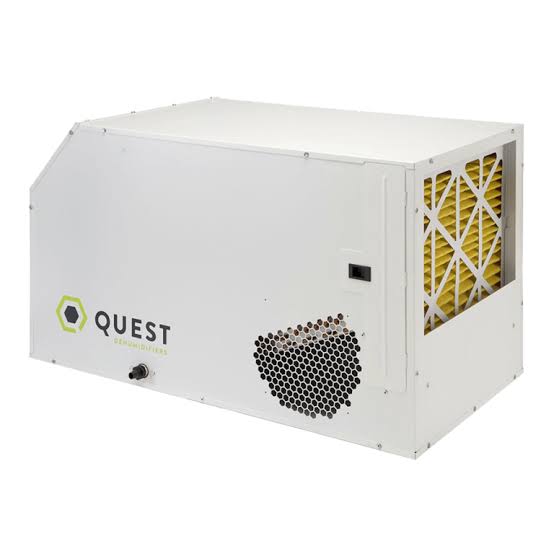
The quest Dual 165 Overhead Dehumidifiers are designed for high-performance moisture control in commercial and controlled-environment spaces. Built for flexibility, this dehumidifier can be mounted overhead or connected to ductwork, making it a practical solution for grow rooms, warehouses, labs, and other humidity-sensitive areas. With a capacity of 165 pints per day and high efficiency, it delivers strong moisture removal while keeping operating costs low.
One of the biggest advantages of the quest Dual 165 Overhead Dehumidifiers is its energy-conscious design. It operates on 220–240V power and is known for a low current draw, which helps reduce electrical load in demanding environments. The unit also supports onboard controls with a low-voltage terminal block, making it easier to integrate with external control systems. Other standout features include a MERV 11 filter, a wide operating temperature range, and a 5-year warranty that adds long-term value.
This model is best suited for commercial growers, facility managers, and anyone needing reliable whole-space humidity management. It is especially useful where floor space is limited and overhead installation is preferred. Pricing typically falls in the mid-to-high commercial equipment range, often around the low-to-mid $2,000s to low $3,000s depending on the seller, configuration, and availability. Because this model has been discontinued in some channels, stock may be limited and prices may vary significantly by retailer.
Troubleshooting Quest Dual 165 Overhead Dehumidifiers
If the unit is not removing moisture effectively, first check airflow, filter cleanliness, and room temperature. A clogged MERV 11 filter, blocked intake, or operating conditions outside the recommended range can reduce performance. Make sure the drain line is clear and properly sloped, since drainage issues are a common cause of water backup or shutdowns.
Common issues may include unit not starting, intermittent cycling, or error messages on the onboard control. If the dehumidifier does not power on, verify supply voltage, wiring connections, and whether a buck/boost transformer is required for non-standard electrical service. If the display shows an error code, consult the product manual for the exact code definition, as codes typically relate to sensor faults, defrost issues, or communication problems. For recurring faults, reset power after correcting the cause and inspect the control wiring.
Preventive maintenance is the best way to avoid downtime. Clean or replace filters regularly, inspect hanging brackets, keep coils clear of dust, and confirm the condensate line drains freely. The unit is backed by a 5-year warranty, and support is typically available through the manufacturer or authorized distributor. For help, contact Quest Climate customer support or the retailer from which the unit was purchased, and have the model number, serial number, and purchase date ready.
Pros and Cons of Quest Dual 165 Overhead Dehumidifiers
Pros
- High moisture removal at 165 pints per day, making it suitable for large commercial spaces.
- Overhead or ducted installation options save valuable floor space and improve layout flexibility.
- Energy-efficient operation helps lower utility costs over time, especially in continuous-use environments.
- Low-voltage terminal block supports external control integration for advanced climate setups.
- 5-year warranty adds confidence for long-term investment and heavy-duty use.
Cons
- Higher upfront cost than smaller residential dehumidifiers, so it may not suit casual users.
- Installation can be more complex if overhead mounting or ducting is required.
- Availability may be limited because the model is discontinued in some markets.
- Some sellers list slightly different efficiency or amperage figures, which can confuse buyers comparing alternatives.
- Not ideal for small rooms where a compact portable dehumidifier would be more cost-effective.
For buyers comparing commercial dehumidifier options, the quest Dual 165 Overhead Dehumidifiers offer strong value for growing facilities and large enclosed environments. Alternatives may be cheaper upfront, but they often sacrifice efficiency, installation flexibility, or control integration.
Customer Reviews for Quest Dual 165 Overhead Dehumidifiers
Customer feedback for the quest Dual 165 Overhead Dehumidifiers is generally positive, with many users praising its strong moisture removal, compact overhead design, and efficient power use. Common star ratings from retailers and user discussions tend to fall around 4 to 5 stars for performance-focused buyers.
Typical praise includes reliable humidity control in large grow rooms, quiet operation relative to capacity, and space-saving installation. A frequent compliment is that the unit performs well in demanding environments where smaller dehumidifiers struggle. Common complaints usually focus on price, shipping weight, and the complexity of installation compared with plug-in residential models.
Many users recommend this model for serious commercial use rather than occasional household needs. If you need a powerful overhead dehumidifier with long-term value, this is a strong choice. If your space is small or your budget is limited, a simpler portable dehumidifier may be a better fit.
Frequently Asked Questions About Quest Dual 165 Overhead Dehumidifiers
What is the Quest Dual 165 best used for? It is best for commercial grow rooms, warehouses, and other large spaces that need continuous humidity control.
Can it be installed overhead? Yes, the design supports overhead mounting and ducted configurations for flexible placement.
Does it come with a warranty? Yes, it is backed by a 5-year warranty.
Is it energy efficient? Yes, it is designed for high moisture removal with low operating cost, making it efficient for its class.
Final Verdict
The quest Dual 165 Overhead Dehumidifiers are a solid choice for users who need powerful, efficient humidity control in a space-saving design. With commercial-grade performance, flexible installation, and a strong warranty, it stands out as a practical solution for demanding environments. For buyers who want reliable climate control and are comfortable with the higher upfront investment, this model remains a compelling option.
Faqs
How do I set up quest Dual 165 Overhead Dehumidifiers for the first time in a basement or utility room?
Why is my quest Dual 165 Overhead Dehumidifiers not removing enough moisture, and how can I improve performance?
What should I check if quest Dual 165 Overhead Dehumidifiers is running but water is not draining?
Can quest Dual 165 Overhead Dehumidifiers be installed overhead, and what clearance is needed for safe operation?
What room size and humidity conditions are best for quest Dual 165 Overhead Dehumidifiers?
How often should I clean and maintain quest Dual 165 Overhead Dehumidifiers to keep it working properly?
What causes quest Dual 165 Overhead Dehumidifiers to make unusual noise or vibration during operation?
How can I optimize quest Dual 165 Overhead Dehumidifiers for lower energy use and more consistent humidity control?
Tags
Leave a Comment