
Setup & Features: Santa Fe Ultra155/205 Dehumidifiers User Manual
Content
santa fe Ultra155/205 Dehumidifiers: Complete Product Manual and Buyer’s Guide
Introduction
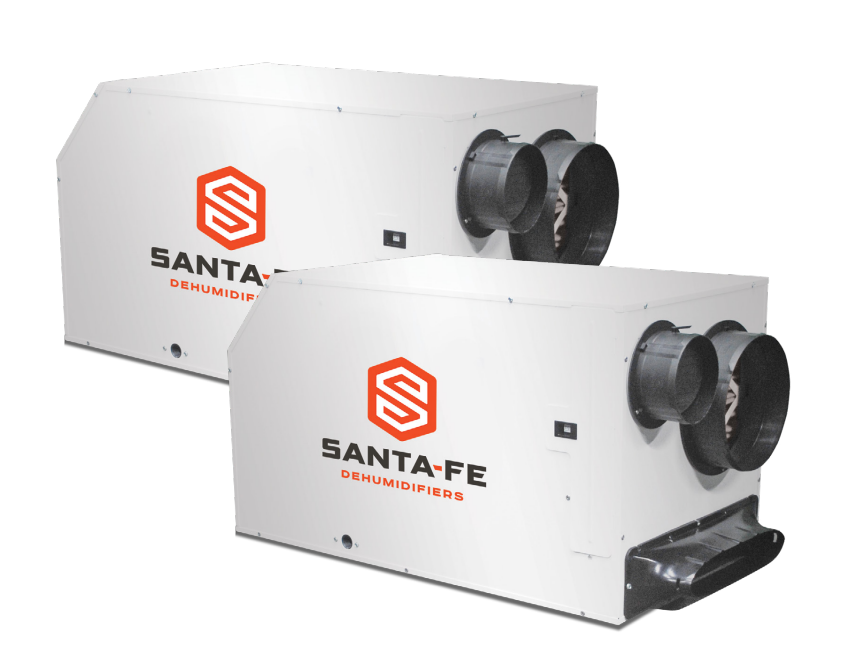
The santa fe Ultra155/205 Dehumidifiers are high-capacity whole-house dehumidification systems designed for demanding residential and light-commercial environments. Built for basements, crawl spaces, large homes, garages, and moisture-prone utility areas, these units deliver powerful humidity control while supporting ducted installation for broader air treatment. The Ultra155 is rated at 155 pints per day, while the Ultra205 steps up to 205 pints per day, making the lineup suitable for users who need reliable moisture removal across large square footage. Both models are engineered for continuous drainage, efficient operation, and integration with central HVAC-style ducting, which makes them especially appealing for homeowners dealing with persistent dampness, musty odors, mold prevention, or allergy concerns.
Key benefits include strong moisture-removal performance, MERV-13 filtration on the Ultra155, and rugged construction for long-term use. The santa fe Ultra155/205 Dehumidifiers are also a strong fit for contractors and property managers who need dependable whole-house humidity control in finished basements, workshop spaces, and multi-zone properties. Price commonly falls in the premium category, with typical market ranges starting around the mid-$2,000s and rising into the low-$4,000s depending on model, accessories, and retailer availability. Stock can vary by season and region, especially during peak humid months, so buying from authorized dealers is recommended for warranty protection and support.
Specifications for santa fe Ultra155/205 Dehumidifiers
- Ultra155 capacity: 155 pints per day at 80°F and 60% RH.
- Ultra205 capacity: 205 pints per day at 80°F and 60% RH.
- Power input: Ultra155 uses about 920 watts; Ultra205 uses about 1,525 watts.
- Voltage: 115V, 1-phase, 60 Hz for both models.
- Current draw: Ultra155 draws about 8.0 amps; Ultra205 draws about 13.2 amps.
- Airflow: Ultra155 reaches about 391 CFM; Ultra205 reaches about 526 CFM.
- Coverage: Ultra155 is suited to spaces up to about 3,500 sq. ft.; Ultra205 is suited to larger spaces up to about 5,000 sq. ft.
- Operating range: Inlet air operating temperature is typically 49°F to 95°F.
- Drain connection: 3/4-inch threaded female NPT for continuous condensate removal.
- Filter: Ultra155 includes a MERV-13 filter for improved airborne particle capture.
Compared with similar whole-house dehumidifiers, the Ultra155 is a better fit for medium-large homes, while the Ultra205 is positioned for higher moisture loads and larger footprints. Both models are more powerful than portable dehumidifiers and are intended for ducted, permanent installation rather than room-by-room use.
Setup Guide for Whole-House Installation
1. Place the unit in a stable mechanical area, basement, or utility room with enough clearance for service access and duct connections.
2. Connect the inlet and outlet ductwork according to the installation plan. Use properly sized ducts to avoid airflow restriction and loss of capacity.
3. Attach a 3/4-inch drain line and route it to an approved gravity drain or condensate disposal point. Keep the drain line sloped and free of kinks.
4. Plug the unit into the correct dedicated circuit. The Ultra155 typically requires a 15-amp dedicated circuit, while the Ultra205 requires a 20-amp dedicated circuit.
5. Set the digital control or external humidistat to the desired relative humidity, usually between 45% and 55% for comfortable indoor conditions.
6. Test operation by confirming fan start-up, water flow through the drain, and humidity response over the first 24 to 48 hours.
Safety note: keep the unit level, never block intake or exhaust paths, and disconnect power before performing service. If the unit is not drying effectively, check duct sizing, drain slope, and filter cleanliness before assuming a mechanical fault.
Troubleshooting santa fe Ultra155/205 Dehumidifiers
Problem: Unit is running but humidity is not dropping. Check for undersized ducting, dirty filters, excessive air leaks, or a humidity setting that is too high. Reduce the setpoint and inspect airflow.
Problem: Water is not draining. Confirm the drain hose is unobstructed, properly sloped, and securely connected to the threaded drain fitting. Clear any trapped debris or algae buildup.
Problem: Unit cycles too often. This often points to poor placement, oversized capacity for the space, or excessive fresh-air infiltration. Recheck duct placement and building envelope leakage.
Problem: No power or no start. Verify breaker status, outlet power, and circuit size. The Ultra205 in particular needs a dedicated 20-amp circuit.
Error codes: Some installations use external controls or humidistats, so fault indication may appear on the controller rather than the cabinet. Refer to the installed control’s display if applicable.
Preventive measures include regular filter cleaning, annual drain inspection, and seasonal inspection of duct joints. For warranty help or technical support, contact the authorized Santa Fe dealer, installer, or the manufacturer’s customer service team through the official Santa Fe Products support channels listed in the product documentation.
Pros and Cons of santa fe Ultra155/205 Dehumidifiers
Pros
- High capacity: Excellent moisture removal for large homes, basements, and crawl spaces.
- Ducted whole-house design: Better coverage than portable dehumidifiers.
- Continuous drainage: Ideal for unattended operation and long-term humidity control.
- Strong airflow: Helps circulate drier air more evenly across the space.
- Good build quality: Designed for professional installation and long service life.
Cons
- Higher upfront cost: More expensive than portable and mid-range residential units.
- Installation required: Best results depend on proper ducting and electrical setup.
- Size and weight: Not suitable for simple plug-and-play room use.
- Overkill for small spaces: Lower-capacity alternatives may be more cost-effective for apartments or single rooms.
For value for money, the Ultra155 is often the better balance for large residential spaces, while the Ultra205 makes sense when moisture loads are severe or square footage is closer to commercial scale. Compared with portable dehumidifiers, both Santa Fe models offer far better coverage and fewer maintenance headaches.
Customer Reviews of santa fe Ultra155/205 Dehumidifiers
Typical customer feedback is strongly positive, with many owners giving the santa fe Ultra155/205 Dehumidifiers around 4.5 out of 5 stars. Users frequently praise the noticeable drop in basement humidity, quieter-than-expected operation for a whole-house unit, and the convenience of continuous drainage.
Common complaints usually involve installation complexity, the need for professional ducting, and the higher purchase price. A frequent testimonial theme is that the unit “finally solved the musty smell” in damp basements and crawl spaces. Buyers who want a set-it-and-forget-it solution tend to recommend these models, especially when paired with proper sizing and humidity control. For most homeowners battling persistent moisture, these units are a solid purchase recommendation.
Frequently Asked Questions
What size space can the Ultra155 handle? It is typically suited for spaces up to about 3,500 square feet, depending on humidity load and layout.
What size space can the Ultra205 handle? It is typically suited for spaces up to about 5,000 square feet under appropriate conditions.
Do these units need a drain pump? Not usually. They are designed for continuous gravity drainage with proper installation.
Are these good for basements? Yes. They are especially effective in basements, crawl spaces, and other moisture-prone areas.
Faqs
How do I set up santa fe Ultra155/205 Dehumidifiers for the first time in a basement or crawl space?
Why is my santa fe Ultra155/205 Dehumidifiers running but not removing much moisture?
What drain setup works best with santa fe Ultra155/205 Dehumidifiers for continuous operation?
How can I tell if santa fe Ultra155/205 Dehumidifiers is the right size for my space?
What should I do if santa fe Ultra155/205 Dehumidifiers is making unusual noise or vibrating?
How often should I clean and maintain santa fe Ultra155/205 Dehumidifiers for reliable operation?
Can santa fe Ultra155/205 Dehumidifiers help reduce musty smells and mold risk in a basement?
What humidity setting should I use on santa fe Ultra155/205 Dehumidifiers for the best energy efficiency?
Tags
More santa fe manuals
Leave a Comment