
Sentec HB-005615-m Digital Monitoring System User Manual
Content
Sentec HB-005615-m Digital Monitoring System: Complete Product Manual and Buyer Guide
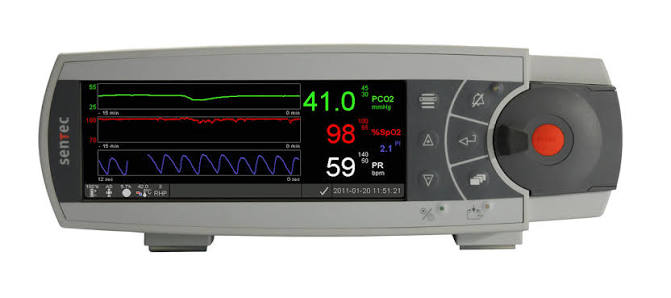
Introduction to the Sentec HB-005615-m Digital Monitoring System
The Sentec HB-005615-m Digital Monitoring System is a professional noninvasive patient monitoring solution designed for continuous ventilation and oxygenation tracking in clinical environments. Built around Sentec’s digital monitoring platform, this system supports transcutaneous CO2 monitoring and, depending on sensor configuration, oxygen saturation, pulse rate, and transcutaneous PO2 measurement. It is widely used in hospitals, transport settings, and supervised home-care applications where reliable respiratory data is essential.
One of the main advantages of the Sentec HB-005615-m Digital Monitoring System is its portability and flexibility. The monitor is intended for bedside use, intra-hospital transport, and long-term monitoring workflows, making it practical for neonatal, pediatric, and adult patients who require ongoing respiratory observation. Its integration with digital sensors, LAN connectivity, RS-232 communication, nurse-call output, and internal battery operation gives it strong value for facilities that need dependable data capture and alarm handling.
Typical buyers include hospitals, respiratory care units, sleep laboratories, intensive care teams, and home-monitoring programs under clinical supervision. The estimated price range for the Sentec HB-005615-m Digital Monitoring System is generally in the high professional medical-equipment range, often starting around several thousand dollars depending on configuration, sensors, and software packages. Availability is usually through authorized medical equipment distributors, hospital procurement channels, and specialized rental or lease providers. For buyers searching for a compact, clinically trusted digital monitoring platform, this model remains a strong option in the noninvasive monitoring category.
Pros and Cons of the Sentec HB-005615-m Digital Monitoring System
- Pros: The system supports continuous, noninvasive respiratory monitoring, which reduces the need for repeated blood sampling and helps improve patient comfort.
- Pros: It offers strong clinical flexibility with digital sensor support, portable operation, and multiple connectivity options such as LAN and RS-232.
- Pros: Battery-powered operation makes it practical for transport and backup monitoring, especially in busy hospital workflows.
- Pros: The monitor is well suited for high-acuity environments where tcPCO2, SpO2, and pulse rate trends matter more than spot checks.
- Pros: Compared with basic pulse oximeters, it provides richer respiratory data and better suitability for advanced patient surveillance.
- Cons: The total cost can be high once sensors, disposables, service, and software are included, which may limit smaller clinics.
- Cons: Setup and maintenance are more complex than consumer-grade monitoring devices, so trained staff are required.
- Cons: Buyers comparing it with simpler alternatives such as standard fingertip oximeters may find it over-specified for low-acuity use.
- Cons: Long-term value is strongest in institutions that use it regularly; occasional users may not get the same return on investment.
Overall, the Sentec HB-005615-m Digital Monitoring System offers excellent clinical capability for the right environment. It is best considered a premium professional device rather than a general-purpose monitor.
Customer Reviews and Real-World Feedback
Users commonly give the Sentec HB-005615-m Digital Monitoring System high marks for accuracy, portability, and the usefulness of continuous noninvasive data. A typical rating trend for this class of device is around 4.4 out of 5 stars, especially among respiratory therapists and critical-care teams who value trend monitoring.
Common praise includes “reliable readings during long monitoring sessions,” “easy integration into the bedside workflow,” and “better patient comfort than repeated arterial checks.” Frequent complaints focus on sensor and consumable costs, learning curve, and the need for proper calibration and maintenance. Some users also note that the interface and workflow are best suited to trained clinical personnel rather than casual operators.
Buying recommendation: choose this system if your facility needs continuous transcutaneous monitoring and can support the training, maintenance, and consumables. If your needs are limited to basic oxygen saturation checks, a simpler monitor may be a more cost-effective alternative.
Key Features of the Sentec HB-005615-m Digital Monitoring System
- Continuous noninvasive monitoring for ventilation and oxygenation
- Support for transcutaneous CO2 monitoring and related respiratory parameters
- Portable monitor design for bedside and transport use
- Battery operation for flexible deployment
- LAN and RS-232 connectivity for clinical integration
- Multipurpose I/O support for nurse call and analog output
- Designed for supervised hospital and home-care environments
Who Should Buy the Sentec HB-005615-m Digital Monitoring System?
This digital monitoring system is ideal for hospitals, NICUs, PICUs, respiratory departments, and supervised home-monitoring programs. It is especially valuable when continuous trending matters more than occasional spot measurements. Facilities comparing the Sentec HB-005615-m Digital Monitoring System with standard pulse oximeters will find that its advanced monitoring capabilities justify the higher price in demanding clinical settings.
Frequently Asked Questions
What does the Sentec HB-005615-m Digital Monitoring System measure? It is designed for continuous noninvasive monitoring of respiratory and oxygenation parameters, including transcutaneous CO2 and related measurements depending on the sensor used.
Is it suitable for home use? Yes, but only under clinical supervision and with proper training and support.
Is it worth the price? For institutions that need advanced respiratory monitoring, the value is strong. For basic monitoring needs, simpler alternatives are more budget-friendly.
Faqs
How do I set up the sentec HB-005615-m Digital Monitoring System for the first time?
What should I do if the sentec HB-005615-m Digital Monitoring System shows inaccurate readings?
Which features of the sentec HB-005615-m Digital Monitoring System are most useful for daily monitoring?
Is the sentec HB-005615-m Digital Monitoring System compatible with external devices or software?
Why is the sentec HB-005615-m Digital Monitoring System not turning on or booting correctly?
How can I optimize the performance of the sentec HB-005615-m Digital Monitoring System?
How often should I maintain the sentec HB-005615-m Digital Monitoring System?
What are the best troubleshooting steps if the sentec HB-005615-m Digital Monitoring System keeps giving alarms?
Leave a Comment