
Setup: Shure SM86 Cardioid Condenser Microphone User Manual
Content
Shure SM86 Cardioid Condenser Microphone: Comprehensive Product Manual
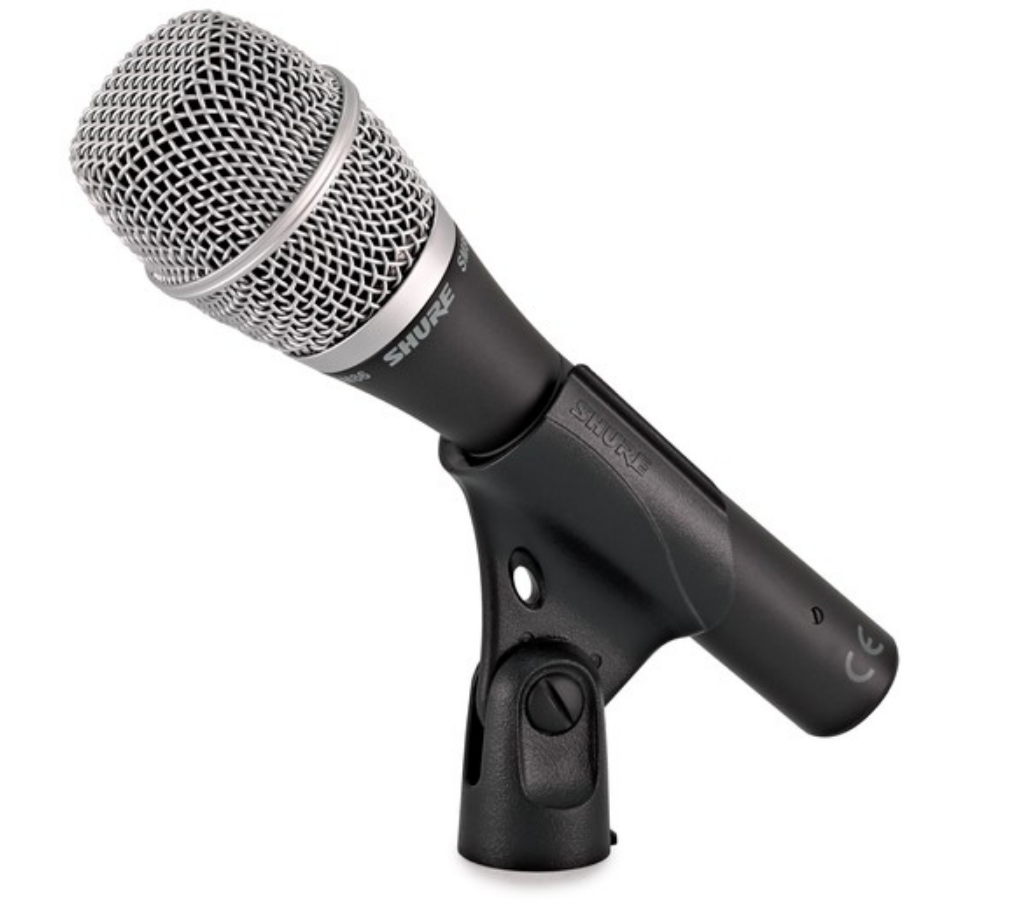
Introduction to the Shure SM86 Cardioid Condenser Microphone
The Shure SM86 Cardioid Condenser Microphone is a professional-grade handheld vocal microphone designed for live performances, delivering studio-quality sound with exceptional clarity and rugged durability. This unidirectional cardioid condenser mic features a tailored frequency response from 50Hz to 18kHz, emphasizing upper vocal frequencies for natural, detailed reproduction that cuts through mixes. Key benefits include a built-in three-point shock mount to minimize handling noise, a two-stage pop filter reducing wind and breath plosives, and a cardioid polar pattern that isolates the sound source while rejecting background noise—ideal for stage monitors and in-ear systems.
Unique selling points of the Shure SM86 Cardioid Condenser Microphone include its electret condenser capsule with a 10mm diaphragm for precise transient capture, maximum SPL handling of 147dB, and robust construction suited for touring rigors. Targeted at singers, musicians, podcasters, broadcasters, and audio engineers, it's perfect for live vocals, studio recording, outdoor events, speeches, and instrument miking. Whether on stage or in the studio, this mic bridges professional live sound and high-fidelity capture seamlessly.
The estimated price range is $200-$210, widely available from retailers like Shure authorized dealers, B&H Photo, Sweetwater, and CDW, with free shipping options on orders over $50 and 30-day returns. Elevate your vocal performance with the reliable Shure SM86 Cardioid Condenser Microphone, a staple for demanding audio applications.
Specifications
- Transducer type: Condenser (electret bias).
- Frequency response: 50 to 18,000 Hz (see figure 2).
- Polar pattern: Cardioid.
- Output impedance: 150 ohms at 1 kHz.
- Recommended minimum load impedance: 600 ohms.
- Sensitivity (at 1,000 Hz): Open-circuit voltage: −50 dBV/Pa (3.15 mV).
- Reference sound pressure: 1 Pa = 94 dB SPL.
- Output clipping level: +3 dBV (1.41 V) at 1,000 Hz with a 1000-ohm load.
- Maximum SPL (at 1,000 Hz): 147 dB with a 1000-ohm load (1% THD).
- Self-noise: 23 dB typical, A-weighted.
- Dynamic range (1000 ohms): 124 dB (maximum SPL to A-weighted noise level).
- Signal-to-noise ratio: 71 dB at 94 dB SPL (IEC 651).
- S/N ratio note: Difference between 94 dB SPL and equivalent A-weighted SPL of self-noise.
- Polarity: Positive pressure on diaphragm produces positive voltage on pin 2 relative to pin 3 of the output connector.
Features
- Condenser cartridge for studio-quality sound.
- Tailored frequency response for a clear reproduction of vocals.
- Rugged construction withstands the rigors of touring sound.
- Cardioid polar pattern minimizes unwanted background noise.
- Excellent choice for stage monitors and personal in-ear monitors.
- Built-in three-point shock mount minimizes handling noise.
- Two-stage “pop” filter reduces wind and breath noise.
Stage monitor & P.A. loudspeakers
Placement
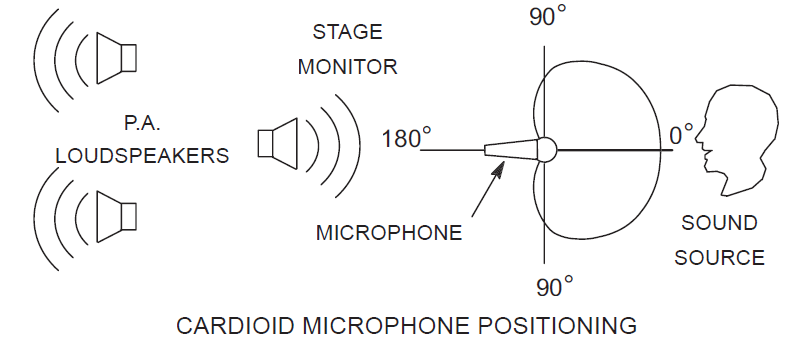
Place the stage monitor directly behind the microphone (see figure 1). Locate the P.A. loudspeakers so that they point away from the rear of the microphone. With the speakers located in these positions, the possibility of feedback is greatly reduced. Always check the stage setup before a performance to ensure optimum placement of microphone and monitors.
Operation
Power
The SM86 requires phantom power. This may be supplied to the microphone from an external power supply (such as the Shure model PS1A) or directly from preamplifiers, mixers, or consoles with built-in phantom power. Suitable sources should provide 11 to 52 Vdc phantom voltage.
Impedance
A load impedance of at least 600 ohms is recommended. The load may be as low as 150 ohms, but a reduction in output level and output clipping level will result.
Troubleshooting the Shure SM86 Cardioid Condenser Microphone
Common issues with the Shure SM86 Cardioid Condenser Microphone include handling noise, feedback, low output, or pop noise. For handling noise, ensure the built-in three-point shock mount is secure; grip lightly above the capsule and use the included A25D clip for stability. Feedback occurs in high-gain setups—position the cardioid pattern away from monitors, maintain a 15- 60 cm singer-to-mic distance for optimal proximity effect, and reduce bass boost.
Low output or no signal? Verify phantom power (11-52V required for condenser operation) via XLR cable to a compatible mixer; check output impedance (150Ω) matches preamp. Pop or wind noise: Use the two-stage filter effectively by angling the mic slightly off-axis; add a windscreen for outdoors. No error codes apply, as it's analog. Preventive measures: Store in the provided 26A13 bag, avoid drops, clean grille gently, and test cables regularly.
Shure offers a 2-year warranty; register at shure.com for support. Contact Shure tech support at 1-800-323-4669 (U.S.) or visit shure.com/support for global assistance, manuals, and FAQs.
Pros and Cons of the Shure SM86 Cardioid Condenser Microphone
Pros
- Studio-quality vocals on stage: Condenser capsule and 50-18kHz response deliver clear, detailed sound with upper-frequency emphasis for live clarity.
- Rugged touring build withstands heavy use, made in Mexico since 2001.
- Superior noise rejection: Cardioid pattern plus shock mount and pop filter minimize handling, feedback, and plosives—excellent for monitors.
- High SPL (147dB) handles loud sources without distortion; 71dB signal-to-noise ratio ensures clean capture.
- Great value at $200-$210, outperforming dynamic mics like the SM58 in fidelity for vocals and podcasts.
Cons
- Requires phantom power, less plug-and-play than dynamics for basic setups.
- Small 10mm electret diaphragm may lack warmth of larger studio condensers for certain recording styles.
- Proximity effect boosts bass close-up, needing EQ adjustment for consistent tone.
- Compared to alternatives like Audio-Technica AT2020 (studio-focused) or Sennheiser e935 (dynamic), it's pricier for non-pros but offers better live condenser performance.
Overall, the Shure SM86 Cardioid Condenser Microphone provides excellent value for professionals seeking live vocal excellence.
Customer Reviews: Shure SM86 Cardioid Condenser Microphone Feedback
Users rave about the Shure SM86 Cardioid Condenser Microphone, averaging 4.8/5 stars across sites like Shure.com and Equipboard. Praises highlight "crystal-clear vocals that cut through mixes" and "tour-proof durability," with one performer noting, “No handling noise even in wild gigs—beats my SM58 hands-down.” Podcasters love its "studio sound for broadcasts" and feedback resistance.
Common complaints include phantom power needs ("Forgot it once mid-show!") and slight brightness requiring EQ. Testimonials: "5 stars—perfect for outdoor events" (Sweetwater user); "Game-changer for monitors" (4.9/5 Equipboard). Most recommend it for live pros, addressing issues like plosives via its pop filter. A top pick for Shure SM86 Cardioid Condenser Microphone buyers seeking reliability.
Tags
More shure manuals
- Setup: Shure SE315 SE425 SE535 Sound Isolating Earphones User Manual
- Setup: Shure Microflex Complete (MXC) System User Manual
- Setup: Shure SRH144 Portable Headphones User Manual
- Setup: Shure UA874Z Active Directional Antenna User Manual
- Setup: Shure UABIAST In-line Power Supply User Manual
- Setup: Shure SRH1840 Professional Open Back Headphones User Manual
Leave a Comment