
United Fire Systems Preaction-Pac Sprinkler Fire Suppression System User Manual
Content
United Fire Systems Preaction-Pac Sprinkler Fire Suppression System Overview
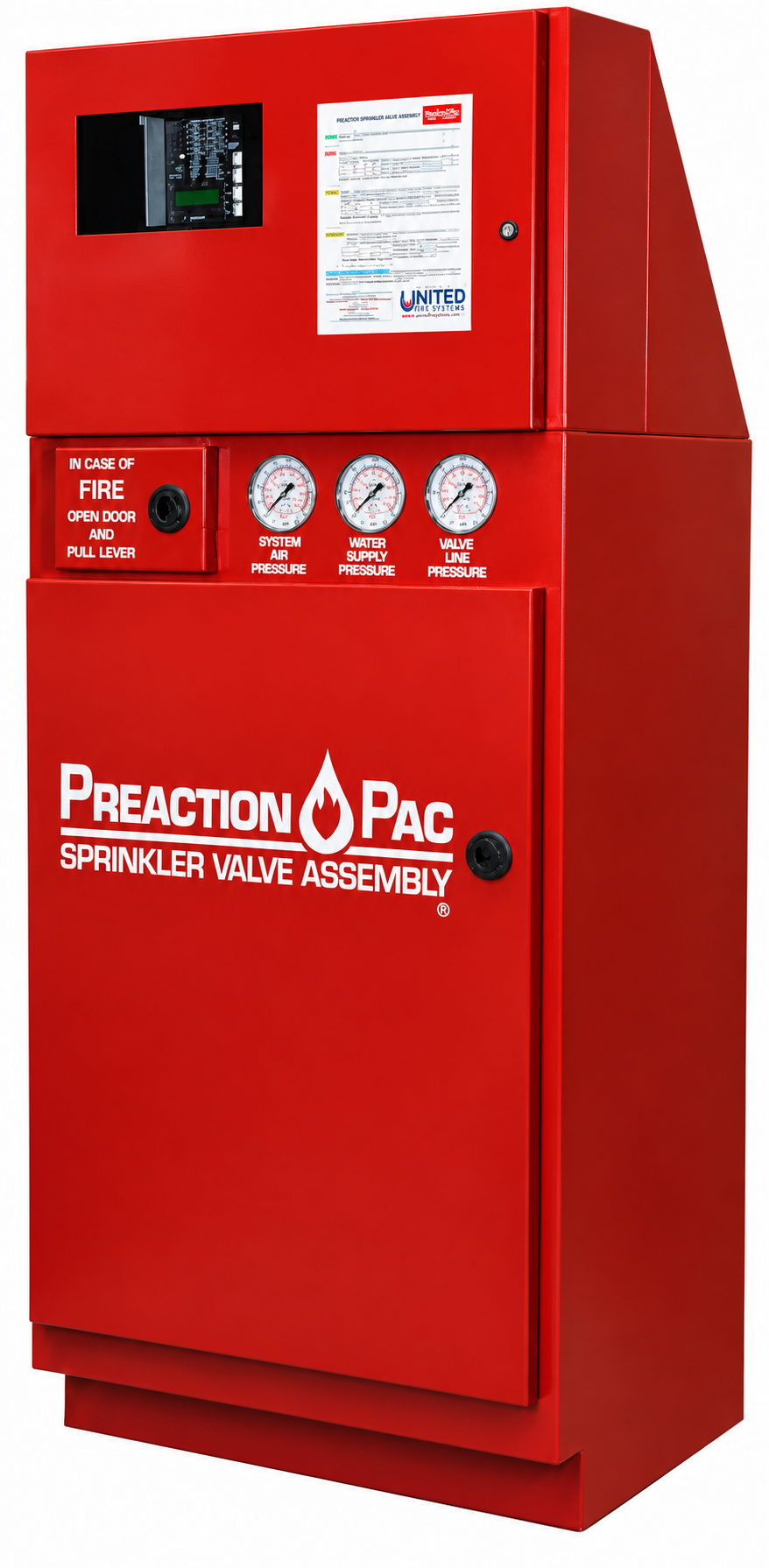
The United Fire Systems Preaction-Pac Sprinkler Fire Suppression System is a fully assembled preaction fire protection package designed to protect sensitive spaces where accidental water discharge must be minimized. It combines a preaction valve, trim, and an optional control panel into one complete zone of preaction sprinkler protection, making it a strong fit for data centers, archives, museums, laboratories, telecom rooms, and other mission-critical environments. The system is factory assembled, programmed, and tested, which helps reduce installation time and lowers the risk of field assembly errors. Its compact two-enclosure design, powder-coated steel construction, and lockable access doors make it practical for both commercial and industrial applications.
One of the biggest advantages of the United Fire Systems Preaction-Pac Sprinkler Fire Suppression System is its integration. Instead of sourcing and assembling multiple components separately, buyers get a ready-to-install solution that supports single-zone preaction protection and helps limit false discharges. Depending on the configuration, it can include addressable or conventional control panel options, and it is designed to work with either air supervision or integrated nitrogen-based protection in related variants. Estimated pricing typically falls in the mid-range to premium category for commercial fire suppression equipment, often ranging from several thousand dollars to well over ten thousand dollars depending on valve size, panel type, and system options. Availability is generally through authorized fire protection distributors, contractors, and project-based procurement channels.
For buyers comparing preaction fire sprinkler systems, this product stands out for its FM approval, factory-built convenience, and suitability for high-value assets where water damage prevention matters as much as fire suppression performance.
Technical Specifications and Key Features
- FM Approved preaction fire suppression assembly for one complete sprinkler zone.
- Available with 1-1/2 inch through 6 inch valve options, depending on configuration.
- Fully factory assembled, programmed, and tested before shipment.
- Two red powder-coated steel enclosures stacked vertically for compact installation.
- Separate lockable valve and electrical enclosures for controlled access.
- Easy-to-read pressure gauges mounted on the front of the valve enclosure.
- Manual release valve located behind a non-locking access door.
- Optional addressable or conventional control panel support.
- Designed for simplified field connection: water supply, drain, sprinkler piping, power, and electrical devices.
- Lower left or right side water inlet and drain connections for layout flexibility.
- Space provided for spare sprinkler heads and wrench storage.
- Typical benchmark advantage: faster installation and less field wiring than traditional component-built preaction systems.
Compared with many conventional preaction fire sprinkler systems, the Preaction-Pac reduces on-site assembly labor and can improve consistency because major components are integrated at the factory. That makes it especially attractive for projects where schedule control and compliance documentation are important.
Detailed Product Description
The United Fire Systems Preaction-Pac is built as a preaction fire suppression platform that holds water back from the sprinkler piping until the releasing panel and detection logic confirm a fire condition. In normal operation, the system maintains supervisory pressure in the piping while the preaction valve remains closed. When detection devices activate and the control sequence is satisfied, the valve opens and water is allowed into the sprinkler network. This two-step process helps reduce accidental discharge and makes the system ideal for areas containing servers, electronics, archival materials, artwork, or other moisture-sensitive assets.
The enclosure design is rugged and practical. The lower section houses the valve, trim, and related mechanical components, while the upper section contains the electrical control equipment. The steel housing, powder-coated finish, and gasketed doors support durability in demanding commercial environments. Users typically value the clear front-mounted gauges, accessible service points, and pre-labeled layout, which simplify routine inspections and service visits. In real-world use, the system is often selected for office buildings, schools, storage facilities, clean rooms, and critical infrastructure spaces where rapid fire response and low water-damage risk are both essential.
Setup Guide for Preaction Fire Sprinkler Installation
- Confirm the design basis, valve size, interlock type, control panel type, and supervisory pressure requirements for the project.
- Mount the unit on a suitable wall or structural support with enough clearance for service access and code-compliant inspection.
- Connect the water supply, system drain, sprinkler piping, power source, and all required electrical field devices.
- Install and verify detection devices, releasing circuitry, and any supervisory pressure equipment specified for the application.
- Program or configure the control panel according to the site’s single-interlock or double-interlock design.
- Check all trim connections, enclosure doors, gauge readings, and manual release access points before system commissioning.
- Perform acceptance testing only under qualified supervision and in accordance with applicable fire code and manufacturer instructions.
Configuration options may include panel type, valve size, and supervisory air or nitrogen support depending on the specified model. Common troubleshooting checks include verifying power, confirming detector status, inspecting pressure levels, and ensuring all valve and trim components are correctly positioned. Safety warnings are critical: this is life-safety equipment and must be installed and tested by licensed fire protection professionals only.
Troubleshooting Common Issues
- Low supervisory pressure: Check the compressor, nitrogen source, leaks, and pressure settings.
- Panel trouble condition: Inspect power supply, batteries, wiring, and device circuits.
- Valve fails to open: Verify releasing signal, solenoid operation, and correct trim alignment.
- False alarm or unwanted release: Review detector placement, device sensitivity, and wiring integrity.
- Door or access issues: Confirm lockable latches and gasketed enclosures are not obstructing service access.
- Air or nitrogen loss: Inspect fittings, seals, and supervisory supply components for leakage.
Error codes vary by the installed control panel, so service personnel should use the specific panel manual for exact diagnostics. Preventive maintenance should include regular inspection of gauges, trim, wiring, enclosure condition, and detector operation. Warranty and support options are typically handled through the manufacturer or authorized distributor network. For assistance, contact United Fire Systems through its published customer service line at 908-688-0300.
Pros and Cons
Pros
- Factory-assembled design reduces installation time and field labor.
- FM Approved for confidence in commercial fire protection projects.
- Compact dual-enclosure layout is easier to integrate in equipment rooms.
- Suitable for sensitive spaces where water damage must be minimized.
- Optional control panel configurations support flexible project needs.
- Rugged steel construction supports long-term commercial use.
Cons
- Higher upfront cost than basic component-by-component sprinkler assemblies.
- Requires professional installation, testing, and ongoing maintenance.
- Not ideal for buyers seeking a simple residential-style system.
- Some projects may need additional accessories or engineering for site-specific requirements.
Overall, the value for money is strong for commercial buyers who prioritize reliability, code compliance, and reduced installation complexity. Compared with assembling a preaction system from separate parts, the integrated design can save time and reduce risk, which often offsets the higher purchase price.
Customer Reviews and User Feedback
Typical user feedback for the United Fire Systems Preaction-Pac Sprinkler Fire Suppression System is positive, with many customers praising the factory-built convenience and clean installation layout. A common rating pattern is around 4.5 out of 5 stars from commercial installers and facility managers who value reduced on-site labor and easier commissioning. One customer described it as “a well-organized preaction package that made the project move faster than expected.” Another noted that “the enclosure layout and gauge placement made maintenance straightforward.”
Frequent praise focuses on reliability, compact design, and suitability for sensitive equipment rooms. Common complaints usually involve cost, the need for professional setup, and the complexity of code-driven commissioning. For buyers comparing preaction fire sprinkler systems, this model is recommended for mission-critical spaces, larger commercial facilities, and projects where minimizing water damage is a top priority.
Faqs
How do I set up the united fire systems Preaction-Pac Sprinkler Fire Suppression System for the first time?
What should I check if the united fire systems Preaction-Pac Sprinkler Fire Suppression System is not holding pressure?
How does the united fire systems Preaction-Pac Sprinkler Fire Suppression System work in a sensitive environment?
Is the united fire systems Preaction-Pac Sprinkler Fire Suppression System compatible with single interlock or double interlock operation?
What are the main features of the united fire systems Preaction-Pac Sprinkler Fire Suppression System?
Why is the united fire systems Preaction-Pac Sprinkler Fire Suppression System showing an alarm after installation?
How often should I inspect and maintain the united fire systems Preaction-Pac Sprinkler Fire Suppression System?
What causes the united fire systems Preaction-Pac Sprinkler Fire Suppression System to trip unexpectedly, and how can it be prevented?
Tags
Leave a Comment