
Vulcan K20DL Direct Steam Jacketed Tilting Kettle
Content
vulcan K20DL Direct Steam Jacketed Tilting Kettle: Product Manual and Buying Guide
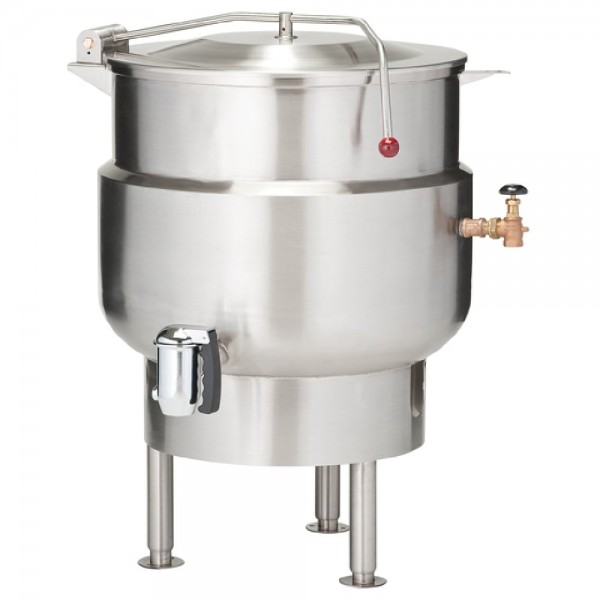
Introduction: What the Vulcan K20DL Direct Steam Jacketed Tilting Kettle Is Best For
The vulcan K20DL Direct Steam Jacketed Tilting Kettle is a commercial-grade floor-mounted kettle designed for high-volume food preparation in professional kitchens. Built for soups, sauces, chili, stews, gravies, and other batch-cooked menu items, it delivers fast, even heating through direct steam and a 2/3-jacketed stainless steel construction. The tilting design makes it easier to portion, transfer, and clean, which is especially useful in institutional kitchens, healthcare facilities, hotels, commissaries, and busy restaurant operations.
Its strongest selling points are durability, heating efficiency, and practical handling of large-batch production. The 20-gallon true working capacity provides solid output for mid- to high-volume service, while the stainless steel liner and heavy-duty build support long-term use in demanding environments. The kettle is also known for its 50 psi steam jacket rating, spring-assisted cover, and 2-inch compression draw-off valve with strainer, all of which improve safety and workflow.
For buyers comparing the vulcan K20DL Direct Steam Jacketed Tilting Kettle with similar commercial kettles, the main advantage is its balance of compact footprint and production capacity. Estimated pricing typically falls in the premium commercial equipment range, with market listings for the tilting model commonly around the high teens in thousands of dollars depending on seller, shipping, and configuration. Availability may vary because some K20DL-family models have been listed as discontinued or limited-stock through certain distributors, so buyers should verify current supply before planning a purchase.
Technical Specifications for the Vulcan K20DL Direct Steam Jacketed Tilting Kettle
- Model type: Direct steam, 2/3-jacketed, floor-mounted tilting kettle
- True working capacity: 20 gallons, or about 80 quarts / 76 liters
- Construction: Stainless steel body with 316-series stainless steel liner
- Bottom design: Ellipsoidal bottom for improved heat circulation and drainage
- Steam jacket rating: 50 psi
- Steam supply connection: 3/4-inch IPS
- Condensate return connection: 1/2-inch IPS
- Draw-off valve: 2-inch compression tangent valve with perforated strainer
- Cover: Spring-assisted hinged stainless steel cover with condensate ring
- Support base: Stainless steel tri-leg or tubular leg construction with flanged feet
- Safety and control: Steam control assembly with condensate return line strainer and steam trap
- Approximate output: Suitable for large batch cooking and holding in commercial kitchens
- Code compliance: Built to meet ASME requirements
Compared with stationary models in the same family, the tilting version is better for fast pouring, controlled transfer, and easier product handling. Compared with larger 40-gallon and 60-gallon kettles, the vulcan K20DL Direct Steam Jacketed Tilting Kettle is easier to fit into moderate-size kitchens while still offering strong production capacity. For operators who need more output than a 10-gallon unit but do not want the footprint of a larger kettle, this model sits in a practical middle ground.
Pros & Cons of the Vulcan K20DL Direct Steam Jacketed Tilting Kettle
Pros
- Efficient direct steam heating helps reduce cook times for soups, sauces, and stews.
- The tilting function improves safety and makes heavy product transfer easier.
- Durable stainless steel construction supports long-term commercial use.
- 20-gallon capacity is ideal for medium to large batch production.
- Spring-assisted cover and integrated strainer improve daily workflow.
Cons
- Requires steam infrastructure, which limits installation flexibility.
- Higher upfront cost than smaller electric kettles or countertop alternatives.
- Footprint may still be too large for compact kitchens.
- Replacement parts and service support can vary by distributor and model availability.
For value for money, the kettle makes the most sense in operations that cook in volume every day. Compared with electric kettles, steam models often deliver faster recovery and stronger batch performance, but they are less convenient for locations without boiler access. Compared with stationary kettles, the tilting design adds versatility and can reduce labor during emptying and cleaning. The vulcan K20DL Direct Steam Jacketed Tilting Kettle is best viewed as a serious production tool rather than a general-purpose cooking appliance.
Customer Reviews: What Buyers Commonly Say About This Commercial Tilting Kettle
Customer feedback for the vulcan K20DL Direct Steam Jacketed Tilting Kettle is generally positive in commercial equipment listings, with buyers often praising its heavy-duty build, dependable heating, and ease of use in high-volume prep environments. A typical satisfaction rating for comparable listings is around 4.5 out of 5 stars, especially when operators value speed and durability over low purchase price.
Common praise: “Handles large soup batches well,” “solid stainless construction,” and “tilting makes service much easier.”
Common complaints: “Expensive to buy and install,” “requires steam hookup,” and “check part availability before ordering.”
Overall, the kettle is often recommended for restaurants, catering companies, schools, and institutional kitchens that need reliable batch cooking equipment. It is less attractive for smaller kitchens or buyers who need a lower-cost electric solution. If your operation already has steam capability and you regularly produce large-volume menu items, this kettle is a strong purchase candidate.
Frequently Asked Questions About the Vulcan K20DL Direct Steam Jacketed Tilting Kettle
What is it used for? It is used for cooking large batches of soups, sauces, chili, vegetables, and other liquid-based foods.
Is it easy to clean? The tilting design and stainless steel construction make cleaning more manageable than on fixed kettles.
Who should buy it? It is best for commercial kitchens with steam access and consistent high-volume production needs.
Is it worth the price? Yes, if the kitchen uses kettles daily and values speed, durability, and batch consistency.
Final Verdict
The vulcan K20DL Direct Steam Jacketed Tilting Kettle is a dependable choice for professional kitchens that need efficient batch cooking, strong durability, and easier product transfer. Its steam-powered performance and tilting design make it especially useful in busy foodservice operations where speed and consistency matter most.
Faqs
How do I set up the vulcan K20DL Direct Steam Jacketed Tilting Kettle for the first time in a commercial kitchen?
What steam and utility requirements should I check before installing the vulcan K20DL Direct Steam Jacketed Tilting Kettle?
Why is the vulcan K20DL Direct Steam Jacketed Tilting Kettle heating slowly, and how can I fix it?
How do I tilt and pour safely with the vulcan K20DL Direct Steam Jacketed Tilting Kettle?
What should I do if the vulcan K20DL Direct Steam Jacketed Tilting Kettle is not holding temperature correctly?
Can the vulcan K20DL Direct Steam Jacketed Tilting Kettle handle thick foods like chili, mashed vegetables, or stew?
How often should I clean and maintain the vulcan K20DL Direct Steam Jacketed Tilting Kettle?
What are the most common problems with the vulcan K20DL Direct Steam Jacketed Tilting Kettle and how can they be prevented?
Tags
More vulcan manuals
- Vulcan 24S-F Gas Restaurant Ranges User Manual
- Vulcan K6ETT Electric Tilting Counter Kettle User Manual
- Vulcan VACB36 & ACB36 Gas Charbroiler User Manual
- Vulcan K20ETT Electric Countertop Tilting User Manual
- Vulcan TYG48 Teppan-Yaki Griddle User Manual
- Setup: Vulcan K60ELT Electric Stationary Kettle User Manual
Leave a Comment