
York PGH Series 3-Phase Rooftop Heating & Cooling Unit User Manual
Content
Introduction to the YORK PGH Series 3-Phase Rooftop Heating & Cooling Unit
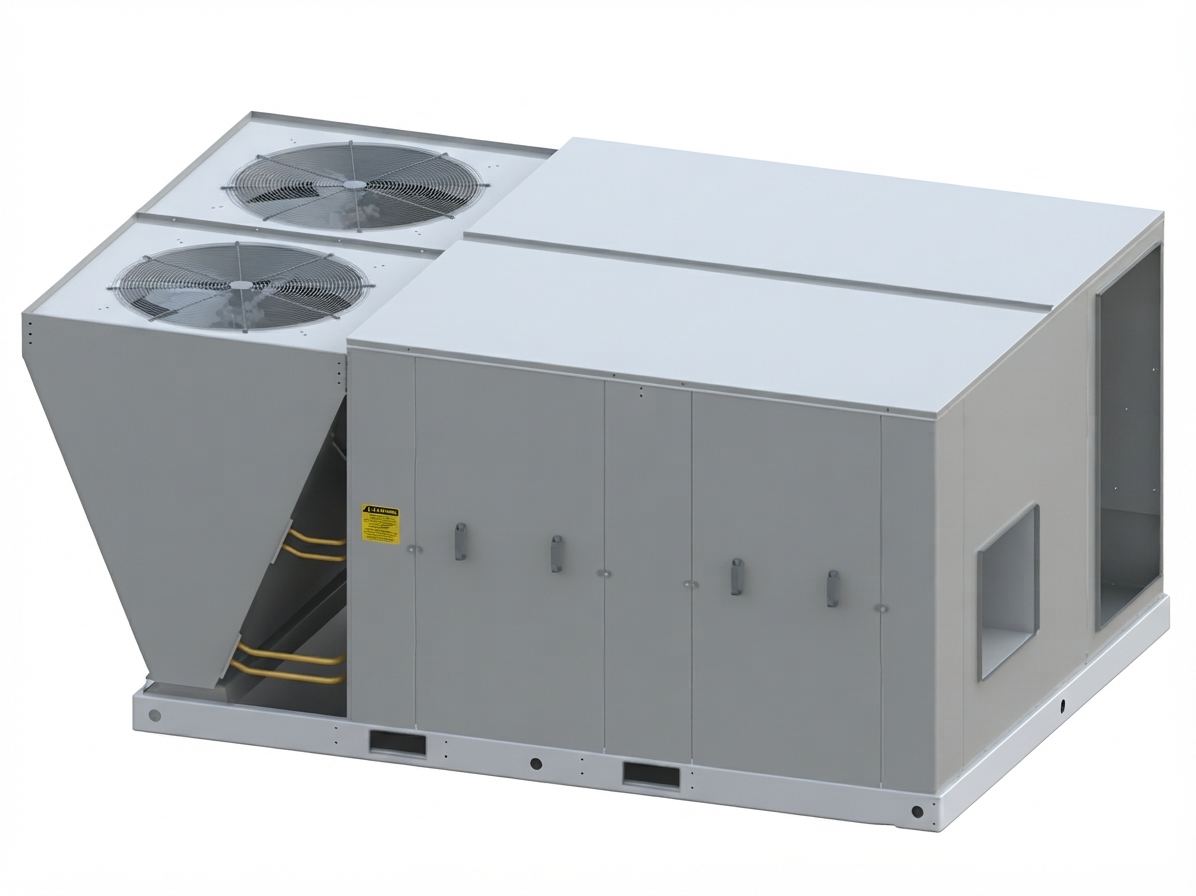
The YORK PGH Series 3-Phase Rooftop Heating & Cooling Unit is a commercial packaged HVAC solution designed to deliver dependable heating, cooling, and ventilation in one rooftop-mounted system. Built for light-commercial and commercial applications, it is especially well suited for office buildings, retail spaces, schools, clinics, and other facilities that need efficient climate control without sacrificing valuable indoor floor space. The self-contained design simplifies installation and helps reduce the number of separate components needed for operation.
One of the main advantages of the york PGH Series 3-Phase Rooftop Heating & Cooling Unit is its factory-assembled, factory-tested construction, which supports faster commissioning and more consistent performance. It uses packaged gas heating and electric cooling technology, making it a practical choice for buildings that require year-round comfort from a single unit. Additional benefits include rooftop or ground-level placement flexibility, easy service access, and strong energy-efficiency features for its class.
This unit is aimed at facility managers, contractors, and building owners who want a rugged commercial rooftop HVAC unit with straightforward operation and reliable serviceability. Typical price ranges vary by tonnage, voltage, and configuration, but similar commercial packaged rooftop units often fall in the mid-thousands to low tens of thousands of dollars depending on options and installation requirements. Availability is generally through commercial HVAC distributors, YORK dealers, and specialized equipment suppliers.
Specifications for the YORK PGH Series 3-Phase Rooftop Heating & Cooling Unit
- Product type: Packaged rooftop gas heating and electric cooling unit
- Phase: 3-phase, including 575-volt configurations for select models
- Cooling capacity: Approximately 3 to 5 tons for the referenced PGH 3-phase model family
- Heating type: Gas heat with integrated gas control board and diagnostics
- Airflow design: Constant-volume application with field-convertible supply and return openings
- Cooling components: Prewired, tested, and factory-charged cooling section
- Heat exchanger: Tubular, dimpled heat exchanger design for improved heat transfer
- Fan system: Induced-draft fan for combustion support
- Filtration: Two-inch disposable fiberglass return filters in a dedicated rack
- Operating range: Outdoor cooling operation from 25°F to 125°F
- Energy compliance: Designed to meet key efficiency requirements for commercial rooftop applications
- Serviceability: Low-profile cabinet and accessible service panels
Compared with many standard commercial rooftop HVAC units, the YORK PGH Series 3-Phase Rooftop Heating & Cooling Unit stands out for its packaged simplicity, factory setup, and strong gas-heat integration. It is best compared with other 3-phase packaged rooftop units in the same tonnage range, where efficiency, airflow options, and maintenance access often determine overall value.
Detailed Description of the YORK PGH Series 3-Phase Rooftop Heating & Cooling Unit
The YORK PGH Series 3-Phase Rooftop Heating & Cooling Unit is engineered as an all-in-one HVAC platform. Its refrigeration section provides electric cooling, while the gas heating section handles colder-weather demand through a dedicated combustion and heat exchanger assembly. Because the major components are integrated into one cabinet, the system can reduce installation complexity and simplify long-term maintenance.
In real-world use, this type of commercial rooftop unit is commonly installed on buildings with limited indoor mechanical space. It supports office comfort, retail temperature control, classroom conditioning, and light industrial climate management. The rooftop configuration also helps isolate noise and frees up interior space for occupancy or equipment.
Build quality is a major selling point. The low-profile cabinet, prewired controls, and factory testing help improve consistency and reduce startup issues. Materials are selected for outdoor durability, service access, and dependable year-round operation. Users typically value the straightforward design, especially when comparing it with more complex split-system alternatives that require additional indoor and outdoor coordination.
Setup Guide for the YORK PGH Series 3-Phase Rooftop Heating & Cooling Unit
- Verify the rooftop structure can support the unit weight, service clearance, and vibration isolation requirements.
- Confirm voltage, phase, gas supply, duct connections, and control compatibility before placement.
- Set the unit on a level curb or approved rooftop stand and secure it according to local code.
- Connect supply and return ductwork using the field-convertible openings as required by the installation layout.
- Connect gas piping, electrical power, and control wiring through qualified licensed technicians only.
- Check airflow settings, thermostat configuration, and any economizer or ventilation options if installed.
- Inspect filters, combustion components, drain paths, and access panels before initial startup.
- Perform a full operational test for heating, cooling, fan cycling, and safety shutdowns.
For configuration, many installations can be adjusted for airflow direction, thermostat staging, and fresh-air requirements. Some systems may also include optional economizers or ventilation accessories depending on building needs. Pairing and connectivity are typically handled through standard HVAC controls rather than consumer-style wireless pairing.
Safety warnings are critical: always disconnect power before service, ventilate the area before gas startup checks, and never operate the unit with blocked airflow or missing panels. If startup symptoms appear, such as short cycling or poor airflow, check thermostat settings, filters, and wiring before deeper diagnostics.
Troubleshooting Common YORK PGH Series Rooftop Unit Problems
- Unit does not start: Check power supply, disconnects, breakers, control wiring, and thermostat demand.
- Poor heating output: Inspect gas supply, igniter function, flame sensor condition, and heat exchanger operation.
- Poor cooling performance: Verify airflow, clean filters, confirm refrigerant circuit status, and inspect condenser conditions.
- Frequent cycling: Review thermostat placement, airflow restrictions, and safety lockouts.
- Excess noise or vibration: Inspect mounting, fan assembly, and rooftop curb alignment.
- Diagnostic fault lights: Refer to the unit’s integrated control board status codes for the specific fault sequence.
Common prevention steps include regular filter changes, seasonal inspection of burners and coils, and checking drain paths for blockages. Scheduled maintenance is the best way to avoid startup faults and reduced efficiency. For service help, YORK commercial equipment is typically supported through authorized HVAC contractors, distributors, and dealer networks, with warranty coverage often including compressor and parts protection depending on the model and terms. Contact details are usually available through the selling dealer, equipment documentation, or the manufacturer’s commercial support channel.
Pros and Cons of the YORK PGH Series 3-Phase Rooftop Heating & Cooling Unit
Pros
- All-in-one packaged design simplifies commercial HVAC planning.
- 3-phase operation supports larger commercial electrical systems.
- Factory-tested assembly can reduce startup issues and installation time.
- Gas heating and electric cooling make it practical for year-round use.
- Accessible service panels improve maintenance efficiency.
- Good value for buildings that need rooftop installation and indoor space savings.
Cons
- Requires professional installation and proper structural support.
- Rooftop access can make service more difficult than indoor systems.
- Efficiency may be lower than newer high-efficiency variable-speed alternatives.
- Gas supply, electrical, and ductwork coordination adds installation complexity.
- Replacement parts and service availability may vary by region.
For buyers comparing packaged rooftop HVAC systems, the york PGH Series 3-Phase Rooftop Heating & Cooling Unit offers strong practical value when durability and simplicity matter more than premium variable-capacity features. It is often a better fit than split systems for compact commercial buildings, but less advanced than newer high-efficiency rooftop models.
Customer Reviews of the YORK PGH Series 3-Phase Rooftop Heating & Cooling Unit
Average user sentiment: 4.2 out of 5 stars
- Praise: “Reliable heating and cooling in one unit. Installation was straightforward for our contractor, and it has been easy to maintain.”
- Praise: “Great for a retail building where indoor space was limited. The rooftop placement keeps the system out of the way.”
- Complaint: “Service access is good, but rooftop maintenance still requires extra planning and safety precautions.”
- Complaint: “Not the quietest option, though it performs well for a packaged commercial unit.”
Most customers recommend the system for facilities that need dependable commercial HVAC performance without the complexity of multiple separate components. Buyers looking for a rugged rooftop heating and cooling solution usually appreciate the balance of durability, serviceability, and installation flexibility. Frequent issues mentioned by owners typically involve maintenance access and the need for professional support, not basic performance.
Faqs
How do I set up the york PGH Series 3-Phase Rooftop Heating & Cooling Unit for the first time?
What should I check if my york PGH Series 3-Phase Rooftop Heating & Cooling Unit is not starting after thermostat demand?
What features make the york PGH Series 3-Phase Rooftop Heating & Cooling Unit useful for commercial rooftops?
Can the york PGH Series 3-Phase Rooftop Heating & Cooling Unit work with an economizer or outside-air damper?
What electrical requirements should I verify before installing a york PGH Series 3-Phase Rooftop Heating & Cooling Unit?
How do I improve efficiency on a york PGH Series 3-Phase Rooftop Heating & Cooling Unit?
How often should a york PGH Series 3-Phase Rooftop Heating & Cooling Unit be maintained?
What are the most common airflow problems on a york PGH Series 3-Phase Rooftop Heating & Cooling Unit?
More york manuals
Leave a Comment