
Carrier Aquasnap 30RB Air-Cooled Chillers User Manual
Content
Carrier 30RB Air-Cooled Chillers Overview
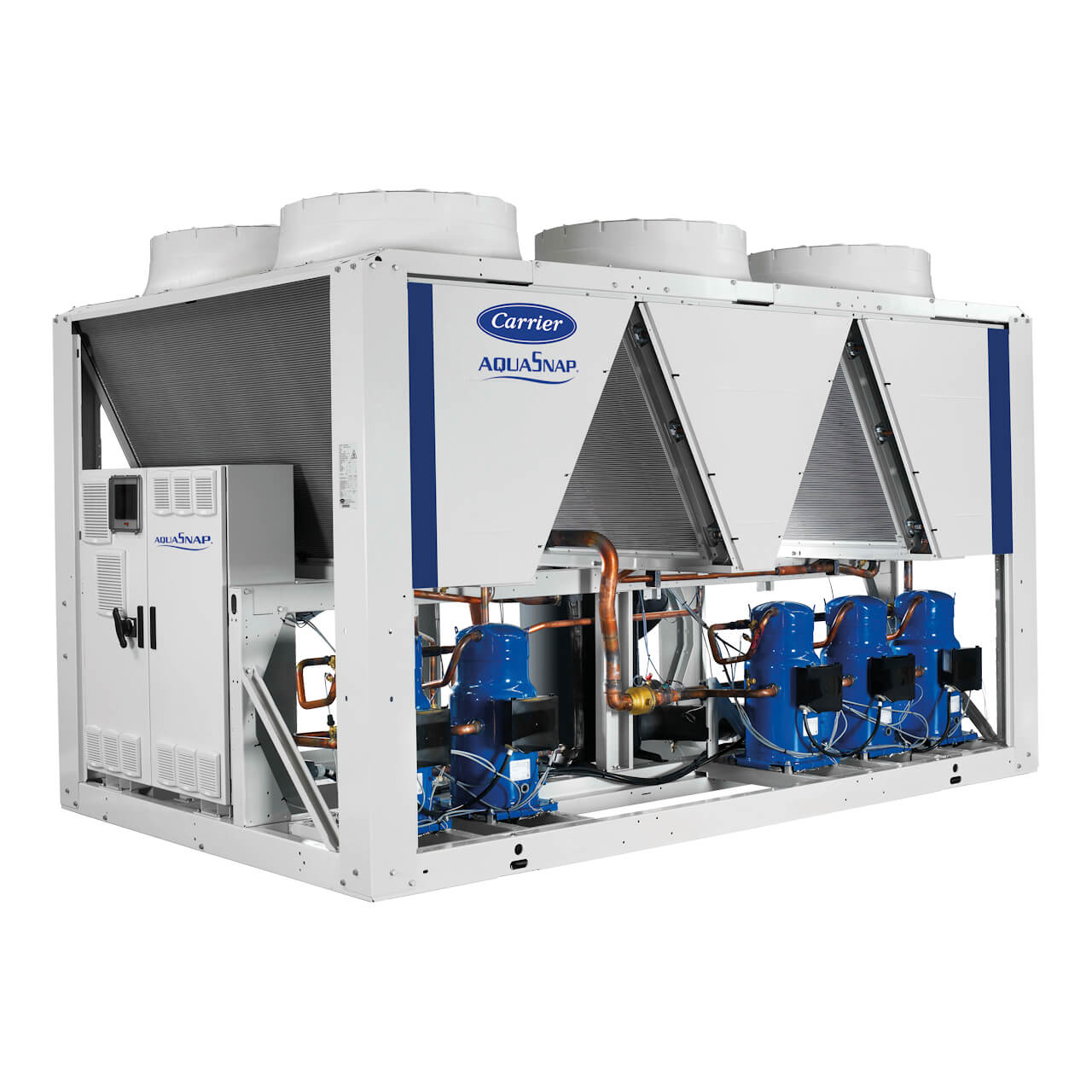
The carrier 30RB Air-Cooled Chillers are high-efficiency, outdoor liquid cooling systems designed for commercial buildings, industrial facilities, and process cooling applications. Built around scroll compressor technology and air-cooled operation, these chillers are known for compact footprints, reliable performance, and simplified installation compared with water-cooled alternatives. They are widely used in office buildings, hotels, hospitals, schools, data-support spaces, and light industrial sites where dependable chilled water is required without the complexity of cooling towers.
One of the biggest advantages of the 30RB platform is its balance of performance and flexibility. Depending on configuration, the series can deliver strong part-load efficiency, low-noise operation, and stable performance across a wide ambient range. Carrier positions the line for projects that need modern controls, energy-conscious operation, and reduced maintenance demands. Features such as scroll compressors, microchannel heat exchangers, and Greenspeed-style intelligent control options make the platform appealing for building owners seeking long-term operating savings.
The carrier 30RB Air-Cooled Chillers are typically selected by HVAC contractors, consulting engineers, facility managers, and mechanical designers. Common use cases include comfort cooling, tenant HVAC systems, district plant support, and process temperature control. In general market terms, pricing varies significantly by tonnage, options, region, and controls package, but estimated project-level costs often fall into the mid-range commercial chiller category rather than the low-cost segment. Availability is broad through Carrier commercial channels and authorized distributors, though exact model availability depends on local refrigerant regulations, electrical standards, and regional product variants.
Technical Specifications and Key Performance Details
- Cooling capacity range: approximately 60 to 390 nominal tons, with broader regional variants extending across different kW classes.
- Refrigerant: R-410A in many configurations, with some regional product families using newer refrigerants.
- Compressor type: scroll compressors for dependable, efficient cooling performance.
- Condenser type: air-cooled microchannel heat exchanger design on many models.
- Efficiency: full-load EER values up to 10.3 and IPLV values up to 17.1 in optimized configurations.
- Ambient operating range: designed for operation from about -20 °F to 125 °F ambient conditions in specified models.
- Controls: advanced microprocessor-based controls with intelligent staging and system monitoring.
- Compliance: AHRI-certified and designed to meet ASHRAE 90.1 efficiency expectations in applicable configurations.
- Noise management: low-sound fan options and variable-speed strategies help reduce acoustic impact.
Compared with older fixed-speed air-cooled chillers, the carrier 30RB Air-Cooled Chillers generally offer better part-load efficiency, more refined temperature control, and a more compact, service-friendly design. Against similar premium units from other major HVAC brands, the 30RB line stands out for its established controls platform, broad capacity range, and strong engineering reputation.
Detailed Product Description
The 30RB family is a microprocessor-controlled air-cooled liquid chiller designed for outdoor installation. It works by circulating refrigerant through scroll compressors, where heat is removed from chilled water or glycol in the evaporator and rejected to outdoor air through the condenser coil. Fans move ambient air across the coil, allowing the unit to deliver chilled water without the need for a cooling tower, condenser water loop, or extensive water treatment.
This makes the system especially useful in real-world applications where simplicity and reliability matter. Typical installations include retail centers, medical facilities, university buildings, manufacturing support areas, and mechanical plant retrofits. The unit’s construction typically features durable steel framing, corrosion-resistant coil options, and service-access panels designed for maintenance efficiency. Microchannel condenser coils improve heat transfer and can help reduce refrigerant charge compared with traditional tube-and-fin designs.
From a user-experience standpoint, building operators value the stable control response, consistent discharge temperatures, and reduced maintenance burden. Variable-speed or intelligent control options can further improve comfort and operating economy by matching cooling output to demand rather than running at full capacity all the time.
Setup Guide: How to Install and Configure Carrier 30RB Air-Cooled Chillers
- Confirm site readiness, including structural support, clear airflow around the unit, service access, and proper electrical capacity.
- Position the chiller on a level pad or structural steel frame that meets the manufacturer’s vibration and weight requirements.
- Connect chilled water piping with correct flow direction, isolation valves, strainers, and flexible connectors where needed.
- Install controls wiring, power supply, and any building management system integration according to the electrical diagram.
- Verify refrigerant circuit integrity, sensor placement, and factory-installed options before startup.
- Configure operating settings such as leaving water setpoint, staging logic, alarm thresholds, and pump interlocks.
- Perform initial commissioning by checking water flow, compressor rotation, fan operation, and temperature differentials.
- Test alarms, safety shutdowns, and remote communication points before placing the system into service.
Safety precautions are essential during setup. Lock out all power before service, avoid direct contact with moving fan components, and ensure proper lifting equipment is used because these units are heavy. If the system is connected to a building automation platform, verify communication protocols and address settings before final handoff. Common startup issues often involve low water flow, incorrect phase rotation, or loose sensor connections.
Troubleshooting Common Problems
Typical issues with air-cooled chillers include low cooling output, nuisance trips, high head pressure, alarm lockouts, and unstable water temperature. If the unit is not cooling properly, check the chilled water flow rate, filter strainers, control setpoints, and outdoor airflow obstructions first. Dirty coils, blocked fins, and fan faults are common causes of reduced capacity.
When an error or fault code appears, the best first step is to review the onboard controller display and match the alarm description with the service manual. Common fault categories include high-pressure trips, low-temperature protection, sensor failure, compressor protection, and phase loss. In many cases, a reset will not solve the root cause unless the underlying condition is corrected.
- High head pressure: clean coils, verify fan rotation, improve airflow clearance.
- Low evaporator temperature: confirm water flow and sensor accuracy.
- Compressor lockout: inspect electrical supply, overloads, and anti-short-cycle timing.
- Communication fault: confirm BMS wiring, addressing, and network settings.
Preventive maintenance should include coil cleaning, electrical inspection, vibration checks, and sensor verification. Warranty coverage and support options vary by region and distributor. For service, contact Carrier authorized HVAC support, your installing contractor, or the local Carrier commercial office for parts, diagnostics, and commissioning help.
Pros and Cons of Carrier 30RB Air-Cooled Chillers
Pros
- Strong efficiency potential, especially in part-load operation.
- Scroll compressor design supports reliable, quiet, and smooth performance.
- Air-cooled architecture eliminates cooling tower maintenance.
- Compact and easier to install than many water-cooled systems.
- Well-suited for a wide range of commercial HVAC applications.
- Good long-term value for facilities focused on lower maintenance costs.
Cons
- Performance can drop in extreme ambient heat compared with water-cooled chillers.
- Requires sufficient outdoor space and airflow clearance.
- Initial cost can be higher than basic packaged cooling equipment.
- Exact features vary by region, so model comparison requires careful specification review.
Compared with alternative air-cooled chillers, the carrier 30RB Air-Cooled Chillers line offers a strong mix of engineering credibility, efficiency, and serviceability. For projects prioritizing reduced operating complexity and dependable cooling, the value proposition is compelling.
Customer Reviews and User Feedback
Typical customer feedback for the 30RB platform is positive, with many users praising reliability, temperature stability, and reduced maintenance requirements. Common ratings from commercial buyers generally fall around 4.3 out of 5 stars, especially when the unit is properly commissioned and maintained.
Frequent praise includes quiet operation, good part-load performance, and responsive controls. Common complaints usually focus on installation cost, required service expertise, and the need for regular coil cleaning in dusty environments. Users also note that performance depends heavily on correct water flow and airflow clearance.
One facilities manager commented that the system “runs steadily through long cooling seasons with fewer service calls than the old setup.” Another reviewer noted that “commissioning took time, but once tuned, the unit delivered very consistent chilled water temperatures.”
For buyers seeking a dependable commercial air-cooled chiller, the carrier 30RB Air-Cooled Chillers are often recommended for projects where long-term operating reliability matters more than the lowest upfront price.
Faqs
How do I set up Carrier 30RB Air-Cooled Chillers for the first time after installation?
Why is my Carrier 30RB Air-Cooled Chillers unit showing high pressure or low pressure alarms?
What water flow and piping requirements should I check for Carrier 30RB Air-Cooled Chillers compatibility?
How can I improve the energy efficiency of Carrier 30RB Air-Cooled Chillers during daily operation?
What are the most common Carrier 30RB Air-Cooled Chillers problems and how do I troubleshoot them?
How often should Carrier 30RB Air-Cooled Chillers be serviced for reliable maintenance?
Can Carrier 30RB Air-Cooled Chillers be integrated with a building management system?
What should I do if Carrier 30RB Air-Cooled Chillers is short cycling or not holding temperature?
Leave a Comment