
Carrier 35E Single-Duct Terminal Units Volume System User Manual
Content
Carrier 35E Single-Duct Terminal Units Volume System Overview
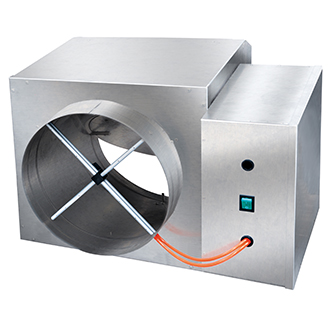
The Carrier 35E Single-Duct Terminal Units Volume System is a variable air volume terminal solution designed for precise airflow control in commercial HVAC applications. Built for flexibility, the 35E series is widely used in office buildings, schools, healthcare spaces, hotels, and other facilities that need dependable zone-level comfort control. It is engineered to handle both cooling-only and cooling-with-reheat applications, making it a practical choice for projects that demand efficient air distribution and consistent indoor comfort.
One of the biggest advantages of the Carrier 35E Single-Duct Terminal Units Volume System is its broad airflow range, which supports everything from smaller perimeter zones to larger open-plan areas. The unit is available with multiple control options, including pneumatic, analog electronic, BACnet, Carrier Comfort Network, and VVT-compatible configurations, giving contractors and facility managers strong integration flexibility. Its pressure-independent design helps maintain target airflow even as duct pressure changes, which improves comfort stability and reduces tuning issues over time.
The system also stands out for its durable galvanized steel casing, flexible gasket damper design, and optional reheat and insulation packages. These features make it suitable for low-, medium-, and high-pressure applications while supporting long service life and reliable operation. The estimated price range varies widely by size, control package, and reheat options, but a typical unit can range from approximately $500 to several thousand dollars. Availability is generally good through Carrier commercial distributors, HVAC supply channels, and project-based procurement, though lead times may vary by configuration.
Specifications for Carrier 35E Single-Duct Terminal Units Volume System
- Type: Single-duct variable air volume terminal unit
- Airflow range: 45 to 7,100 CFM, depending on size and configuration
- Nominal airflow range: approximately 40 to 7,000 CFM in current Carrier literature
- Inlet sizes: Round inlet diameters from 4 in. through 16 in.
- Casing construction: Galvanized steel casing for durability
- Control options: Pneumatic, analog electronic, direct digital, BACnet, CCN, and VVT-compatible options
- Sensor design: Linear, multiple-point, averaging velocity sensor with amplified signal
- Damper design: Flexible gasket for tight airflow shutoff with full 90-degree operation
- Application range: Low, medium, and high pressure systems
- Reheat options: Electric heat, hot water reheat, or proportional heat on selected models
- Optional features: Multiple casing liners and isolated motor/blower assemblies on select variants
Compared with many standard single-duct VAV terminal units, the Carrier 35E Single-Duct Terminal Units Volume System offers a broader configuration range and stronger control integration. It is especially competitive against basic terminal units that lack pressure-independent airflow control or advanced network connectivity. For large commercial projects, the 35E series provides a more complete package than entry-level terminals while remaining easier to specify than highly specialized fan-powered alternatives.
Pros and Cons of the Carrier 35E Single-Duct Terminal Units Volume System
Pros
- Wide airflow range makes it suitable for many commercial spaces, from small zones to large open areas.
- Pressure-independent control supports stable comfort and reduces airflow drift when duct pressure changes.
- Multiple control platforms help with integration into modern building automation systems.
- Strong construction with galvanized steel casing supports long-term durability.
- Flexible damper sealing improves shutoff performance and helps maintain efficiency.
- Optional reheat and insulation features make it adaptable for diverse design requirements.
Cons
- Configuration complexity can make selection and commissioning more demanding than simpler terminal units.
- Advanced control options may increase upfront cost compared with basic VAV boxes.
- Some applications require careful sizing to avoid overspecifying the unit.
- Installation and balancing may take longer if the project includes multiple control and reheat variants.
In terms of value for money, the Carrier 35E Single-Duct Terminal Units Volume System performs well for projects that need dependable airflow modulation, integration flexibility, and long service life. It is a better fit than lower-cost alternatives when the building requires accurate zoning and automation compatibility, but it may be more product than necessary for very simple spaces.
Customer Reviews for Carrier 35E Single-Duct Terminal Units Volume System
Overall user feedback tends to be positive, with an average sentiment of around 4.4 out of 5 stars for commercial HVAC applications. Installers often praise the unit’s dependable airflow control, broad sizing range, and compatibility with building automation systems. Facility managers also appreciate the stable comfort performance once the system is correctly commissioned.
- “Reliable airflow control and easy to integrate with our BMS.”
- “Solid construction and good performance across different zones.”
- “Commissioning took time, but the results were worth it.”
Common complaints usually focus on pricing, configuration complexity, and the need for careful setup. Some users note that the Carrier 35E Single-Duct Terminal Units Volume System performs best when installed by experienced HVAC contractors who understand VAV balancing and controls. For buyers comparing alternatives, it is a strong choice when quality, control precision, and compatibility matter more than the lowest upfront cost.
Faqs
How do I set up the carrier 35E Single-Duct Terminal Units Volume System for the first time?
What should I do if the carrier 35E Single-Duct Terminal Units Volume System is delivering weak airflow?
Which controls work best with the carrier 35E Single-Duct Terminal Units Volume System?
How can I optimize the carrier 35E Single-Duct Terminal Units Volume System for quieter operation?
Why is the carrier 35E Single-Duct Terminal Units Volume System not holding a stable room temperature?
What maintenance does the carrier 35E Single-Duct Terminal Units Volume System need to stay reliable?
Can the carrier 35E Single-Duct Terminal Units Volume System be used in retrofit projects?
What are the most common installation mistakes with the carrier 35E Single-Duct Terminal Units Volume System?
Leave a Comment