
Fisher&paykel Double & Single DishDrawer Dishwasher User Manual
Content
Fisher & Paykel Double or Single Dish Drawer & Dish Washer: Complete Product Manual
Introduction
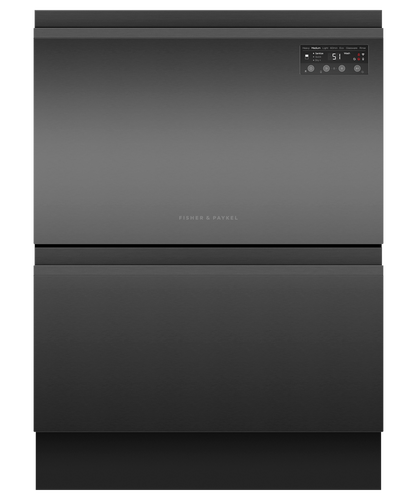
The Fisher & Paykel Double or Single Dish Drawer & Dish Washer is designed for households that want flexible loading, quiet operation, and a premium built-in look. Unlike traditional front-open dishwashers, DishDrawer models open like kitchen drawers, making them easier to load and unload while reducing bending and reaching. This design is especially useful for apartments, compact kitchens, busy family homes, and users who prefer to run smaller, more efficient wash loads.
One of the biggest advantages of the Fisher & Paykel Double or Single Dish Drawer & Dish Washer is its modular style. Single DishDrawer models are ideal for smaller households, while Double DishDrawer versions let you wash two separate loads at once or run a quick cycle in one drawer while the other stays in use. Many models include flexible racking, sanitise options, quick wash programs, and smart connectivity on selected versions. Noise levels are typically low, making them a strong choice for open-plan living spaces.
Estimated pricing varies by model, finish, and market. Single DishDrawer units generally start around the lower premium range, while double models often sit in the mid to upper premium tier. Availability is strong through appliance retailers, kitchen specialists, and the Fisher & Paykel product range in multiple regions. For buyers comparing compact dishwasher solutions, this product line remains one of the most distinctive and practical options available.
Specifications
- Product type: Single DishDrawer or Double DishDrawer built-in dishwasher.
- Capacity: Single models typically suit smaller households; double models commonly support up to 14 place settings depending on configuration.
- Dimensions: Standard width is about 599 mm / 23 9/16 in; height varies by single or double drawer format.
- Water use: Single drawer models can use as little as about 1.65 gal to 4.9 L per wash cycle on some versions; double drawer models use more depending on load and cycle.
- Noise: Many models operate around 43 to 45 dBA, which is quieter than many conventional dishwashers.
- Programs: Common cycles include Eco, Fast, Heavy, Normal, Delicate, Rinse, Glassware, and Sanitise.
- Controls: Touch controls and LED indicators are common; Wi-Fi is available on selected models.
- Power: Typical supply is 120V in North American models, with 15A circuit requirements on many units.
- Comparison: Compared with standard single-tub dishwashers, DishDrawer units offer better load separation and easier access, but often cost more than entry-level full-size models.
Detailed Description
The Fisher & Paykel DishDrawer system works by dividing the wash chamber into one or two independent drawers. Each drawer functions as its own dishwasher, allowing different cycles, soil levels, or load sizes to run separately. This is ideal for mixed loads such as glassware in one drawer and pots or plates in the other. The layout also helps households wash smaller loads without waiting for a full machine to fill up.
Build quality is one of the standout strengths of this product line. Many models feature durable finishes, smooth drawer glides, and well-designed internal racks with foldable cup supports and adjustable tines. The interior layout is made to handle everyday dishes, cookware, cutlery, and delicate items while maintaining stable washing performance.
In real-world use, the DishDrawer format improves ergonomics and workflow. Users often appreciate the low noise, easy access, and ability to run partial loads efficiently. The design is particularly useful in modern kitchens where aesthetics matter just as much as function. For buyers looking for a premium drawer dishwasher experience, the Fisher & Paykel Double or Single Dish Drawer & Dish Washer delivers a practical blend of convenience and flexibility.
Setup Guide
Before installation, confirm that the cabinet opening, water connection, drainage line, and power supply match the selected model’s requirements. A standard DishDrawer installation usually needs a level surface, proper ventilation space, and secure mounting to prevent movement during operation.
- Measure the cabinet opening carefully and verify width, height, and depth clearance.
- Install the water inlet and drain hose according to the model’s connector specification.
- Connect the dishwasher to the correct voltage and amperage circuit.
- Level the unit so both drawers close smoothly and seal correctly.
- Run a test cycle with no dishes to check for leaks, drainage, and cycle completion.
- If the model supports smart functions, follow the app pairing instructions and connect to Wi-Fi.
Safety is important during setup. Always disconnect power before installation, avoid kinking hoses, and never force a drawer closed if an obstruction is present. If the drawer does not latch properly, recheck alignment and leveling. For connectivity issues, move the router closer or reconnect through the app setup process. If the machine shows installation-related warnings, consult the user guide before using the dishwasher normally.
Troubleshooting
Like any premium dishwasher, the Fisher & Paykel Double or Single Dish Drawer & Dish Washer may occasionally show performance issues that are usually easy to fix. Common problems include poor drying, water remaining in the drawer, unusual noise, or a cycle that does not start.
- Drawer will not start: Check that it is fully closed, the child lock is off, and power is connected.
- Poor cleaning results: Clean spray arms, avoid overloading, and use the correct detergent.
- Water not draining: Inspect the drain hose for bends, clogs, or incorrect installation.
- Excess noise: Make sure dishes are not touching spray arms or blocking drawer movement.
- Error display: Power-cycle the unit, then refer to the model’s guide for code-specific instructions.
Preventive care includes regularly cleaning the filter, checking seals, and running hot cycles when needed. Warranty coverage and support vary by region and model, so users should rely on the retailer, local Fisher & Paykel service channel, or authorized appliance repair support for help. Keep the model number, serial number, and proof of purchase ready when requesting assistance.
Pros & Cons
Pros
- Drawer-style access makes loading easier and more ergonomic.
- Double models allow two separate wash loads at the same time.
- Quiet operation suits open-plan kitchens and apartments.
- Flexible racking helps with plates, glasses, cutlery, and cookware.
- Premium appearance integrates well with modern cabinetry.
Cons
- Higher price than many standard dishwashers.
- Smaller per-drawer capacity may require more frequent runs.
- Some models need careful installation to achieve proper alignment.
- Replacement parts and servicing can be more expensive than budget alternatives.
Overall value for money is strong if convenience, quiet performance, and flexible loading matter more than the lowest upfront price. Compared with conventional full-size dishwashers, this format is better for mixed-use households and premium kitchens, but less ideal for buyers who want maximum capacity at the lowest cost.
Customer Reviews
Typical customer feedback for the Fisher & Paykel DishDrawer range is highly positive, especially for ease of use and low noise. Many owners rate the product around 4 to 5 stars for design, performance, and space efficiency. One common comment is that the drawer format feels more intuitive than a traditional dishwasher, particularly in smaller kitchens.
Praise often focuses on quiet cycles, strong cleaning performance, and the ability to wash small loads without wasting water. Complaints usually mention the premium price, occasional drying limitations on plastic items, or the learning curve when first using the two-drawer layout. A common recommendation is to choose the double model for families and the single model for smaller homes or secondary kitchens. Users who value convenience and modern design tend to be the most satisfied customers.
Faqs
How do I set up fisher&paykel Double or Single Dish Drawer & Dish Washer for the first time?
What should I do if fisher&paykel Double or Single Dish Drawer & Dish Washer is not draining properly?
Can fisher&paykel Double or Single Dish Drawer & Dish Washer run one drawer independently?
Why is my fisher&paykel Double or Single Dish Drawer & Dish Washer leaving dishes cloudy or streaky?
What dishes and cookware are best suited for fisher&paykel Double or Single Dish Drawer & Dish Washer?
How do I improve cleaning performance in fisher&paykel Double or Single Dish Drawer & Dish Washer?
How often should I clean and maintain fisher&paykel Double or Single Dish Drawer & Dish Washer?
What does the fisher&paykel Double or Single Dish Drawer & Dish Washer draw design offer compared with a standard dishwasher?
More fisher&paykel manuals
- Fisher&paykel French Door & Bottom Door Refrigerator Freezer User Manual
- Fisher&paykel EB30PSX1 Built-in Coffee Maker User Manual
- Fisher&paykel OB60SDPT Oven User Manual
- Fisher&paykel RF331T Active smart Refrigerator User Manual
- Fisher&paykel OR90SCG1X Free Standing Cooker User Manual
- Fisher&paykel HP24IDCHX4 Insert Range Hood User Manual
Leave a Comment