
Hydro-Gear P Series Hydrostatic Pump User Manual
Content
Hydro-Gear P Series Hydrostatic Pump Review and Manual
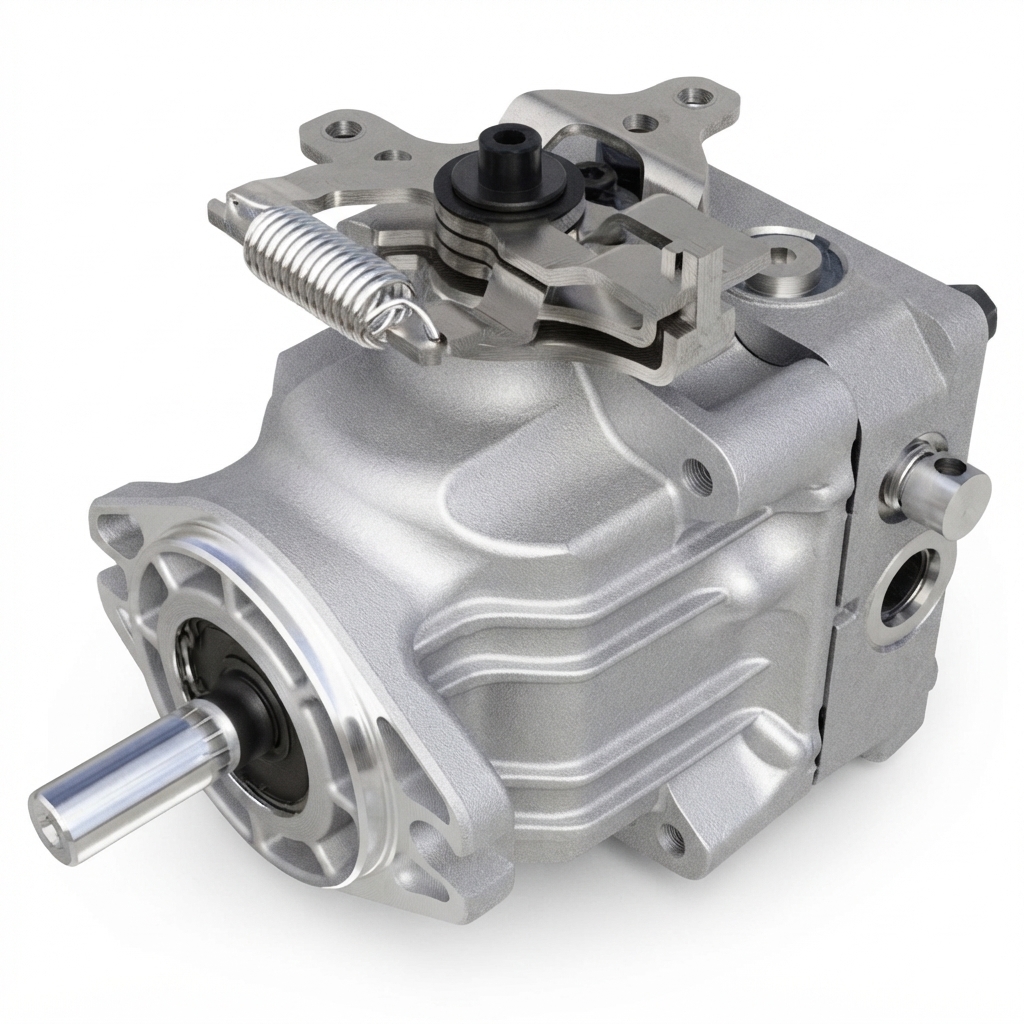
The Hydro-Gear P Series Hydrostatic Pump is a commercial-grade piston pump line built for compact equipment, lawn and turf machines, and other hydrostatic drive applications that need reliable variable displacement performance. Designed for smooth power transfer, efficient operation, and long service life, this pump series is widely used by OEMs and technicians who need dependable hydraulic control in demanding field conditions.
One of the biggest advantages of the Hydro-Gear P Series Hydrostatic Pump is its broad configuration range. The series includes multiple pump types with different displacements, pressure ratings, and performance outputs, making it easier to match the right unit to the machine’s duty cycle. Operators benefit from responsive drive control, strong torque delivery, and proven durability in commercial mowing and light industrial equipment. The series also supports features such as optional auxiliary pump configurations, tandem compatibility in some setups, and selectable rotation options depending on the model.
For buyers comparing hydrostatic pumps, the P Series stands out as a practical choice when reliability and parts support matter more than flashy extras. It is typically targeted at maintenance teams, equipment owners, and repair shops replacing worn hydrostatic drive units. Estimated pricing can vary significantly by model and seller, but typical market ranges often fall from roughly $700 to $900 or more for many OEM-style replacements, depending on part number and availability. Stock can fluctuate, so availability is often best through authorized dealers, parts distributors, and specialty equipment suppliers.
Hydro-Gear P Series Hydrostatic Pump Specifications
- Product family: PC, PG/PE, PJ/PK, PR, PW, and PY variants
- Displacement range: 0.37 to 1.33 in³/rev, or approximately 6.1 to 21.8 cc/rev
- Maximum unloaded input speed: up to 3600 RPM on supported models
- Minimum loaded speed: commonly 1800 RPM
- Continuous operating pressure: model-dependent, with ranges such as 750 psi to 1500 psi
- Intermittent pressure: typically 1750 psi to 2500 psi, depending on configuration
- Peak pressure: up to 3500 psi on higher-capacity variants
- Pump performance: approximately 3.6 to 19.6 GPM at 3600 RPM and 1000 PSI, depending on model
- Case pressure limits: low continuous case pressure requirements for reliability and seal life
- Inlet vacuum limits: designed for proper fluid supply under continuous operation
In practical use, the Hydro-Gear P Series Hydrostatic Pump offers a stronger performance range than many basic replacement hydro pumps while staying compact enough for turf and utility machines. Compared with lower-cost generic pumps, it generally provides better OEM compatibility, more consistent output, and a wider selection of displacement options. Against larger commercial hydrostatic drives, it is less focused on heavy industrial loads but delivers an excellent balance of size, efficiency, and controllability for mid-duty equipment.
Pros and Cons of the Hydro-Gear P Series Hydrostatic Pump
Pros
- Wide model range makes it easier to match the right pump to the machine
- Strong pressure capability for commercial mowing and light-duty hydraulic drives
- Good flow output for responsive ground speed and drive performance
- OEM-grade design supports long-term reliability and parts consistency
- Suitable for equipment owners who want a direct replacement rather than a workaround
- Better value for money than many no-name alternatives when downtime matters
Cons
- Price can be higher than generic aftermarket hydrostatic pumps
- Model identification must be accurate before ordering
- Availability can vary by seller and region
- Some applications may require additional setup knowledge during installation
- Not the best fit for very heavy-duty industrial systems that need larger displacement capacity
For most buyers, the value proposition is strong: the Hydro-Gear P Series Hydrostatic Pump is usually worth the investment when downtime, fitment, and dependable performance are priorities. Cheaper alternatives may save money upfront, but they often come with compatibility risks and shorter service life.
Customer Reviews and Real-World Feedback on the Hydro-Gear P Series Hydrostatic Pump
Typical customer feedback for the Hydro-Gear P Series Hydrostatic Pump is generally positive, with many users rating it around 4.5 out of 5 stars for reliability and fitment. Buyers frequently praise smooth operation, easy replacement on compatible machines, and restored drive performance after installation. A common positive comment is that the pump feels like the original factory unit and brings equipment back to proper speed and control.
Common complaints usually focus on price, part-number confusion, and the need to verify exact model compatibility before purchase. Some users also mention that hydraulic systems require proper bleeding and fluid checks after replacement, especially if the machine had been running poorly before the swap. One recurring testimonial style comment is: “Installed correctly, it brought my mower back to life and eliminated weak forward drive.” Another frequent note is that buyers recommend checking serial numbers and service documentation before ordering.
Overall, this hydrostatic pump is best recommended for owners who want a dependable OEM-style replacement and are willing to pay a bit more for consistency and durability.
Who Should Buy the Hydro-Gear P Series Hydrostatic Pump?
- Commercial mower owners needing a reliable hydrostatic drive pump
- Repair shops replacing worn OEM hydro pumps
- Equipment managers prioritizing uptime and long service life
- Buyers looking for a direct-fit replacement with proven performance
Final Verdict
The Hydro-Gear P Series Hydrostatic Pump is a solid choice for commercial turf equipment and other compatible hydrostatic drive systems. With multiple displacement options, strong pressure ratings, and dependable OEM-grade construction, it delivers the kind of performance most users want from a replacement pump. If the goal is long-term reliability and smooth machine operation, this series remains one of the more practical options in its class.
Faqs
How do I set up the hydro-gear P Series Hydrostatic Pump for the first time?
What should I do if the hydro-gear P Series Hydrostatic Pump is losing power or moving slowly?
How do I know if the hydro-gear P Series Hydrostatic Pump is compatible with my lawn tractor or mower?
Why is my hydro-gear P Series Hydrostatic Pump making noise after installation?
What are the main features of the hydro-gear P Series Hydrostatic Pump and how do they improve performance?
How often should I service the hydro-gear P Series Hydrostatic Pump?
Why does the hydro-gear P Series Hydrostatic Pump overheat during operation?
What maintenance steps help extend the life of a hydro-gear P Series Hydrostatic Pump?
Tags
More hydro-gear manuals
Leave a Comment