
Master MP-Satin Series Water Softener User Manual
Content
Master MP-Satin Series Water Softener Review and Manual
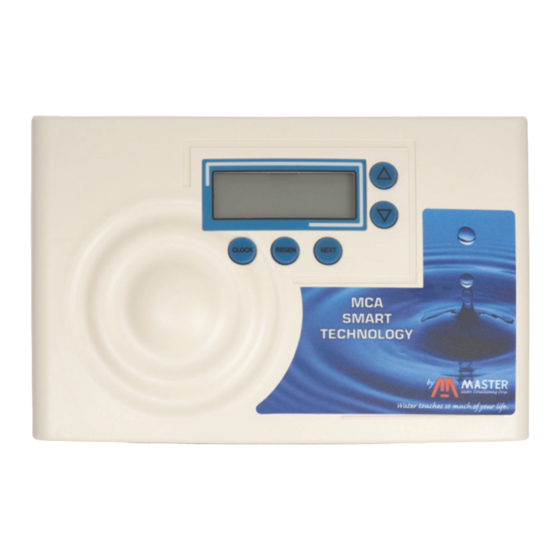
The master MP-Satin Series Water Softener is a high-efficiency whole-home water softening system designed to reduce hardness, scale buildup, and soap waste while improving water quality at the tap. Built for residential and light commercial use, it uses demand-initiated regeneration, smart valve control, and ion exchange technology to deliver softened water with strong flow performance and efficient salt usage. The Satin Series is especially attractive for homeowners dealing with hard water stains, appliance scaling, and shortened plumbing or water-heater life.
One of its main advantages is its compact footprint combined with high-capacity performance, making it a practical choice for homes that need reliable soft water without a bulky system. The master MP-Satin Series Water Softener is commonly selected for single-family homes, multi-bath households, and properties that want reduced maintenance and consistent water quality. Depending on configuration, it can support various flow demands and regeneration strategies, including standard single-tank operation, twin alternating treatment, and parallel systems for higher demand.
Estimated pricing typically falls in the mid-range to premium category for residential softeners, with many systems landing around $900 to $2,500+ depending on model size, resin capacity, valve options, and installation costs. Availability is generally strongest through plumbing supply distributors, water-treatment dealers, and authorized resellers. For buyers comparing the master MP-Satin Series Water Softener with similar systems, its strongest selling points are its efficient salt use, configurable regeneration settings, and reputation for dependable whole-home softening.
Specifications for Master MP-Satin Series Water Softener
- System type: Demand-initiated whole-home water softener with ion exchange technology.
- Core configurations: Single-tank MP, twin alternating RS, and parallel MP2 setups for higher flow and 24/7 treated water.
- Service flow performance: Common residential models are rated around 16.8 GPM at a 15 psi pressure drop, with some higher-capacity variants reaching above 17 GPM.
- Softening capacity: Varies by model and salt setting, with capacities commonly ranging from roughly 18,700 to 63,400 grains in Satin Series configurations.
- Efficiency: High-efficiency operation, with some models achieving about 4,322 grains per pound of salt at optimized settings.
- Operating pressure: Typically designed for residential water pressure ranges around 20 to 100 psi.
- Temperature range: Common operating range is approximately 34°F to 100°F.
- Drain flow: Regeneration drain flow is generally about 1.7 GPM on comparable MP-Satin models.
- Control features: Metered regeneration, programmable settings, time/date memory retention, and factory-configured control parameters.
- Comparison with similar products: Compared with basic timer-based softeners, the Satin Series is more efficient and better suited to variable household demand; compared with twin-tank competitors, it offers a strong balance of size, flow, and salt economy.
In practical terms, the Satin Series performs better than many standard entry-level softeners when households need consistent flow, low salt use, and fewer manual adjustments. It is especially appealing when compared with less efficient systems that regenerate on fixed schedules rather than actual water usage.
Pros and Cons of the Master MP-Satin Series Water Softener
Pros
- High efficiency: Uses less salt and water than many traditional softeners, helping lower operating costs over time.
- Strong flow performance: Handles typical family-home water demand well, including showers, laundry, and dishwashing.
- Flexible configurations: Single, twin, and parallel options make it easier to match household size and water usage.
- Improved appliance protection: Helps reduce scale in water heaters, dishwashers, washing machines, and plumbing fixtures.
- Good value for money: The higher upfront cost is often offset by lower salt consumption and fewer maintenance issues.
Cons
- Higher initial price: Costs more than basic softeners, especially after installation and accessory upgrades.
- Dealer-dependent setup: Best results often depend on proper programming and professional installation.
- Not the cheapest option: Budget buyers may prefer simpler systems with fewer features.
- Complexity for DIY users: Advanced controls and configuration options may be more than some homeowners want to manage.
Overall, the master MP-Satin Series Water Softener compares favorably with alternatives when efficiency and long-term savings matter more than low upfront cost. Buyers looking for a straightforward, low-budget softener may find simpler models more appealing, but the Satin Series is stronger for performance and value over time.
Customer Reviews for Master MP-Satin Series Water Softener
Customer feedback for the Satin Series is generally positive, with many users highlighting noticeably softer water, cleaner fixtures, and less scale buildup after installation. Average impressions often land around 4.4 to 4.7 out of 5 stars for performance-focused buyers.
- Praise: “Our water spots disappeared within days, and the dishwasher stopped leaving residue.”
- Praise: “Very efficient system. Salt usage is lower than our old softener, and water pressure stays strong.”
- Complaint: “The setup took professional help, and the programming was more involved than expected.”
- Complaint: “Higher cost than basic brands, but the water quality improvement was worth it.”
Most buyers recommend it for medium to large households, especially where hard water is causing appliance wear or frequent mineral buildup. Common issues mentioned include installation complexity, the need for correct sizing, and the importance of periodic maintenance. For shoppers who want a reliable whole-home softener with strong efficiency, the master MP-Satin Series Water Softener remains a solid purchase recommendation.
Faqs
How do I set up the master MP-Satin Series Water Softener for the first time?
What water hardness setting should I use on the master MP-Satin Series Water Softener?
Why is the master MP-Satin Series Water Softener using too much salt?
What should I do if the master MP-Satin Series Water Softener is not softening water?
Is the master MP-Satin Series Water Softener compatible with well water?
How often should the master MP-Satin Series Water Softener regenerate?
How do I clean and maintain the master MP-Satin Series Water Softener?
What are the most common master MP-Satin Series Water Softener problems and how can I fix them?
More master manuals
Leave a Comment