
Mindray VS-900 Vital Signs Monitor User Manual
Content
Mindray VS-900 Vital Signs Monitor: Complete Product Manual and Buyer Guide
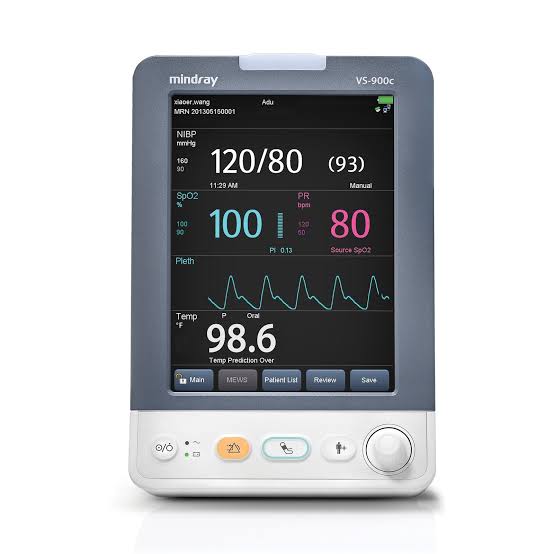
The Mindray VS-900 Vital Signs Monitor is a compact, multi-parameter patient monitoring solution designed for busy clinical environments that need fast, reliable spot checks and bedside assessments. It is widely used in hospitals, outpatient clinics, emergency departments, recovery rooms, and general wards where staff need accurate vital sign capture with minimal setup time. The Mindray VS-900 Vital Signs Monitor combines an 8.4-inch color touchscreen, intuitive workflow, configurable profiles, and support for adult, pediatric, and neonatal patients, making it a flexible choice for diverse care settings. It is built to measure key physiologic parameters such as SpO2, pulse rate, non-invasive blood pressure, temperature, and optional CO2, while also supporting alarm functions, data storage, and network integration. The device is valued for its portability, user-friendly interface, and dependable performance in routine monitoring tasks.
Key selling points include a lightweight design, rechargeable battery operation, optional barcode scanning, and the ability to connect with central monitoring and hospital information systems. Many facilities choose the Mindray VS-900 Vital Signs Monitor because it balances clinical functionality with ease of use, helping reduce workflow delays during patient intake and routine observations. Typical pricing varies by configuration, region, and accessories, but new units often fall in the approximate range of $2,000 to $4,500, with refurbished or used systems available at lower prices depending on condition and included modules. Availability is generally strongest through medical equipment distributors, hospital procurement channels, and used-equipment marketplaces. For teams seeking a dependable vital signs monitor with strong core features and broad patient applicability, the VS-900 remains a practical and proven option.
Detailed Specifications of the Mindray VS-900 Vital Signs Monitor
- Display: 8.4-inch color TFT LCD, 800 × 600 resolution, with touchscreen operation on supported configurations.
- Patient types: Adult, pediatric, and neonatal monitoring modes.
- Measured parameters: SpO2, pulse rate, NIBP, temperature, and optional CO2 depending on configuration.
- Battery: Rechargeable lithium-ion power source with up to 8 hours of runtime in supported configurations.
- Recorder: Built-in thermal printer with 25 mm/s paper speed for numerics and waveforms.
- Data capacity: Supports large local storage, with configurations offering up to 5,000 measurements.
- Connectivity: USB ports, network integration, and support for hospital workflow systems in compatible builds.
- Alarm system: Audible and visual alarms with multi-level warning behavior.
- Weight: Less than 2.5 kg in common configurations, making it highly portable.
- Performance: NIBP accuracy is typically specified within medical-grade limits, with fast measurement cycles and standard spot-check operation.
- Comparison: Compared with basic spot-check monitors, the VS-900 offers a larger display, broader parameter support, and stronger connectivity; compared with premium bedside monitors, it is simpler and more portable but less advanced in continuous critical-care monitoring.
The monitor is especially well suited to clinics that need a balance of speed, portability, and dependable vital sign capture without the complexity of a full ICU monitor. In practice, it competes most directly with other mid-range vital signs monitors from major medical brands, where its touchscreen interface and battery life are strong advantages.
Troubleshooting the Mindray VS-900 Vital Signs Monitor: Common Problems and Fixes
If the monitor does not power on, first check the AC connection, battery charge level, and power button response. If the screen is blank or dim, verify display brightness settings and confirm the unit is receiving power. If NIBP readings are unstable or inconsistent, inspect cuff size, cuff placement, tubing connections, and patient movement. For SpO2 errors or weak pulse detection, confirm proper sensor placement, clean the sensor, and remove motion interference. If temperature readings appear incorrect, check probe compatibility, ensure the probe is seated correctly, and allow the device to stabilize to room conditions before use.
Common fault messages may indicate sensor disconnection, low battery, system initialization issues, or printer paper problems. Typical fixes include reconnecting accessories, replacing depleted consumables, restarting the device, and running a basic function check. Preventive maintenance should include regular cleaning, battery conditioning, software verification, and routine inspection of cuffs, cables, and probes. Warranty coverage varies by seller and region, so buyers should confirm whether the unit is new, refurbished, or used before purchase. For support, contact the original distributor or Mindray regional service center through the official customer service channel listed in the product documentation or sales paperwork. If the issue involves repeated alarm failures, calibration concerns, or internal hardware errors, the unit should be removed from clinical service until inspected by qualified biomedical staff.
Pros and Cons of the Mindray VS-900 Vital Signs Monitor
Pros
- Simple touchscreen workflow reduces training time for nurses and clinical staff.
- Portable design makes it easy to move between rooms, wards, and triage areas.
- Supports adult, pediatric, and neonatal use, improving versatility across departments.
- Strong battery runtime is useful for mobile rounds and high-traffic environments.
- Built-in recorder and network options add value for documentation and charting.
- Good value for money for facilities that need a capable spot-check monitor rather than a full bedside system.
Cons
- Not intended to replace advanced continuous monitoring in critical care settings.
- Optional features can raise total system cost significantly.
- Accessory compatibility may vary by configuration, which can complicate procurement.
- Some users prefer larger modern displays found on newer alternatives.
- Compared with premium monitors, it offers fewer advanced analytics and customization tools.
Overall, the Mindray VS-900 Vital Signs Monitor is best for organizations that want reliable essential monitoring at a reasonable cost. It compares favorably with many mid-range alternatives when portability, ease of use, and battery life matter more than advanced ICU-style functionality.
Customer Reviews for the Mindray VS-900 Vital Signs Monitor
User feedback is generally positive, with many reviewers giving it about 4.3 out of 5 stars for everyday clinical use. Clinicians often praise the fast startup, clear display, and easy navigation, especially in triage and outpatient settings. Common compliments include reliable blood pressure measurements, good portability, and the convenience of the built-in printer.
Frequent complaints focus on accessory replacement costs, limited advanced features compared with premium monitors, and occasional setup complexity when connecting to networks or hospital systems. A typical testimonial reads: “Very practical for our ward workflow, easy to teach new staff, and the battery lasts through a shift.” Another common comment is: “Excellent for routine vitals, but not the right choice if you need ICU-level continuous monitoring.” For buyers seeking a dependable spot-check monitor, the VS-900 is often recommended as a strong value option, especially when purchased with the correct configuration and supported accessories.
Faqs
How do I set up the mindray VS-900 Vital Signs Monitor for the first time?
Why is my mindray VS-900 Vital Signs Monitor showing inaccurate blood pressure readings?
What should I do if the mindray VS-900 Vital Signs Monitor does not power on?
Which accessories are compatible with the mindray VS-900 Vital Signs Monitor?
How do I reduce false alarm issues on the mindray VS-900 Vital Signs Monitor?
Can the mindray VS-900 Vital Signs Monitor be used for both adult and pediatric patients?
How often should I clean and maintain the mindray VS-900 Vital Signs Monitor?
What is the best way to improve measurement speed and reliability on the mindray VS-900 Vital Signs Monitor?
More mindray manuals
Leave a Comment