
Philips EV300 Respironics Trilogy User Manual
Content
Philips EV300 Respironics Trilogy Product Manual
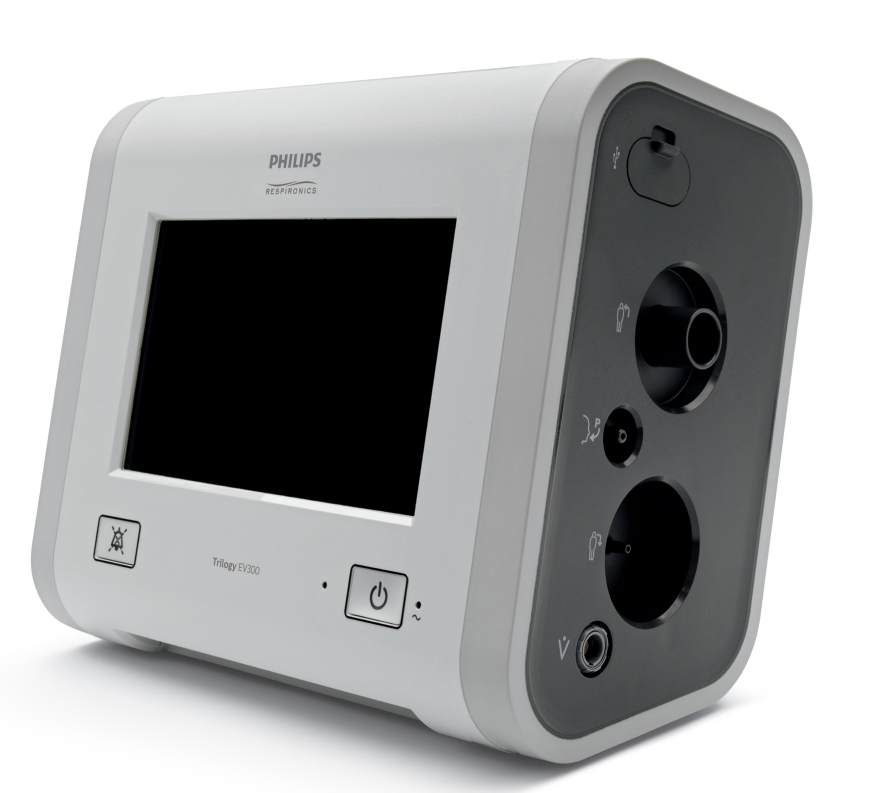
Introduction to the Philips EV300 Respironics Trilogy
The Philips EV300 Respironics Trilogy is a portable hospital ventilator designed for invasive and non-invasive positive-pressure ventilation in pediatric through adult patients weighing at least 2.5 kg. It combines a compact footprint with an integrated air compressor, making it suitable for hospital transport, step-down care, and critical care support where mobility and reliability matter. This ventilator is built for clinicians who need flexible ventilation modes, dependable battery performance, and broad patient compatibility in one platform.
One of the biggest advantages of the Philips EV300 Respironics Trilogy is its versatility. It supports a wide range of ventilation modes, including pressure and volume options, and is used for both acute and chronic respiratory support workflows. The color touchscreen interface, integrated monitoring, and portable design make it practical in fast-paced clinical environments. It is also known for its dual battery setup, which helps support extended operation during transfers or power interruptions. In many facilities, this makes the unit especially valuable for patients who require continuous support but do not always need a full stationary ICU ventilator.
The estimated price range for the Philips EV300 Respironics Trilogy typically falls between $1,750 for refurbished units and around $635,000 to $800,000 for new or dealer-listed systems, depending on configuration, accessories, and market region. Availability is generally strongest through medical equipment dealers, hospital procurement channels, and refurbished ventilator suppliers. For clinicians and biomedical teams looking for a hospital ventilator that balances portability, advanced features, and dependable runtime, the Philips EV300 Respironics Trilogy remains a strong option.
Pros and Cons of the Philips EV300 Respironics Trilogy
Key advantages for hospital and transport ventilation
- Portable and lightweight: The unit is designed for mobility, with a compact form factor that supports patient transport and bedside use.
- Flexible ventilation modes: It supports invasive and non-invasive ventilation, making it useful across a wide range of respiratory care scenarios.
- Long battery runtime: Internal and detachable lithium-ion batteries can provide extended operation, which is a major benefit during transfers and outages.
- Integrated air compression: The built-in compressor reduces dependence on external air sources in some clinical settings.
- Clear touchscreen interface: The 8-inch display improves readability and helps clinicians manage settings quickly.
Limitations to consider before purchase
- High purchase cost: New units can be expensive, which may place them outside the budget of smaller facilities.
- Clinical complexity: Advanced ventilation features require trained staff and proper setup for safe use.
- Accessory dependence: Performance and workflow can vary based on circuit choice, oxygen configuration, and monitoring accessories.
- Alternative options: Some buyers may compare it with other hospital ventilators or refurbished respiratory devices when prioritizing lower cost over portability.
Overall, the Philips EV300 Respironics Trilogy offers strong value for money in settings where portability, runtime, and ventilation versatility are more important than the lowest upfront price. Compared with compact transport ventilators, it provides broader clinical flexibility; compared with larger ICU systems, it is easier to move and deploy.
Customer Reviews and User Feedback
What users commonly praise and criticize
Typical user feedback for the Philips EV300 Respironics Trilogy is positive, with many buyers giving it an average rating of 4.5 out of 5 stars for mobility, battery support, and clinical flexibility. Clinicians often praise the ventilator for being easy to move between departments and for offering dependable performance during transport. A common testimonial is that it feels “compact but powerful” and is well suited for mixed-acuity environments.
Common complaints focus on cost, accessory compatibility, and the learning curve associated with advanced settings. Some users note that the setup process can take time for new staff, especially when configuring circuits or alarm parameters. Others mention that replacement parts and accessories can add to the total ownership cost. Despite these concerns, most reviewers recommend the unit for hospitals and care teams that need a reliable portable ventilator rather than a basic entry-level device.
If you are evaluating the Philips EV300 Respironics Trilogy for your facility, it is often recommended for buyers who need strong battery life, flexible ventilation support, and a trusted hospital-grade platform.
Technical Overview and Core Specifications
At-a-glance product details
- Patient range: pediatric through adult, minimum weight 2.5 kg
- Ventilation type: invasive and non-invasive positive-pressure ventilation
- Display: 8-inch color touchscreen
- Weight: approximately 5.8 kg with detachable battery, or about 6.3 kg with oxygen blender and battery
- Ingress protection: IP22
- Battery runtime: up to 15 hours nominal total run time with internal and detachable battery configuration
- Charging time: about 2.5 hours from 0% to 80% and 3.5 hours from 0% to 100% for the detachable/internal battery setup
- Power input: AC and DC support for flexible deployment
- Airway support: suitable for pressure and volume-based ventilation workflows
Buying Advice
Who should choose this ventilator?
The Philips EV300 Respironics Trilogy is best suited for hospitals, respiratory therapy teams, and clinical transport units that need dependable ventilation support with portability. It is especially useful for facilities that require one platform for both invasive and non-invasive care. Buyers should compare total ownership cost, available accessories, service support, and clinician training needs before purchase.
For SEO-focused buyers searching for a Philips EV300 Respironics Trilogy manual, product overview, or ventilator review, the most important decision factors are battery life, ventilation versatility, patient range, and ease of use in real clinical workflows.
Faqs
How do I set up philips EV300 Respironics Trilogy for the first time?
What should I check if philips EV300 Respironics Trilogy shows a low pressure or leak alarm?
Which ventilation modes and features does philips EV300 Respironics Trilogy support for home care use?
Can philips EV300 Respironics Trilogy be used with a mask, tracheostomy, or humidifier setup?
How do I improve comfort and reduce air leaks when using philips EV300 Respironics Trilogy?
Why does philips EV300 Respironics Trilogy keep alarming during startup or therapy?
How often should philips EV300 Respironics Trilogy be cleaned and maintained?
What battery and backup power considerations are important for philips EV300 Respironics Trilogy?
More philips manuals
Leave a Comment