
Sana 878 Vertical Juicer User Manual
Content
Introduction: Sana 878 Vertical Juicer Manual and Product Overview
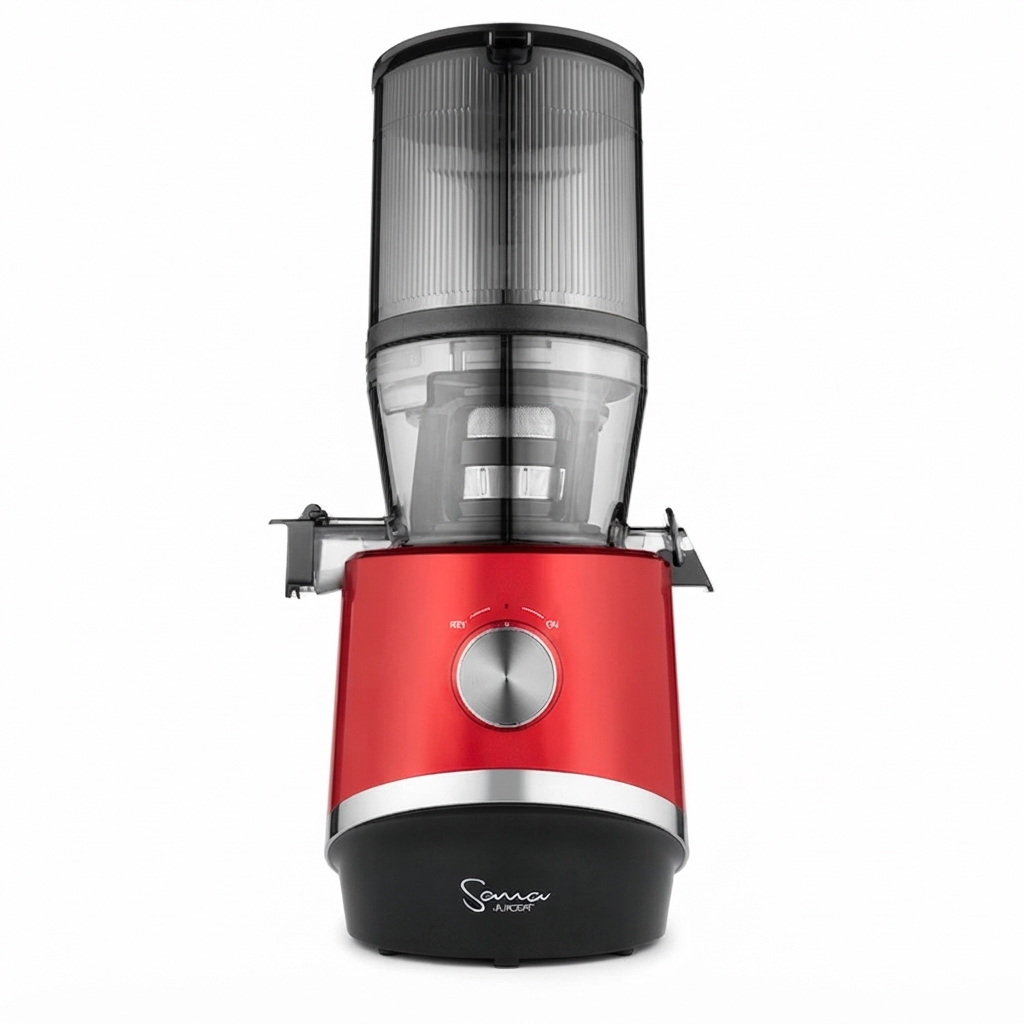
The Sana 878 Vertical Juicer is a premium slow juicer designed for users who want convenience, strong juice yield, and a polished countertop-friendly design. Built around a self-feeding vertical auger system, it is especially appealing for busy households, health-conscious families, and anyone who wants to make fresh juice with less prep time than a standard masticating juicer. Its 50 RPM speed helps reduce heat and oxidation, supporting quality juice extraction from a wide range of produce, including soft fruits, leafy greens, celery, wheatgrass, and harder vegetables.
One of the biggest selling points of the Sana 878 vertical juicer is its self-feeding hopper, which allows batches of ingredients to be loaded with less hands-on effort. This makes it a practical choice for people who juice regularly and want a machine that feels more automated than traditional slow juicers. It also includes a powerful 200-watt motor, a compact vertical footprint, and premium build materials that help it stand out in the higher-end slow juicer category.
The Sana 878 is best suited for daily juice drinkers, wellness-focused users, and buyers comparing it with other vertical cold press juicers from brands like Nama and Omega. Estimated pricing typically falls in the premium range, with availability often around $549 to $599 depending on region, color, and retailer. It is commonly sold through official brand stores and specialty kitchen appliance shops, with stock varying by country.
Specifications: Sana 878 Vertical Juicer Features and Technical Details
- Juicing type: Single-auger vertical slow juicer with self-feeding hopper
- Motor power: 200 watts
- Speed: 50 RPM for low-heat, low-oxidation extraction
- Voltage: 120V in US versions; 220–240V in international versions
- Weight: Approximately 13.8 lb to 9.9 kg depending on market listing
- Dimensions: About 8 x 10 x 18.75 inches, or 25 x 22 x 46 cm
- Operating cycle: Up to 30 minutes continuous use
- Warranty: Commonly listed as 15 years on the motor and 5 years on parts in some markets
- Materials: BPA-free food-grade plastics with Ultem auger and stainless-steel components in some configurations
- Included accessories: Juice container, pulp container, cleaning brush, and multiple strain options in some packages
Compared with many standard vertical masticating juicers, the Sana 878 emphasizes batch juicing and convenience rather than compact simplicity alone. Against premium competitors, it competes closely on speed, build quality, and automation features, while offering a more self-feeding style that appeals to users who want less prep and feeding time.
Pros and Cons of the Sana 878 Vertical Juicer
Pros
- Self-feeding design: Saves time by reducing the need to manually push ingredients through the feed chute.
- Strong juice quality: The slow 50 RPM extraction helps preserve flavor and reduce foam in many juices.
- Premium build: Solid construction gives it a stable, durable feel during operation.
- Good for frequent use: Ideal for users making daily juice batches for one person or a family.
- Versatile performance: Works well for greens, harder produce, and mixed fruit-and-vegetable blends.
- Long warranty value: The extended motor coverage improves overall value for money in the premium segment.
Cons
- Higher price point: The Sana 878 vertical juicer is more expensive than entry-level slow juicers.
- Not the smallest appliance: Its tall profile may be awkward for very tight kitchens.
- Cleaning still takes effort: Like most masticating juicers, screens and pulp parts need thorough rinsing after use.
- Best for regular juicing: Occasional users may not fully benefit from the premium features.
Overall, the Sana 878 offers strong value for users who prioritize convenience, juice yield, and long-term reliability over budget pricing. Compared with less expensive alternatives, it feels more refined and efficient, but buyers looking for a simple entry-level juicer may find it unnecessary.
Customer Reviews: What Users Say About the Sana 878 Juicer
Customer feedback for the Sana 878 is generally very positive, with many users praising its ease of use, sturdy construction, and high-quality juice output. A common theme in reviews is that the self-feeding hopper makes juicing feel much faster and less labor-intensive than traditional slow juicers. Many owners also appreciate the compact vertical footprint and the premium look of the machine.
Typical praise includes statements such as, “It feels solid, runs quietly, and saves a lot of prep time,” and “Cleanup is easier than I expected for a juicer of this type.” Common complaints focus on the premium price, the need to disassemble parts for cleaning, and the fact that some produce can require careful cutting to maximize feeding efficiency. Overall star ratings often trend high, around 4.5 out of 5 stars for satisfied buyers.
For shoppers comparing cold press juicers, the Sana 878 is often recommended for serious home juicing and daily use rather than casual, once-in-a-while use. If you want a reliable vertical slow juicer with strong performance and a more automated feeding system, it is a smart purchase.
Frequently Asked Questions About the Sana 878 Vertical Juicer
Is the Sana 878 good for leafy greens? Yes, it is designed to handle leafy greens, celery, and mixed produce effectively.
Does the Sana 878 make clear juice? Yes, the slow vertical extraction process is built to produce smooth, low-foam juice with good yield.
Is it worth the price? For frequent juicers who want self-feeding convenience and premium build quality, it offers strong value in the high-end category.
Who should buy it? It is best for health-focused households, busy users, and anyone upgrading from a basic juicer to a premium vertical cold press model.
Faqs
How do I set up the sana 878 Vertical Juicer for the first time?
Why is my sana 878 Vertical Juicer not turning on after setup?
How do I prevent clogging in the sana 878 Vertical Juicer when juicing leafy greens?
What fruits and vegetables work best in the sana 878 Vertical Juicer?
How do I get more juice yield from the sana 878 Vertical Juicer?
How should I clean and maintain the sana 878 Vertical Juicer after each use?
What should I do if the sana 878 Vertical Juicer is making unusual noise or vibration?
Is the sana 878 Vertical Juicer suitable for daily use and small kitchens?
Tags
More sana manuals
Leave a Comment