
Vts VENTUS Platinium Compact Air Handling & Ventilation Units User Manual
Content
Introduction
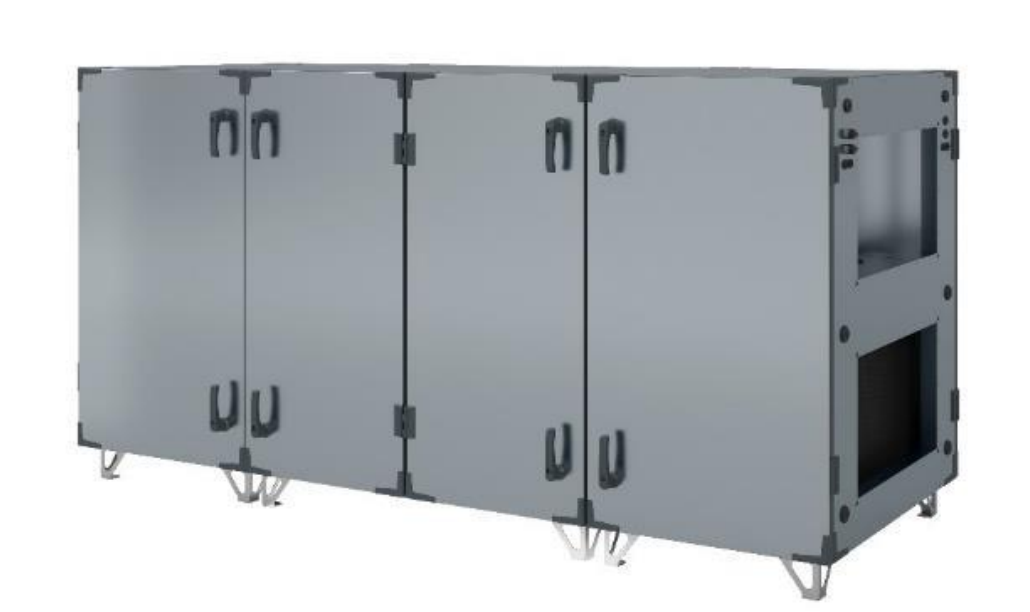
The vts VENTUS Platinium Compact Air Handling & Ventilation Units are designed for projects that need high-efficiency air treatment in a compact footprint. Built for modern HVAC installations, these units combine heat recovery, low-energy EC fans, advanced filtration, and integrated automation to deliver reliable ventilation with reduced operating costs. The range is especially well suited to commercial buildings, schools, offices, healthcare environments, hospitality spaces, and renovation projects where installation space is limited but performance cannot be compromised.
One of the strongest advantages of the vts VENTUS Platinium Compact Air Handling & Ventilation Units is their flexible configuration. Depending on the model, they can include rotary or counterflow heat exchangers, high-efficiency filters, electric or water heating options, and additional accessories such as silencers or cooling coils. The compact design also makes them easier to transport and install, including through standard 900 mm door openings in many applications. This makes them a practical choice for retrofit work and tight mechanical rooms.
Typical pricing varies by size, airflow capacity, and selected accessories, but a realistic estimate for this product category is usually in the mid-to-high HVAC equipment range, often starting from several thousand euros and increasing significantly for larger, fully configured systems. Availability is generally tied to project-based ordering through HVAC distributors, contractors, and regional VTS partners. For buyers comparing compact AHUs, the Platinium line stands out for its durability, energy recovery performance, and broad application range.
Specifications
- Product type: Compact air handling and ventilation units with vertical duct connection
- Airflow range: approximately 420 to 8,000 m³/h depending on configuration and size
- Heat recovery: rotary heat exchanger or counterflow hexagonal exchanger with bypass
- Energy recovery efficiency: up to 90%
- Fan technology: high-efficiency EC motors for lower power consumption and smooth modulation
- Panel construction: 50 mm mineral wool insulation with Magnelis-coated metal surfaces
- Corrosion resistance: C5 classification for demanding environments
- Casing performance: EN1886 compliant with strong thermal and structural properties
- Filtration: configurable filter stages, commonly supplied with high-efficiency filters
- Heating options: electric heater power from roughly 3 to 21 kW depending on unit size
- Operating range for counterflow exchanger: about -40°C to +90°C
- Installation benefit: compact dimensions designed for easier transportation and retrofits
Compared with many standard compact AHUs, this series emphasizes stronger casing protection, higher recovery efficiency, and more flexible section layout. It is a better fit for demanding commercial HVAC projects than basic ventilation boxes, especially when long-term efficiency and service life matter.
Detailed Description
The vts VENTUS Platinium Compact Air Handling & Ventilation Units are engineered to move, filter, heat, cool, and recover energy from supply and exhaust air streams in a single compact cabinet. Fresh air enters the system, passes through filtration and conditioning stages, and is then distributed into the building, while extracted indoor air is used to recover thermal energy before being exhausted. This improves indoor air quality while reducing the load on heating and cooling systems.
The build quality is a major strength. The casing uses mineral wool panels with double-sided metal cladding and Magnelis coating, which helps improve corrosion resistance and durability in challenging environments. Internal components are arranged for efficient servicing, and the modular structure supports different heat recovery and treatment configurations. In real-world use, this makes the units suitable for offices, schools, retail spaces, residential common areas, and public buildings where reliable ventilation and energy savings are priorities.
User experience is typically improved by the plug-and-play style automation, EC motor efficiency, and relatively compact footprint. Facility teams benefit from simpler integration, while contractors appreciate the easier installation compared with larger centralized systems.
Setup Guide
Installation of the vts VENTUS Platinium Compact Air Handling & Ventilation Units should be handled by qualified HVAC professionals. Start by verifying the project drawings, airflow requirements, and duct connection orientation. Confirm that the unit can be brought into the mechanical space safely and that there is enough clearance for service access, filter replacement, and maintenance.
Next, position the unit on a stable base or suspension system as specified for the model. Connect the supply and return ducts, then install any optional components such as silencers, cooling coils, or heating modules. After that, complete electrical wiring, automation connections, and sensor installation. Most units are supplied with integrated controls, so configuration usually includes setting airflow targets, heating limits, fan curves, and schedule parameters through the controller interface.
Before startup, inspect all seals, filters, and fasteners. Ensure the rotation or bypass function of the heat exchanger is set correctly and check that condensate drainage is properly connected where required. If airflow is unstable, verify duct resistance, filter condition, and sensor placement. Never operate the unit with open access panels, and always isolate power before service work.
Troubleshooting
Common issues with compact air handling units usually relate to airflow imbalance, dirty filters, fan alarms, temperature control errors, or communication faults in the automation system. If airflow is low, check for blocked filters, closed dampers, damaged ductwork, or incorrect fan settings. If the unit produces excess noise, inspect mounting stability, duct vibration, and fan speed configuration.
Typical controller messages may include general alarms such as filter replacement warnings, fan overload faults, sensor failures, or heat exchanger protection alerts. If an error code appears, compare it with the controller manual and reset only after confirming the underlying cause. For temperature problems, check heater operation, exchanger bypass position, and sensor calibration. Preventive maintenance should include regular filter changes, cleaning of heat recovery components, and inspection of electrical terminals.
The warranty period and support terms depend on the distributor and region. For help, contact the authorized VTS sales office, local HVAC distributor, or the installer who commissioned the unit. Keep the unit model, serial number, and controller fault code available when requesting assistance.
Pros & Cons
Pros
- High heat recovery efficiency, making it energy cost-effective for long-term operation
- Compact footprint with easier transport and installation in constrained spaces
- Durable casing with strong corrosion resistance for demanding environments
- EC motors improve efficiency and support precise airflow control
- Flexible configuration options for heating, cooling, filtration, and automation
- Good value for projects that need premium performance in a smaller package
Cons
- Project-based pricing can be higher than basic ventilation equipment
- Professional installation is required, which adds to total cost
- Advanced configuration may be more complex than entry-level AHUs
- Best value is realized only when the full recovery and automation features are used
For buyers comparing compact AHUs, this series is stronger than low-cost alternatives in durability, efficiency, and customization. It is especially attractive when lifecycle cost matters more than upfront purchase price.
Customer Reviews
Users commonly rate this type of system around 4.5 out of 5 stars for efficiency, build quality, and ease of integration. Positive feedback often highlights stable airflow, quiet operation, and the savings achieved through energy recovery. Many reviewers also appreciate the compact cabinet design, especially during renovation projects.
Common complaints usually focus on installation complexity, higher purchase price, and the need for regular maintenance to keep performance at its best. One facilities manager described it as “a reliable compact AHU that delivers strong comfort control without taking up valuable plant room space.” A contractor noted that “the modular design makes commissioning easier once the system is correctly planned.”
Overall, this product is recommended for commercial and institutional projects where energy efficiency, long service life, and flexible configuration are priorities. Buyers looking for a basic low-cost ventilation box may prefer a simpler alternative, but those wanting premium compact air handling performance will find strong value here.
Faqs
How do I set up vts VENTUS Platinium Compact Air Handling & Ventilation Units for first-time operation?
What should I check if vts VENTUS Platinium Compact Air Handling & Ventilation Units is not delivering enough airflow?
Which key features make vts VENTUS Platinium Compact Air Handling & Ventilation Units suitable for renovation projects?
Are vts VENTUS Platinium Compact Air Handling & Ventilation Units compatible with standard building automation systems?
How can I optimize energy efficiency in vts VENTUS Platinium Compact Air Handling & Ventilation Units?
What maintenance tasks are most important for vts VENTUS Platinium Compact Air Handling & Ventilation Units?
Why does my vts VENTUS Platinium Compact Air Handling & Ventilation Units make unusual noise during operation?
What installation requirements should I confirm before buying vts VENTUS Platinium Compact Air Handling & Ventilation Units?
Tags
More vts manuals
Leave a Comment