
Setup & Features: Vulcan Electric Stationary and Tilting Kettles K20EL, K40EL, K60EL, K20ETL, K40ELT, and K60ELT User Manual
Content
Vulcan Electric Stationary and Tilting Kettles K20EL, K40EL, K60EL, K20ETL, K40ELT, and K60ELT: Complete Product Manual
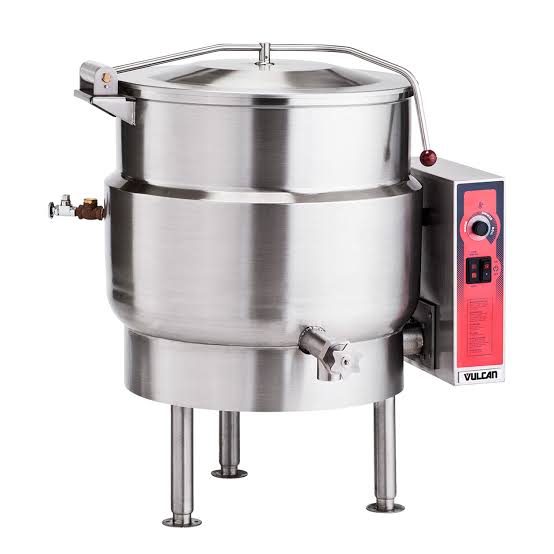
The Vulcan Electric Stationary and Tilting Kettles K20EL, K40EL, K60EL, K20ETL, K40ELT, and K60ELT are heavy-duty commercial cooking solutions built for high-volume kitchens that need reliable batch production, consistent heat, and efficient workflow. These electric steam-jacketed kettles are widely used in restaurants, institutions, catering operations, commissaries, and food manufacturing environments where soups, sauces, stews, chili, custards, and other liquid or semi-liquid products must be prepared in large quantities with controlled, even heating.
One of the biggest advantages of the vulcan Electric Stationary and Tilting Kettles K20EL, K40EL, K60EL, K20ETL, K40ELT, and K60ELT is their flexibility across batch sizes. The lineup includes 20-gallon, 40-gallon, and 60-gallon models, giving operators the ability to match kettle capacity to menu demand. Stationary versions are ideal for production lines that require fixed placement, while tilting versions make product transfer easier and reduce labor during pouring, portioning, and cleaning. These kettles are built for durable floor-mounted installation, stainless steel construction, and commercial-grade electrical performance, making them a strong fit for demanding kitchen environments.
Estimated pricing typically ranges from about $10,000 to $25,000 depending on size, configuration, voltage, and supplier, with larger tilting models usually costing more. Availability is generally through commercial restaurant equipment dealers, authorized distributors, and industrial kitchen suppliers. For buyers searching for a dependable steam-jacketed kettle solution, the vulcan Electric Stationary and Tilting Kettles K20EL, K40EL, K60EL, K20ETL, K40ELT, and K60ELT remain a practical choice for performance, capacity, and long-term value.
Specifications for Vulcan Electric Stationary and Tilting Kettles
The vulcan Electric Stationary and Tilting Kettles K20EL, K40EL, K60EL, K20ETL, K40ELT, and K60ELT are commercial floor-model kettles designed for efficient batch cooking and high-temperature steam-jacketed heating.
- Capacities: 20 gallons, 40 gallons, and 60 gallons for both stationary and tilting configurations.
- Heating output: 12 kW on the 20-gallon models and 18 kW on the 40-gallon and 60-gallon models.
- Electrical options: Common commercial configurations include 208V, 240V, and 480V, with single-phase and three-phase options depending on model and setup.
- Construction: Heavy-duty stainless steel body with a 2/3-jacketed steam design for even heat transfer.
- Mounting: Floor-mounted stationary or tilting base depending on version.
- Tilting models: Manual tilt operation for controlled pouring and product transfer.
- Typical performance: Designed for fast recovery, uniform simmering, and consistent batch cooking in commercial kitchens.
- Comparison with similar products: Compared with standard gas kettles, electric steam-jacketed models offer cleaner installation, precise temperature control, and lower on-site combustion requirements.
In practical use, the 20-gallon model suits smaller production batches, while the 40- and 60-gallon versions are better for institutional cooking, commissaries, and high-volume soup or sauce production.
Setup Guide for Vulcan Electric Steam-Jacketed Kettles
Before installing the vulcan Electric Stationary and Tilting Kettles K20EL, K40EL, K60EL, K20ETL, K40ELT, and K60ELT, confirm that the site has proper electrical service, floor space, drainage, and ventilation. These kettles are heavy commercial appliances and should be installed by qualified personnel only.
- Uncrate the kettle carefully and inspect it for shipping damage before signing off on delivery.
- Place the unit on a level floor in the designated production area, leaving enough clearance for maintenance access.
- Verify voltage, phase, and amperage requirements against the building’s electrical supply before connection.
- Make all hardwire connections according to local electrical codes and the equipment nameplate.
- For tilting units, test the tilt mechanism to ensure smooth movement and proper locking.
- Fill the jacket and cooking vessel only as instructed in the manufacturer’s operating procedure.
- Run a short test cycle to check heat-up, controls, and any indicator lights or switches.
Safety warnings are essential: never energize the kettle without verifying proper installation, never exceed fill limits, and keep hands clear of hot surfaces and steam release areas. If the unit does not heat, verify incoming power, breaker status, and wiring connections first. If the kettle is not level or the tilt action feels stiff, stop operation and inspect the base and mounting before use.
Troubleshooting Vulcan Electric Stationary and Tilting Kettles
Most issues with commercial electric kettles are related to power supply, controls, heating elements, or mechanical tilt operation. The following quick checks resolve many common problems.
- Kettle will not heat: Check the main disconnect, breaker, phase supply, and thermostat settings. Confirm the unit is receiving the correct voltage.
- Slow heat-up: Inspect for low incoming power, incorrect phase, or scaling that may be reducing heat transfer.
- Uneven cooking: Ensure the kettle is filled within the recommended range and that the product is stirred as needed during batch cooking.
- Tilt mechanism feels difficult: Check for obstructions, alignment issues, or wear in the manual tilt assembly.
- Indicator lights not working: Verify control power and internal fusing where applicable.
Specific error codes may vary by control version, so always reference the unit’s nameplate and service documentation if a fault display appears. Preventive maintenance should include regular cleaning, inspection of wiring and controls, scale removal, and checking moving parts on tilting models. Warranty coverage and support are typically handled through the seller, distributor, or Vulcan equipment service channels. For help, contact the authorized dealer that supplied the unit or the manufacturer’s commercial equipment support department.
Pros and Cons of Vulcan Electric Stationary and Tilting Kettles
Pros
- Available in multiple capacities, making it easier to match production needs.
- Electric steam-jacketed design supports even heating and consistent results.
- Tilting models simplify pouring, transfer, and cleanup.
- Stainless steel construction is durable and well suited to commercial kitchens.
- Strong value for operations that need long-term batch cooking reliability.
Cons
- Requires substantial electrical service, which can raise installation costs.
- Large floor footprint may be difficult in compact kitchens.
- Manual tilt versions may be less convenient than powered tilt systems.
- Higher upfront cost than smaller countertop or gas alternatives.
For operators comparing alternatives, these kettles are often a better fit than smaller kettles when output, consistency, and durability matter more than initial price. They deliver strong long-term value in kitchens that run large batches every day.
Customer Reviews for Vulcan Electric Kettles
Customer feedback on commercial kettles in this class is generally positive, especially from foodservice teams that value speed, durability, and easy batch processing. Typical ratings fall around 4 to 5 stars for performance and build quality.
- Praise: “Heats evenly and holds temperature well during soup production.”
- Praise: “The tilting model saves a lot of labor when transferring large batches.”
- Complaint: “Installation required a significant electrical upgrade.”
- Complaint: “The unit is large and needs dedicated floor space.”
Most buyers recommend these kettles for high-volume kitchens, especially when consistent output and easy cleaning are priorities. For smaller operations, the 20-gallon version is usually the best starting point, while the 40-gallon and 60-gallon models are preferred for institutional and production-scale cooking.
Frequently Asked Questions About Vulcan Electric Stationary and Tilting Kettles
What are these kettles used for? They are used for large-batch cooking of soups, sauces, stews, chili, gravies, and other liquid foods.
What is the difference between stationary and tilting models? Stationary models stay fixed in place, while tilting models allow controlled pouring and easier product transfer.
Which size should be chosen? The 20-gallon model suits smaller batch production, while the 40-gallon and 60-gallon models work best for high-volume kitchens.
Do these kettles need special electrical service? Yes. They require properly matched commercial electrical supply, and installation should be performed by qualified professionals.
The vulcan Electric Stationary and Tilting Kettles K20EL, K40EL, K60EL, K20ETL, K40ELT, and K60ELT are a dependable option for commercial kitchens that need dependable heat, durable construction, and scalable capacity.
Faqs
How do I set up vulcan Electric Stationary and Tilting Kettles K20EL, K40EL, K60EL, K20ETL, K40ELT, and K60ELT for the first time?
What should I do if my vulcan Electric Stationary and Tilting Kettles K20EL, K40EL, K60EL, K20ETL, K40ELT, and K60ELT is not heating properly?
What is the difference between stationary and tilting models in the vulcan Electric Stationary and Tilting Kettles K20EL, K40EL, K60EL, K20ETL, K40ELT, and K60ELT line?
Can vulcan Electric Stationary and Tilting Kettles K20EL, K40EL, K60EL, K20ETL, K40ELT, and K60ELT be used for soups, sauces, and pasta production?
What electrical requirements should I check before installing vulcan Electric Stationary and Tilting Kettles K20EL, K40EL, K60EL, K20ETL, K40ELT, and K60ELT?
Why does my vulcan Electric Stationary and Tilting Kettles K20EL, K40EL, K60EL, K20ETL, K40ELT, and K60ELT show a low water warning?
How do I clean and maintain vulcan Electric Stationary and Tilting Kettles K20EL, K40EL, K60EL, K20ETL, K40ELT, and K60ELT to extend service life?
What capacity should I choose in the vulcan Electric Stationary and Tilting Kettles K20EL, K40EL, K60EL, K20ETL, K40ELT, and K60ELT series for my kitchen?
More vulcan manuals
- Setup: Vulcan K60ELT Electric Stationary Kettle User Manual
- Vulcan K20ETT Electric Countertop Tilting User Manual
- Vulcan K6ETT Electric Tilting Counter Kettle User Manual
- Vulcan K20DL Direct Steam Jacketed Tilting Kettle
- Vulcan 24S-F Gas Restaurant Ranges User Manual
- Vulcan VACB36 & ACB36 Gas Charbroiler User Manual
Leave a Comment