
Bryant 820SA Non-Condensing Gas Furnace User Manual
Content
Bryant 820SA Non-Condensing Gas Furnace Overview
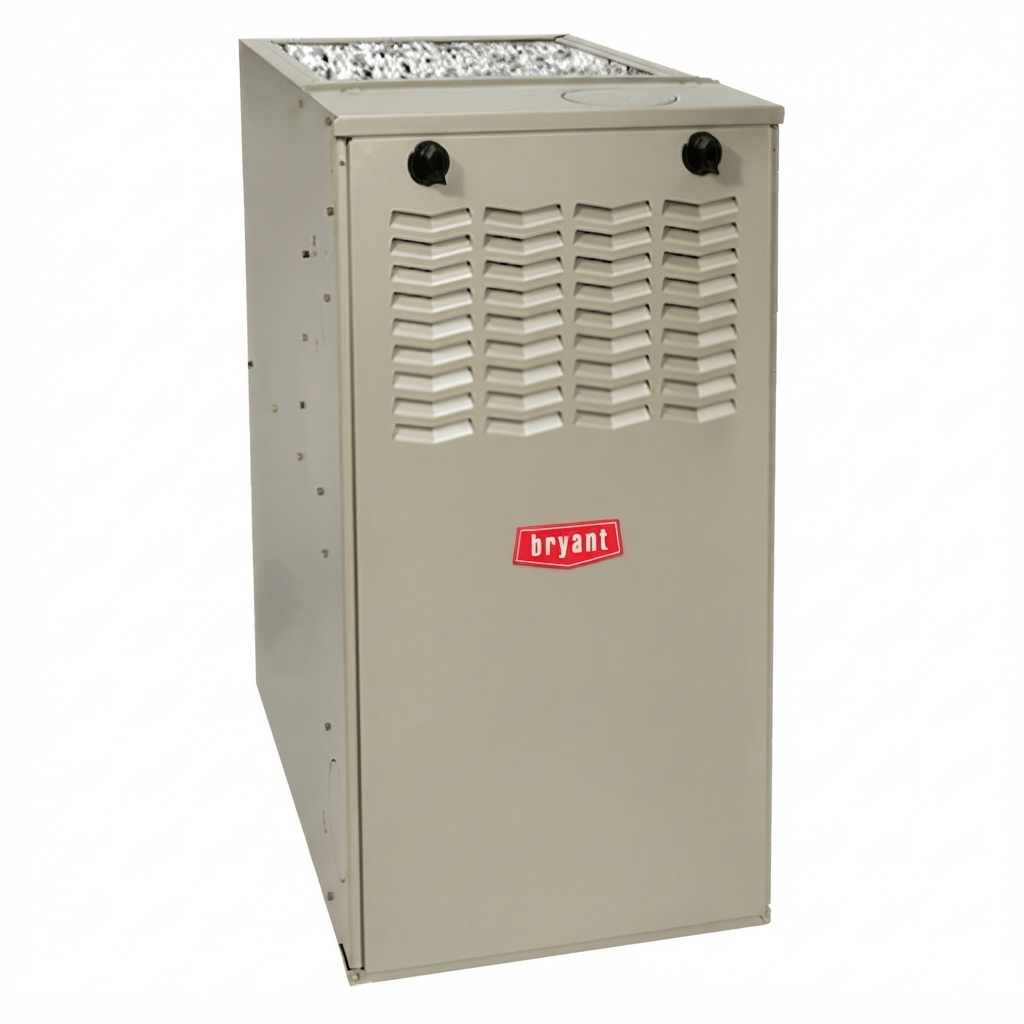
The Bryant 820SA non-condensing gas furnace is a dependable 80% AFUE heating solution built for homeowners who want reliable warmth, straightforward operation, and proven value. As part of Bryant’s Legacy line, the Bryant 820SA Non-Condensing Gas Furnace is designed for single-stage heating and features a multi-speed ECM-style blower, making it a practical choice for homes in mild to moderate climates or for users replacing an older standard-efficiency furnace.
This model is especially well suited for buyers who prioritize affordability, compatibility, and steady comfort over ultra-high efficiency. It uses a 4-way multipoise design, which gives installers more flexibility in tight utility spaces, closets, basements, and attics. The furnace is factory set for natural gas and can be converted to liquid propane with the proper approved kit, expanding installation options for different fuel setups.
One of the biggest advantages of the Bryant 820SA Non-Condensing Gas Furnace is its balance of performance and cost. It delivers reliable heat, quiet operation, and a simpler design that can mean easier serviceability over time. Estimated pricing commonly falls in the mid-range for residential gas furnaces, with many installed systems landing around $3,500 to $5,000 depending on home size, region, labor, and accessories. Availability is generally through Bryant dealers and HVAC contractors, making it a common replacement option for standard-efficiency furnace upgrades.
Technical Specifications and Key Features
The Bryant 820SA Non-Condensing Gas Furnace is built as a fixed-capacity, single-stage heating system with a strong focus on dependable operation and installation flexibility. It is best understood as a conventional 80% furnace, meaning it vents through a standard flue rather than using a condensing PVC vent system.
- AFUE efficiency: 80%
- Heating stages: Single-stage
- Blower motor: Variable 25-speed, constant torque ECM motor
- Heat exchanger: Aluminized steel
- Fuel type: Natural gas, convertible to propane with approved kit
- Configuration: 4-way multipoise
- Ignition: Hot surface igniter for pilot-free starts
- Noise reduction: QuieTech noise control system
- Capacity range: Approximately 30,000 to 110,000 BTUH depending on model
- Electrical supply: 115 volts, 60 Hz, single-phase
- Temperature rise range: Typically 30 to 60 degrees Fahrenheit
- Airflow: Sized for common residential cooling and heating applications
Compared with a Bryant 80% fixed-speed furnace, the 820SA offers better airflow control and quieter comfort. Compared with high-efficiency condensing furnaces, it is simpler, less expensive to install, and often easier to match with existing venting systems. For homeowners searching for a Bryant 820SA gas furnace manual, this model is often chosen for its practical service access and conventional furnace design.
Pros and Cons of the Bryant 820SA Non-Condensing Gas Furnace
Pros
- Solid value for money: The 80% AFUE design keeps upfront costs lower than high-efficiency alternatives while still delivering dependable heat.
- Flexible installation: The 4-way multipoise cabinet helps contractors fit the furnace into a variety of home layouts.
- Quiet operation: The QuieTech system and ECM blower contribute to smoother, quieter performance.
- Good replacement option: Ideal for homeowners upgrading from an older standard-efficiency furnace without changing venting infrastructure.
- Comfort improvement: The constant-torque blower helps maintain more even airflow than basic fixed-speed models.
Cons
- Lower efficiency than condensing models: Homeowners seeking maximum energy savings may prefer a 90%+ furnace.
- Single-stage heating: It does not provide the fine comfort control of two-stage or modulating systems.
- Not ideal for extreme climates: In very cold regions, a high-efficiency unit may deliver better long-term savings.
- Installation cost still varies widely: Total price depends heavily on ductwork, venting, and labor conditions.
For buyers comparing alternatives, the Bryant 820SA Non-Condensing Gas Furnace is best for budget-conscious installs, while premium Bryant models are better for maximum comfort and energy savings.
Customer Reviews and Real-World Feedback
Homeowners commonly rate the Bryant 820SA around 4.2 out of 5 stars for overall comfort, reliability, and value. Many users praise its quiet startup, even heat delivery, and straightforward performance during winter months.
Typical positive feedback includes comments like, “It heats the house quickly and runs much quieter than our old furnace,” and “A solid upgrade that didn’t require major changes to the existing venting.”
Common complaints usually focus on the limitations of an 80% furnace, especially for users who expected higher efficiency savings. Some customers also note that final installed cost can be higher than expected once labor and materials are included.
Purchase recommendation: the Bryant 820SA gas furnace is a smart buy for homeowners who want a dependable standard-efficiency furnace with good installation flexibility. It is a strong option for replacement projects, especially when budget, reliability, and compatibility matter more than premium efficiency.
Frequently Asked Questions About the Bryant 820SA Gas Furnace
Is the Bryant 820SA a condensing furnace?
No. The Bryant 820SA is a non-condensing furnace with 80% AFUE, which means it uses a conventional venting setup.
Can it run on propane?
Yes. It is factory shipped for natural gas and can be converted to propane with the correct approved conversion kit.
Who is this furnace best for?
It is best for homeowners who want a reliable, standard-efficiency furnace for mild to moderate climates, especially during replacement projects.
How does it compare to high-efficiency models?
High-efficiency furnaces save more energy, but the Bryant 820SA is often cheaper to install and simpler to maintain.
Faqs
How do I set up a Bryant 820SA Non-Condensing Gas Furnace for the first time?
What should I do if my Bryant 820SA Non-Condensing Gas Furnace is not heating properly?
What makes the Bryant 820SA Non-Condensing Gas Furnace different from other Bryant gas furnaces?
Is the Bryant 820SA Non-Condensing Gas Furnace compatible with a heat pump system?
Can the Bryant 820SA Non-Condensing Gas Furnace be converted from natural gas to propane?
How often should I maintain a Bryant 820SA Non-Condensing Gas Furnace?
Why is my Bryant 820SA Non-Condensing Gas Furnace making unusual noises?
What size air filter does the Bryant 820SA Non-Condensing Gas Furnace need and how does it affect performance?
More bryant manuals
- Bryant Series A Condensing Gas Furnance 986TA User Manual
- Bryant Legacy 4-Way Multipoise Gas Furnace 830SB User Manual
- Bryant Puron Advance Refrigerant FT5 User Manual
- Bryant 800SB Non-Condensing Gas Furnaces User Manual
- Bryant COR 7 Thermostat TSTPRH01 User Manual
- Bryant OBM098 Multipoise Oil Furnace User Manual
Leave a Comment