
Carrier 50HCQ04-12 Rooftop Heat Pump User Manual
Content
Carrier 50HCQ04-12 Rooftop Heat Pump: Product Overview and Buyer’s Guide
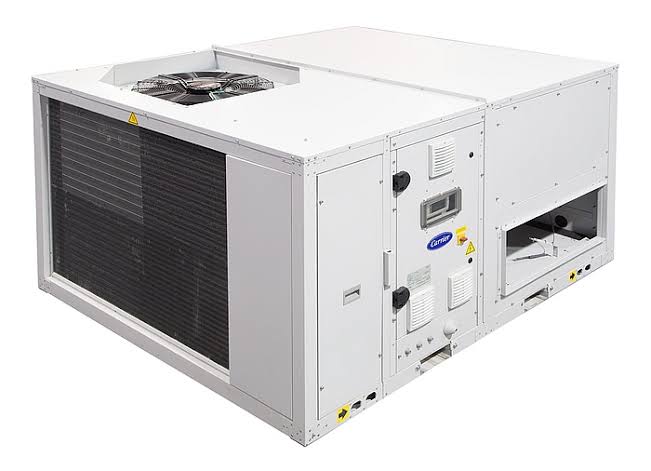
The Carrier 50HCQ04-12 rooftop heat pump is a commercial packaged unit designed for dependable heating and cooling in spaces that need year-round climate control. Built for rooftop installation, this WeatherMaster-style system is commonly used in retail stores, offices, schools, restaurants, and light commercial buildings where footprint, serviceability, and energy efficiency matter. As a packaged rooftop heat pump, it combines cooling, heat pump heating, and airflow management in one cabinet, reducing indoor equipment requirements and simplifying maintenance.
One of the main advantages of the Carrier 50HCQ04-12 Rooftop Heat Pump is its flexible application range. It is available in sizes from roughly 3 to 12.5 tons across the series, with the 04-12 family covering smaller to mid-size commercial loads. Depending on configuration, it supports single-stage or two-stage cooling, Puron R-410A refrigerant, and both horizontal and vertical airflow setups. That makes it a practical choice for buildings that need efficient performance without a complex mechanical room.
Typical pricing varies widely based on tonnage, voltage, options, and installation requirements, but buyers often see the unit or comparable packaged rooftop systems priced in the several-thousand-dollar range before installation. In many cases, total project cost is driven more by crane set, ductwork, electrical work, and controls than by the cabinet itself. Availability is generally through Carrier commercial dealers, HVAC distributors, and authorized parts channels. For facilities that need a durable rooftop HVAC solution with service-friendly access, this model remains a strong contender.
Carrier 50HCQ04-12 Rooftop Heat Pump Specifications and Key Features
- Product type: Single-package rooftop heat pump with electric heat capability in the 50HCQ family.
- Refrigerant: R-410A Puron refrigerant for modern commercial refrigeration performance.
- Capacity range: Family sizes generally span 3 to 12.5 nominal tons, with the 04-12 range covering the lower and middle sizes.
- Cooling control: Single-stage on smaller sizes and two-stage cooling on larger configurations within the series.
- Airflow options: Horizontal and vertical airflow configurations for flexible rooftop layouts.
- Fan performance: Variable CFM settings are available across the family, with published airflow tables for specific size and orientation combinations.
- Compressor system: Scroll-compressor-based commercial package design for steady operation and reduced vibration.
- Electrical options: Multiple voltage and phase configurations are available depending on exact model build.
- Heating method: Heat pump operation with supplemental electric heat options in many configurations.
- Service access: Rooftop service panels and package-unit construction simplify routine maintenance.
Compared with similar packaged rooftop heat pumps, the Carrier 50HCQ04-12 Rooftop Heat Pump stands out for broad configuration flexibility and a strong commercial parts ecosystem. It is especially competitive against other packaged units when a building needs both heating and cooling in a single rooftop cabinet and when service access is a priority.
Troubleshooting Carrier 50HCQ04-12 Rooftop Heat Pump Problems
- No cooling or weak cooling: Check thermostat settings, disconnect power, air filters, condenser airflow, and refrigerant charge before calling for service.
- Unit short cycling: Inspect thermostat placement, dirty coils, clogged filters, and incorrect airflow settings.
- Blower runs but compressor does not start: Verify line voltage, control board signals, safety switches, and contactor condition.
- Ice on coil or refrigerant lines: Improve airflow, replace dirty filters, and confirm that the evaporator coil is clean.
- Loud operation: Check for loose panels, failing motors, damaged fan blades, or rooftop vibration issues.
- Error indications: Some configurations use control-board diagnostics or LED fault codes rather than a simple thermostat code display; fault interpretation should follow the unit-specific service guide.
Preventive maintenance reduces most failures. Replace filters on schedule, clean coils, verify belts and motors where applicable, and inspect drain paths, wiring, and insulation before peak cooling season. Warranty coverage and support depend on the exact model, installation, and registration status, so owners should confirm terms with an authorized Carrier dealer. For help, contact a Carrier commercial HVAC distributor, a licensed rooftop-unit service contractor, or Carrier customer support through the official commercial service channel.
Pros and Cons of the Carrier 50HCQ04-12 Rooftop Heat Pump
Pros
- All-in-one rooftop design saves indoor space and simplifies system layout.
- Flexible tonnage and configuration options make it suitable for many light commercial buildings.
- R-410A refrigerant and packaged construction support dependable modern HVAC operation.
- Service access is generally straightforward for trained technicians.
- Good value for buildings that need both heating and cooling from one system.
Cons
- Requires professional installation, rooftop rigging, and careful duct connection.
- Upfront cost can be significant once installation and crane services are included.
- Performance depends heavily on correct sizing and airflow setup.
- Replacement parts and labor can be expensive compared with smaller split systems.
- Noise and rooftop exposure may be concerns in some applications.
For value for money, the Carrier 50HCQ04-12 Rooftop Heat Pump is strongest when replacing an older commercial rooftop unit or when a building needs a consolidated HVAC solution. Compared with many alternative packaged units, it offers a balanced mix of serviceability, commercial durability, and application flexibility.
Customer Reviews of the Carrier 50HCQ04-12 Rooftop Heat Pump
Owners and facility managers often rate this type of Carrier rooftop unit around 4 out of 5 stars for overall reliability and ease of service. Common praise centers on stable temperature control, compact rooftop installation, and the convenience of having heating and cooling in one cabinet. Many users describe it as a practical long-term solution for commercial spaces with moderate HVAC loads.
Common complaints usually involve installation cost, occasional control issues, and the need for professional maintenance to keep performance high. A typical customer comment would be, “It has kept our store comfortable year-round, and servicing it is easier than juggling separate systems.” Another common note is, “Great performance, but the installation and crane costs were higher than expected.” For buyers considering the Carrier 50HCQ04-12 Rooftop Heat Pump, it is a strong recommendation for commercial users who want dependable packaged HVAC performance and are prepared for professional installation and routine service.
Faqs
How do I set up the carrier 50HCQ04-12 Rooftop Heat Pump for first-time operation?
Why is my carrier 50HCQ04-12 Rooftop Heat Pump not heating or cooling correctly?
What thermostat settings work best with the carrier 50HCQ04-12 Rooftop Heat Pump?
What are the key features of the carrier 50HCQ04-12 Rooftop Heat Pump that affect performance?
What should I check if the carrier 50HCQ04-12 Rooftop Heat Pump keeps cycling on and off?
How often should I service the carrier 50HCQ04-12 Rooftop Heat Pump for reliable operation?
Is the carrier 50HCQ04-12 Rooftop Heat Pump compatible with standard commercial HVAC controls?
How can I improve energy efficiency on the carrier 50HCQ04-12 Rooftop Heat Pump?
More carrier manuals
Leave a Comment