
Carrier Furnace Replacement Control Kit User Manual
Content
Carrier Furnace Replacement Control Kit: Complete Product Manual
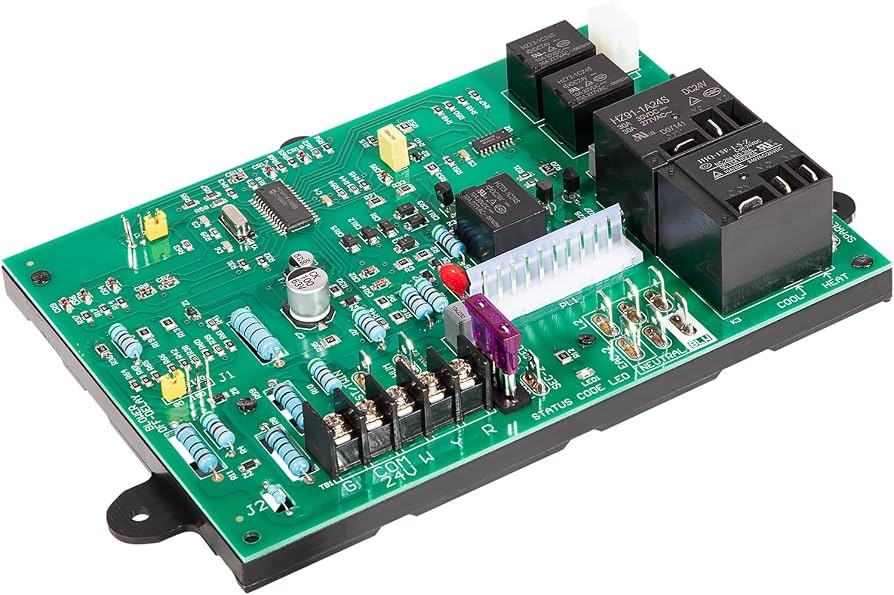
The Carrier Furnace Replacement Control Kit is a practical solution for restoring ignition control, blower sequencing, and safety monitoring in compatible Carrier, Bryant, and Payne furnaces. Designed as a direct replacement for several obsolete control boards, this kit helps homeowners, HVAC technicians, and facility managers extend the life of an existing heating system without replacing the entire furnace. It is especially useful when a furnace shows intermittent ignition issues, fan timing problems, or diagnostic faults tied to the control board.
One of the biggest advantages of the Carrier Furnace Replacement Control Kit is its broad compatibility with legacy part numbers, including multiple HK42FZ-series boards and 325878-751-style replacements. That makes it a strong choice for repairs on older systems where OEM parts may be hard to source. The kit typically includes the control board, interconnect harnesses, a manual, and accessories, which simplifies installation and reduces the number of extra parts needed on site.
Estimated pricing generally ranges from about $170 to $400 for common replacement kits, while some OEM board assemblies can cost more depending on model and supplier. Availability is usually good through HVAC parts retailers, major distributors, and Carrier support channels, though stock can vary by board revision. For users searching for a reliable Carrier furnace control board replacement, this kit offers a balance of compatibility, diagnostics, and value.
Specifications for Carrier Furnace Replacement Control Kit
- Input voltage: 25 VAC, 50/60 Hz
- Maximum input current: 0.45 amp at 25 VAC
- Valve relay rating: 1.5 amp at 25 VAC, 50/60 Hz
- Ignitor relay rating: 6.0 amp at 120 VAC, 50/60 Hz
- Inducer relay rating: 2.2 FLA to 3.5 LRA at 120 VAC
- Circulator relay rating: 14.5 FLA to 25.0 LRA at 120 VAC
- Operating temperature range: -40°F to 175°F
- Humidity range: 5% to 93% relative humidity, non-condensing
- Flame detection requirement: 1 microamp DC minimum for reliable sensing
- Timing performance: 0.8 second flame establishing time and 2.0 second flame failure response at 60 Hz
- Mounting style: surface-mount multipurpose configuration
- Approved gas types: natural gas, manufactured gas, mixed gas, liquefied petroleum gas, and LP air mixtures
- Typical size: 5.25 inches wide x 7 inches high x 1.25 inches deep
Compared with universal furnace control kits, the Carrier Furnace Replacement Control Kit is usually better suited to exact-fit restoration because it is designed to replace specific Carrier-family boards and preserve original system behavior. Compared with lower-cost generic boards, it often provides stronger compatibility and easier fault diagnosis through LED feedback and built-in self-test functions.
Troubleshooting Guide for Carrier Furnace Control Board Replacement
Common problems with a Carrier Furnace Replacement Control Kit often trace back to wiring, flame sensing, or installation errors rather than a defective board. If the furnace does not ignite, check the thermostat call for heat, the 24V supply, and all harness connections. If the blower runs continuously, inspect fan-limit settings, the control jumpers, and the board configuration.
- No heat: verify power, fuse condition, thermostat signal, and ignition sequence.
- Ignitor not heating: confirm relay output, hot surface ignitor continuity, and 120V supply where applicable.
- Flame drops out: clean the flame sensor, check grounding, and inspect gas pressure.
- Blower timing issues: review fan delay settings and connector placement.
- LED fault indication: use the diagnostic light and fault recall function to identify pressure switch, flame, or ignition problems.
Preventive care includes tightening all terminals, verifying proper grounding, and keeping the flame sensor clean. Many integrated Carrier-style control kits include self-test routines and diagnostic LEDs, which can reduce callback time during service. Warranty coverage varies by distributor and part number, so buyers should confirm the return policy and parts warranty before installation. For assistance, contact the selling distributor or Carrier support through official dealer and documentation channels, and have the furnace model number and replacement board part number ready.
Pros and Cons of Carrier Furnace Replacement Control Kit
Pros
- Direct replacement support for several Carrier, Bryant, and Payne control board part numbers.
- Helps restore ignition, blower control, and safety monitoring without replacing the full furnace.
- Built-in diagnostics and fault recall improve service speed and troubleshooting accuracy.
- Good value for money when compared with full furnace replacement or premium OEM assemblies.
- Useful for older heating systems where original boards are discontinued.
Cons
- Compatibility must be checked carefully before purchase.
- Installation can be technical and may require an HVAC professional.
- Pricing can vary widely by supplier and board revision.
- Universal alternatives may be cheaper, but they may not match the original control logic as well.
For many repairs, the Carrier Furnace Replacement Control Kit is a strong middle ground: more precise than a generic universal board, but usually far less expensive than replacing the furnace. That makes it a smart option for homeowners and contractors focused on targeted repairs and long-term system reliability.
Customer Reviews: What Buyers Say About Carrier Furnace Replacement Control Kit
Average customer sentiment is generally positive, with many users rating the kit around 4 out of 5 stars for fitment, reliability, and easy restoration of heat. Buyers frequently praise the clear wiring layout and the convenience of receiving harnesses and instructions in the box.
- "My furnace was back online the same day. The replacement board matched perfectly."
- "Great value compared with replacing the whole system."
- "The diagnostic LED made troubleshooting much easier."
- "Installation was straightforward for my technician, but not beginner-friendly."
Common complaints include price variation, occasional shipping delays, and confusion over exact compatibility. Many reviewers recommend confirming the furnace model and old board number before ordering. For buyers comparing alternatives, the Carrier Furnace Replacement Control Kit is often recommended when exact replacement and dependable furnace operation matter more than the lowest possible cost.
Faqs
How do I set up a carrier Furnace Replacement Control Kit for the first time?
What compatibility checks should I make before buying a carrier Furnace Replacement Control Kit?
Why is my carrier Furnace Replacement Control Kit not turning the furnace on?
What do flashing LED codes on a carrier Furnace Replacement Control Kit mean?
How do I troubleshoot blower fan problems after installing a carrier Furnace Replacement Control Kit?
Can a carrier Furnace Replacement Control Kit improve furnace performance or efficiency?
What safety steps should I follow when installing a carrier Furnace Replacement Control Kit?
How often should I inspect or maintain a carrier Furnace Replacement Control Kit?
More carrier manuals
- Setup: Carrier DEHXXCDA1080A Dehumidifier User Manual
- Carrier HB-Series Geothermal Heat Pump User Manual
- Carrier KSACN0401AAA Wired Remote Controller User Manual
- Carrier 58STA Induced Combustion Gas Furnace User Manual
- Carrier 58SB0A Non–Condensing Gas Furnace User Manual
- Carrier InteliSense 59TP6C Condensing Gas Furnace User Manual
Leave a Comment