
Carrier HB-Series Geothermal Heat Pump User Manual
Content
Carrier HB-Series Geothermal Heat Pump Overview
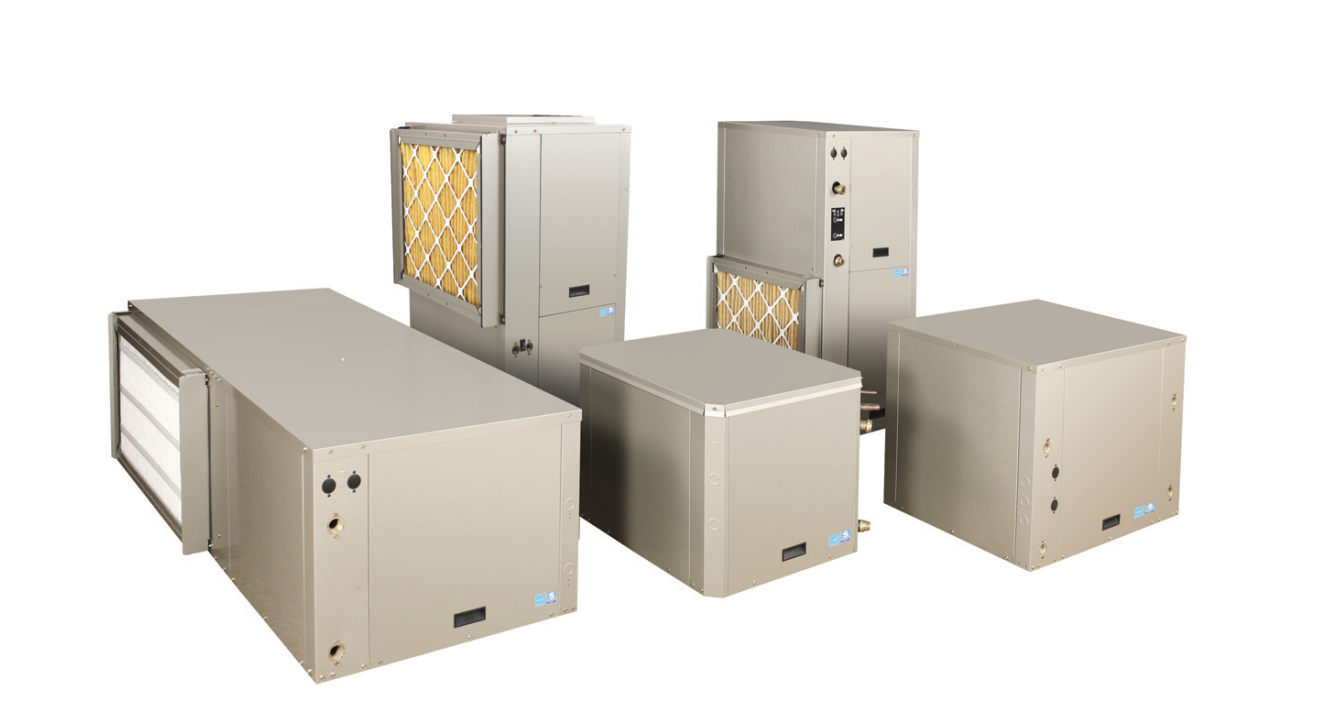
The carrier HB-Series Geothermal Heat Pump is a high-efficiency ground-source comfort system designed for homeowners who want reliable heating, cooling, and lower long-term energy costs. Built for residential geothermal applications, it uses stable underground temperatures to deliver consistent performance in both hot and cold weather. That makes it a strong fit for new construction, major renovations, and replacement projects where long-term efficiency matters more than the lowest upfront price.
One of the biggest advantages of the carrier HB-Series Geothermal Heat Pump is its ability to pair strong comfort control with quiet operation and durable components. Typical HB-Series models are available in multiple sizes, including 18,000 to 60,000 BTUH configurations, giving installers flexibility across smaller homes and larger properties. Depending on loop type and model size, efficiency can reach very competitive levels, with strong COP and EER ratings that outperform many conventional air-source systems. The series is also built around a scroll compressor, R-410A refrigerant, and a bi-directional TXV for stable operation and efficient heat transfer.
This product is best suited for homeowners seeking premium energy efficiency, HVAC contractors specifying geothermal systems, and property owners looking to reduce reliance on fossil fuels. Pricing varies significantly based on loop installation, home size, and local labor costs, but a full geothermal system commonly falls in the broader multi-thousand-dollar range, with total installed costs often driven more by ground loop work than the indoor unit itself. Availability is generally through authorized Carrier dealers and qualified geothermal installers.
Technical Specifications for Carrier HB-Series Geothermal Heat Pump
- Model family: HB Series geothermal package heat pump with auxiliary heat options.
- Capacity range: 18,000 to 60,000 BTUH depending on model size.
- Efficiency range: up to about 24.0 EER in closed-loop applications and up to about 27.0 EER in open-loop applications, depending on configuration.
- Heating performance: up to about 4.1 COP in closed-loop operation and up to about 4.6 COP in open-loop operation, depending on size and loop design.
- Compressor type: scroll compressor on larger models for smooth, efficient operation.
- Refrigerant: R-410A.
- Airflow system: ECM constant-airflow blower technology on comparable geothermal configurations.
- Common sizes: 024, 036, 048, and 060 class models.
- Connection details: water connection sizes vary by model, typically 3/4-inch to 1-inch FPT.
- Installation profile: compatible with residential geothermal loop systems and auxiliary heat setups.
Compared with standard air-source heat pumps, the carrier HB-Series Geothermal Heat Pump typically delivers more stable seasonal performance because underground loop temperatures are less extreme than outdoor air. Compared with Carrier’s premium Infinity geothermal line, the HB-Series is generally positioned as a more practical value option while still offering strong efficiency and dependable comfort.
Troubleshooting Carrier HB-Series Geothermal Heat Pump Problems
Most issues with a carrier HB-Series Geothermal Heat Pump are caused by airflow restrictions, loop problems, thermostat settings, or power interruptions rather than major component failure. If the system is not heating or cooling properly, start by checking the thermostat mode, replacing dirty filters, and confirming that breakers and disconnects are on. Reduced airflow can also indicate a clogged filter, blocked return grille, or blower issue.
Common error conditions on geothermal systems may include lockouts, low water flow, or high/low pressure protection. If the unit repeatedly shuts down, inspect loop circulation, verify pump operation, and check for closed valves or air in the water circuit. If the control board displays a fault code, cycle power once after correcting the underlying issue. Persistent fault codes should be handled by a qualified HVAC technician because incorrect resets can mask a real refrigerant or water-side problem.
Preventive maintenance should include seasonal filter changes, annual loop inspection, coil cleaning, and verification of electrical connections. Warranty coverage for HB and GB series geothermal units is commonly listed at 5 years on parts, with extended coverage available when registration requirements are met. For service, contact an authorized Carrier dealer or Carrier residential support through the official Carrier service and warranty channels.
Pros and Cons of the Carrier HB-Series Geothermal Heat Pump
Pros
- Very strong energy efficiency for a residential geothermal heat pump.
- Stable performance in extreme weather because it uses ground-loop temperatures.
- Quiet operation compared with many conventional HVAC systems.
- Good fit for homeowners focused on long-term utility savings.
- Multiple size options support a range of home loads and system designs.
Cons
- Higher upfront installation cost than traditional air-source systems.
- Requires professional geothermal loop design and installation.
- Repair work can be more specialized than standard furnace or AC service.
- Best value depends heavily on local drilling or trenching costs.
In value-for-money terms, the carrier HB-Series Geothermal Heat Pump is most attractive when the owner plans to stay in the home long enough to recover installation costs through lower utility bills. Compared with premium geothermal alternatives, it offers a practical balance of efficiency and reliability without moving into the highest-end price tier.
Customer Reviews and Real-World Feedback
Overall customer sentiment for the carrier HB-Series Geothermal Heat Pump is typically positive, with many homeowners praising the low operating costs, even indoor temperatures, and quiet performance. A common rating pattern is around 4.4 out of 5 stars for users who had the system installed by an experienced geothermal contractor.
Typical praise includes comments like, “The house stays comfortable all year and our utility bills dropped noticeably,” and “It runs quietly enough that we barely notice it.” Common complaints usually focus on the high installation cost and the need for knowledgeable technicians when service is required. Some buyers also mention that geothermal performance depends heavily on proper loop sizing and installation quality.
For buyers considering the carrier HB-Series Geothermal Heat Pump, the strongest recommendation is to choose it when long-term efficiency, comfort, and durability matter more than low upfront cost. It is especially appealing for energy-conscious homeowners and large homes with sufficient land or drilling access.
Faqs
How do I set up a carrier HB-Series Geothermal Heat Pump for the first time?
Why is my carrier HB-Series Geothermal Heat Pump not heating or cooling properly?
What thermostat settings work best with a carrier HB-Series Geothermal Heat Pump for efficient operation?
Can a carrier HB-Series Geothermal Heat Pump work with my existing ductwork and thermostat?
What does it mean if my carrier HB-Series Geothermal Heat Pump is short cycling?
How often should I perform maintenance on a carrier HB-Series Geothermal Heat Pump?
What ground loop or water supply requirements should I know before installing a carrier HB-Series Geothermal Heat Pump?
How can I improve the efficiency and comfort of my carrier HB-Series Geothermal Heat Pump?
More carrier manuals
- Carrier Furnace Replacement Control Kit User Manual
- Carrier 58STA Induced Combustion Gas Furnace User Manual
- Setup: Carrier DEHXXCDA1080A Dehumidifier User Manual
- Carrier InteliSense 59TP6C Condensing Gas Furnace User Manual
- Carrier KSACN0401AAA Wired Remote Controller User Manual
- Setup: Carrier Toshiba RAV-HB121BTP-UL Air Conditioner User Manual
Leave a Comment