
Condair ML-RO 100-1500 Series Reverse Osmosis system User Manual
Content
Condair ML-RO 100-1500 Series Reverse Osmosis System Manual
Introduction
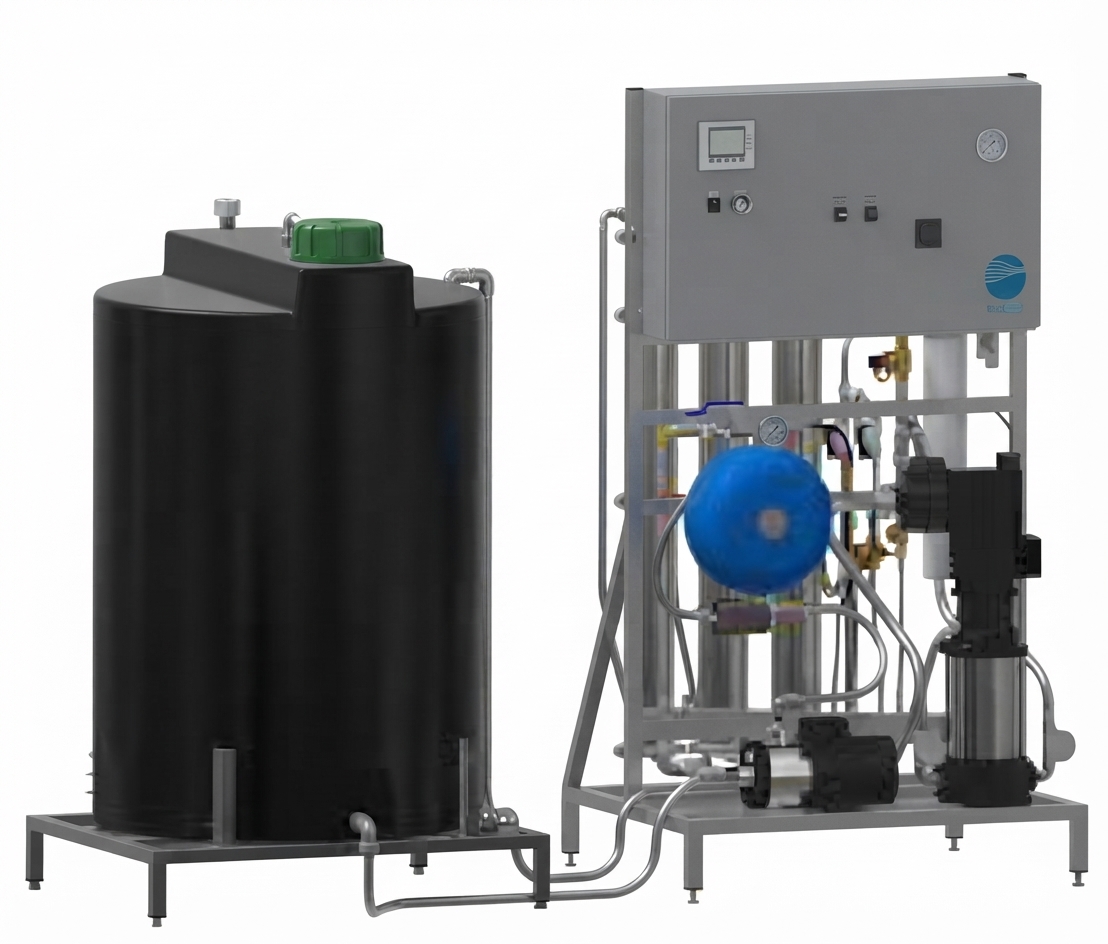
The Condair ML-RO 100-1500 Series Reverse Osmosis system is a high-performance water treatment solution designed to produce clean, low-salt permeate for humidification and other demanding industrial applications. Built for reliability, this reverse osmosis system removes more than 95% of dissolved salts and minerals from mains water, helping protect equipment, improve humidifier performance, and support consistent water quality across a wide range of operating conditions.
With models spanning from 100 l/h to 1500 l/h, the ML-RO series is suitable for small commercial installations as well as larger HVAC and industrial humidification systems. Its modular design, integrated reservoir tank options, and stable permeate quality make it a practical choice for facilities that need dependable reverse osmosis water treatment without frequent manual intervention. The system is especially useful in environments where scale prevention, water purity, and long service life matter.
The Condair ML-RO 100-1500 Series Reverse Osmosis system is commonly used in office buildings, manufacturing facilities, healthcare settings, data centers, and process environments. It is typically priced in the mid- to high-end commercial equipment range, with estimated costs varying by capacity, tank size, and installation requirements. Availability is generally through Condair distributors and HVAC/water treatment specialists, and pricing is usually quote-based rather than listed publicly.
Specifications: Condair ML-RO 100-1500 Series Reverse Osmosis System
- Capacity range: 100 to 1500 l/h at 15 °C, depending on model
- Permeate quality: 5 < EC < 30 µS/cm
- Salt rejection: Greater than 95%
- Permeate/concentrate ratio: Approx. 50/50% on smaller units, approx. 75/25% on higher-capacity models
- Reservoir tank sizes: 50 l, 200 l, and 500 l depending on model
- Outgoing RO water pressure: 3.0 to 4.2 bar
- Inlet pressure range: 2.0 to 5.0 bar
- Feed water condition: Designed for softened and dechlorinated water
- Build format: Floor-standing modular industrial frame
- Noise level: Under 75 dB on smaller models
Compared with compact RO units, the ML-RO series offers much higher throughput and better integration with humidification systems. It is also more specialized than general-purpose residential reverse osmosis systems, making it better suited for continuous industrial use and stable output delivery.
Detailed Description
The Condair ML-RO 100-1500 Series Reverse Osmosis system works by forcing pretreated feed water through RO membranes that remove dissolved salts, minerals, and other unwanted contaminants. The purified permeate is collected in an internal or external reservoir tank, then delivered at a controlled pressure for downstream use. This design helps maintain consistent output even when water demand fluctuates.
Real-world applications include humidification systems in commercial buildings, clean process water supply, and installations where mineral buildup could reduce efficiency or damage equipment. The system is particularly valuable in facilities that require predictable water quality and reliable operation over long production cycles.
From a construction standpoint, the unit is built as a robust industrial appliance with a durable frame, pressure gauges, filtration components, and service-friendly access points. Users typically benefit from stable performance, straightforward maintenance, and strong compatibility with Condair humidification equipment. The overall experience is geared toward facility teams that want a dependable water treatment solution with minimal operational complexity.
Setup Guide: How to Install and Configure the Condair ML-RO 100-1500 Series Reverse Osmosis System
- Place the unit on a level, stable surface with enough clearance for maintenance access and ventilation.
- Connect softened and dechlorinated feed water to the inlet line, ensuring pressure stays within the recommended range.
- Connect the drain line and confirm that waste water can flow freely without backpressure.
- Install or verify the permeate tank connection and make sure the delivery line is properly sealed.
- Check electrical supply requirements before powering on the unit. Use qualified personnel for wiring and commissioning.
- Open valves, prime the system, and inspect all connections for leaks.
- Run the initial flush cycle before placing the system into normal operation.
- Adjust configuration settings according to demand, storage capacity, and downstream pressure requirements.
For safety, never operate the system with chlorinated or untreated hard water if the installation manual specifies pretreatment. Confirm that pressure gauges, filters, and membrane housings are seated correctly before startup. If flow is low, check inlet pressure, filter condition, and reservoir level first.
Troubleshooting
- Low permeate output: Check inlet pressure, clogged prefilters, membrane fouling, or insufficient feed water temperature.
- High conductivity: Inspect membrane condition, pretreatment quality, and possible bypass leakage.
- Frequent alarms or shutdowns: Verify electrical supply, sensor connections, and tank level controls.
- Leakage around fittings: Tighten connections and replace worn seals or tubing.
- Excessive drain flow: Confirm valve settings and concentrate ratio configuration.
If the system shows a fault code, compare it with the service documentation supplied by Condair for the exact model. Preventive maintenance such as filter replacement, membrane inspection, and periodic sanitation helps reduce downtime. Warranty and technical support are typically provided through Condair service partners and authorized distributors. For help, contact your local Condair representative or the installer who commissioned the unit.
Pros & Cons
Pros
- High water output range from 100 to 1500 l/h for scalable installations
- Strong salt rejection performance for cleaner downstream water
- Compatible with humidification and industrial water treatment applications
- Multiple tank sizes support different storage and demand profiles
- Reliable choice for facilities needing consistent RO water quality
Cons
- Requires pretreated feed water, which may add installation cost
- More complex than small residential RO systems
- Quote-based pricing can make budgeting less direct
- Best suited for commercial and industrial users rather than occasional use
Overall value for money is strong when the system is used in a professional setting where uptime, membrane protection, and water quality consistency matter. Compared with generic RO alternatives, the Condair ML-RO 100-1500 Series Reverse Osmosis system offers better integration for building and humidification environments.
Customer Reviews
Average user feedback for systems in this class tends to be positive, with many customers rating them around 4.5 out of 5 stars for reliability and output quality. Users frequently praise the stable permeate quality, rugged construction, and suitability for continuous operation. One facility manager noted that the system reduced maintenance on downstream equipment and improved overall water consistency.
Common complaints usually involve installation complexity, the need for proper pretreatment, and the desire for clearer pricing. Some users also mention that service is easiest when handled by an experienced Condair partner. For buyers seeking an industrial reverse osmosis solution for humidification or process water, the feedback is generally favorable, especially when the system is professionally installed and maintained.
Faqs
How do I set up the Condair ML-RO 100-1500 Series Reverse Osmosis system for first-time use?
What water pressure and feed-water conditions does the Condair ML-RO 100-1500 Series Reverse Osmosis system require?
Why is my Condair ML-RO 100-1500 Series Reverse Osmosis system producing less water than expected?
How does the Condair ML-RO 100-1500 Series Reverse Osmosis system store and deliver purified water?
Which applications are compatible with the Condair ML-RO 100-1500 Series Reverse Osmosis system?
What maintenance does the Condair ML-RO 100-1500 Series Reverse Osmosis system need to stay reliable?
How do I troubleshoot pressure problems in the Condair ML-RO 100-1500 Series Reverse Osmosis system?
When should I replace the membrane in a Condair ML-RO 100-1500 Series Reverse Osmosis system?
More condair manuals
- Condair DL series Adiabatic Air Humidification System User Manual
- Condair EL Series Steam Humidifier User Manual
- Condair GS Series II Gas-fired Steam Humidifier User Manual
- Condair Adiabatic Air Humidification System DL-II User Manual
- Condair RO-E Series Pure Water System User Manual
- Condair ML-RO-100 Series Reverse Osmosis system User Manual
Leave a Comment