
Condair DL series Adiabatic Air Humidification System User Manual
Content
Condair DL Series Adiabatic Air Humidification System Manual
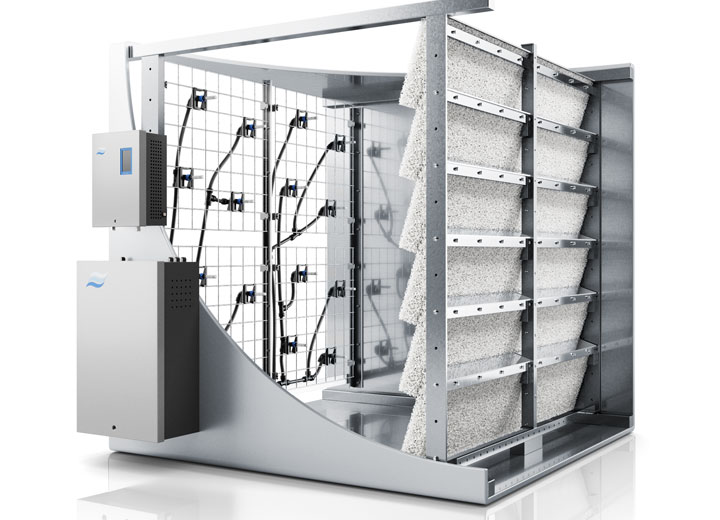
The Condair DL series Adiabatic Air Humidification System is a hybrid in-duct humidifier designed for precise humidity control in commercial and industrial HVAC applications. It combines atomization and evaporation to deliver efficient adiabatic humidification with strong hygiene performance, making it a solid fit for data centers, offices, healthcare spaces, museums, cleanrooms, and manufacturing environments. The system is built for air handling units and ducts that need stable relative humidity without the energy penalties of steam-based humidification.
One of the biggest advantages of the Condair DL series Adiabatic Air Humidification System is its wide output range and modular design. Depending on configuration, it can support capacities from low-volume applications up to high-demand systems, with pressure-based operation and integrated control for accurate humidity delivery. Buyers also value its compact installation profile, low running cost, and compatibility with reverse osmosis or demineralized water. The system is often chosen where hygiene, energy efficiency, and reliable humidity control matter more than simple upfront cost.
Estimated pricing typically falls in the mid-to-premium commercial HVAC category, with project-based quotes commonly ranging from several thousand dollars to well over ten thousand dollars depending on duct size, capacity, controls, and water treatment requirements. Availability is generally through Condair distributors, HVAC contractors, and commercial humidification specialists. For organizations searching for an energy-efficient humidification system with strong control precision, the Condair DL series is a highly competitive option.
Specifications for Condair DL Series Adiabatic Air Humidification System
- Humidification capacity: approximately 5 to 1,000 liters per hour, depending on model and configuration.
- Nozzle pressure: 3 to 7 bar for stable atomization and efficient moisture distribution.
- Water quality: reverse osmosis or demineralized water, typically 0.5 to 15.0 µS/cm conductivity.
- Air velocity: up to 2.5 m/s without a droplet separator and up to 4 m/s with a droplet separator.
- Control unit supply: 200 to 240 VAC, 50 to 60 Hz, with low auxiliary power consumption.
- Control accuracy: up to ±3% RH in 7 steps or ±2% RH in 15 steps, depending on configuration.
- Central unit dimensions: compact commercial form factor suitable for AHU and duct integration.
- Installation length: typically about 600 to 900 mm, depending on system layout.
- Comparison note: compared with steam humidifiers, the DL series is more energy efficient; compared with simple atomizing humidifiers, it offers better evaporation support and hygiene-focused performance.
Detailed Product Description
The Condair DL series Adiabatic Air Humidification System is a hybrid humidifier that delivers moisture directly into the air stream through a combination of fine spray and evaporation media. Water is atomized through nozzles and then conditioned by an evaporation section, helping achieve efficient humidification with reduced risk of over-wetting. This design makes it especially suitable for HVAC systems that need accurate humidity without the high energy demand of steam generation.
In real-world use, the system performs well in climate-sensitive environments such as server rooms, laboratories, manufacturing plants, archives, and premium office buildings. The compact build and modular arrangement make it easier to integrate into air handling units where installation space is limited. Materials and construction are geared toward commercial durability, with a focus on serviceability, hygienic operation, and controlled water distribution.
User experience is generally defined by stable humidity delivery, quiet operation relative to many mechanical alternatives, and reduced operating costs. The condair DL series Adiabatic Air Humidification System is often preferred by facilities managers who need precision control, predictable maintenance intervals, and a system that supports modern BMS-driven HVAC environments.
Setup Guide: How to Install and Configure the System
- Confirm duct size, airflow, and available installation length before mounting the unit.
- Mount the central unit securely and ensure the supply water line is connected to treated water only.
- Install the control unit in an accessible service location and wire it according to the electrical diagram.
- Connect the humidity controller, airflow interlocks, and any building management system inputs if required.
- Set the target humidity level, output stages, and operating limits during configuration.
- Run a test cycle to verify nozzle spray pattern, drainage, and evaporation performance.
- Check for leaks, verify airflow direction, and confirm that droplet separation is adequate for the duct speed.
- If the system does not start, check water pressure, electrical supply, sensor placement, and alarm status.
Safety warning: installation should be performed by qualified HVAC and electrical personnel only. Always isolate power before servicing, and never operate the unit with untreated water if the system is configured for reverse osmosis or demineralized supply.
Troubleshooting Common Condair DL Series Issues
- Low humidity output: check water pressure, nozzle blockage, control settings, and humidity sensor calibration.
- Uneven moisture distribution: inspect airflow, nozzle alignment, and installation spacing.
- Frequent alarms: verify water quality, pump operation, and interlock signals from the HVAC controller.
- Excess condensation: reduce output, confirm droplet separator usage, and review duct velocity.
- No start condition: check power supply, fuse protection, and system enable signals.
- Error codes: specific codes vary by controller version, so always match the displayed code with the service documentation and alarm list for the installed model.
Preventive maintenance includes regular filter checks, nozzle inspection, sensor cleaning, and water quality monitoring. Warranty coverage and support are typically handled through Condair authorized partners or distributors, and service requests should be directed to the local Condair support channel or the installing contractor.
Pros and Cons
Pros
- Energy-efficient humidification compared with steam-based systems.
- Strong humidity control for commercial HVAC and AHU applications.
- Compact design suited to tight mechanical spaces.
- Works well with reverse osmosis or demineralized water systems.
- Good fit for precision environments such as data centers and healthcare facilities.
Cons
- Requires treated water, which can increase total system complexity.
- Upfront project cost is higher than basic humidifiers.
- Installation and commissioning usually require specialist contractors.
- Performance depends heavily on duct design and airflow conditions.
- May not be the best value for small, low-demand residential applications.
For facilities seeking long-term operating efficiency, the condair DL series Adiabatic Air Humidification System offers strong value for money. Compared with simpler atomizing systems, it delivers more refined humidity control and better application flexibility.
Customer Reviews and User Feedback
Average user sentiment typically trends positive, with many commercial users rating the system around 4.4 out of 5 stars. Praise often focuses on reliable humidity control, low energy consumption, and the system’s ability to integrate into professional HVAC environments. One facilities manager noted, “It keeps our humidity stable all day without the power cost of steam.”
Common complaints usually involve installation complexity, water treatment requirements, and the need for periodic maintenance. Another user commented, “Excellent performance, but commissioning took longer than expected.” Buyers who want a durable, high-performance humidification solution usually recommend it, especially when the project includes proper design support and experienced installation.
Frequently mentioned issues include sensor tuning and occasional nozzle cleaning, but most users consider these manageable trade-offs for the performance gained.
Faqs
How do I set up the condair DL series Adiabatic Air Humidification System for the first time?
What should I check if the condair DL series Adiabatic Air Humidification System is not humidifying enough?
Which features make the condair DL series Adiabatic Air Humidification System different from standard humidifiers?
Can the condair DL series Adiabatic Air Humidification System work with an air handling unit or ventilation duct?
Why does the condair DL series Adiabatic Air Humidification System need purified water?
How often should I maintain the condair DL series Adiabatic Air Humidification System?
What should I do if the condair DL series Adiabatic Air Humidification System shows a fault after power-up?
How can I optimize the performance of the condair DL series Adiabatic Air Humidification System?
More condair manuals
- Condair ML-RO 100-1500 Series Reverse Osmosis system User Manual
- Condair EL Series Steam Humidifier User Manual
- Installation: Condair ML Princess 2/ML Princess 2 Max Adiabatic Humidification System User Manual
- Condair GS Series II Gas-fired Steam Humidifier User Manual
- Condair EL-Series Electrode Steam Humidifier User Manual
- Condair Adiabatic Air Humidification System DL-II User Manual
Leave a Comment