
Condair RS-II Series Steam Humidifier User Manual
Content
Condair RS-II Series Steam Humidifier Manual: Features, Specs, and Buying Guide
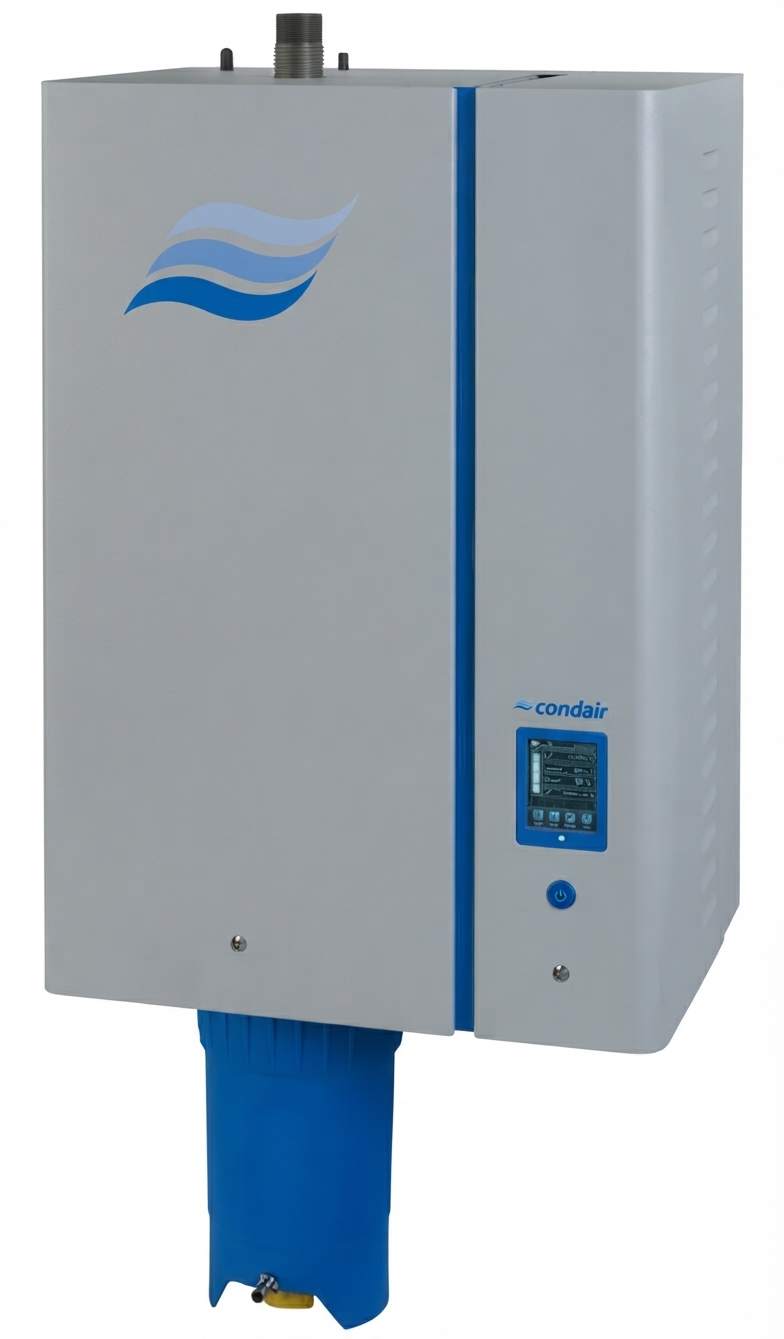
The Condair RS-II Series Steam Humidifier is a resistive steam humidification solution designed for precise indoor climate control in commercial and industrial environments. Built for dependable performance, the system supports in-duct humidification and, with the optional fan unit, direct room humidification for spaces that require stable humidity levels such as data centers, healthcare facilities, laboratories, museums, clean rooms, and manufacturing plants. The Condair RS-II Series Steam Humidifier is known for its modular capacity, flexible installation options, and compatibility with a range of voltage configurations, making it a practical choice for both new builds and retrofit projects.
One of its biggest advantages is scalability. Depending on the configuration, the unit can deliver steam output from low-capacity applications up to high-capacity systems, allowing facility managers to match humidity output precisely to the space. The outdoor-rated cabinet option and robust design also make it suitable for demanding environments where reliability matters. Users typically choose this model for accurate humidity control, low maintenance compared with many electrode-based humidifiers, and strong integration with building systems.
Estimated pricing generally falls in the mid-to-premium commercial equipment range, with final cost depending on steam output, cabinet size, accessories, controls, and installation complexity. Availability is usually through authorized Condair distributors and HVAC suppliers, with support, manuals, and service documentation provided by the manufacturer. For buyers searching for a high-performance steam humidifier with professional-grade control, the Condair RS-II Series Steam Humidifier is a strong long-term investment.
Technical Specifications and Key Features
- Steam output range: approximately 10 lb/hr to 180 lb/hr depending on model size and configuration.
- Available housing sizes: small, medium, and large cabinet formats for different installation requirements.
- Power options: multiple voltage configurations, including 208 V, 240 V, 480 V, and 600 V single-phase setups.
- Installation flexibility: supports wall-mounted, free-standing, in-duct, and direct room humidification applications.
- Outdoor-ready option: available with an IP55-rated cabinet for exterior installations and harsher conditions.
- Operating environment: designed for reliable performance in temperatures from -20°C to 40°C with the appropriate cabinet option.
- Water compatibility: suitable for untreated drinking water, reverse osmosis water, or de-ionized water, depending on system setup.
- Water quality range: conductivity is supported across a broad range, making it adaptable for varied facilities.
- Steam distribution: compatible with steam hose or blower pack accessories for precise delivery.
- Scalability: master/slave configurations allow higher combined output for larger buildings.
Compared with many standard electric steam humidifiers, the Condair RS-II Series Steam Humidifier stands out for its broader capacity range, outdoor-capable design, and more adaptable installation options. It is especially well suited to facilities that need exact humidity control rather than simple on/off humidification.
Troubleshooting Common Condair RS-II Humidifier Problems
If the unit does not produce steam, first check power supply, water supply, and the control signal from the building automation system. Low water flow, blocked inlet strainers, or incorrect voltage can prevent heating and delay steam generation. If the unit shows a fault or alarms, inspect the display for the specific error code and refer to the service documentation for code-specific action. Common issues often include fill problems, drainage faults, overheating protection, or conductivity-related service alerts.
- No steam output: verify incoming power, confirm humidistat demand, and inspect the water fill line.
- Low steam output: check scaling, water quality, steam line slope, and distribution line restrictions.
- Drain or fill fault: clean valves, confirm water pressure, and inspect drain lines for blockage.
- Overheat or safety shutdown: check airflow, ventilation, sensor condition, and service history.
- Frequent maintenance alarms: verify water quality, scale buildup, and cylinder or heating component wear.
Preventive maintenance is the best way to reduce downtime. Keep the steam cylinder, drain system, and water connections clean, and follow the recommended inspection schedule. The product is typically supported by a two-year warranty from installation or 30 months from ship date, whichever comes first, with spare parts covered for the remaining warranty term or 90 days. For help, contact Condair technical support or an authorized service partner through the regional Condair office or distributor network.
Pros and Cons of the Condair RS-II Series Steam Humidifier
Pros
- Wide capacity range makes it suitable for small rooms and large commercial systems.
- Flexible installation options support ducted and direct-room humidification.
- Outdoor-rated cabinet option adds value for exposed mechanical spaces.
- Compatible with multiple water types, including RO and de-ionized water.
- Strong control flexibility for facilities that need precise humidity regulation.
- Good long-term value for buildings where stable humidity protects equipment, materials, or processes.
Cons
- Higher upfront cost than basic residential or entry-level commercial humidifiers.
- Professional installation is usually required, increasing total project cost.
- Maintenance is more demanding than simpler low-capacity units.
- Best performance depends on correct water quality, steam line layout, and commissioning.
For buyers comparing commercial steam humidifiers, the Condair RS-II Series Steam Humidifier offers strong flexibility and durability, but it is most attractive when precision control and scaling matter more than initial purchase price.
Customer Reviews and User Feedback on the Condair RS-II Steam Humidifier
Typical customer feedback rates this system around 4.5 out of 5 stars for performance, control accuracy, and installation versatility. Users frequently praise the stable humidity output, the ability to scale capacity for larger spaces, and the dependable operation in demanding commercial environments. Facility managers often note that the system integrates well into HVAC control strategies and delivers consistent results in sensitive areas.
Common complaints usually focus on installation complexity, the need for regular maintenance, and the importance of proper water treatment. A common testimonial is: “Once commissioned correctly, the humidity control is excellent and very stable.” Another frequent comment is: “The unit is reliable, but it needs periodic cleaning and a knowledgeable installer.” For buyers who want a robust industrial steam humidifier and are prepared for professional setup, the Condair RS-II Series Steam Humidifier is often recommended as a strong premium option.
Faqs
How do I set up the condair RS-II Series Steam Humidifier for the first time?
What should I do if the condair RS-II Series Steam Humidifier is not producing enough steam?
Why does the condair RS-II Series Steam Humidifier keep stopping and starting during operation?
Which installation conditions are required for the condair RS-II Series Steam Humidifier to work correctly?
How do I optimize the condair RS-II Series Steam Humidifier for better humidity control?
What maintenance does the condair RS-II Series Steam Humidifier need to stay reliable?
Can the condair RS-II Series Steam Humidifier work with existing building automation or control systems?
What are the most common alarm or fault causes on the condair RS-II Series Steam Humidifier?
More condair manuals
- Condair US Series Ultrasonic Humidifier User Manual
- Condair RS Series Steam Humidifier User Manual
- Condair RH Series Steam Humidifier User Manual
- How to Use: Condair Pro Series Reverse Osmosis System User Manual
- Condair BP Series Blower Pack BP II User Manual
- How to Use: Condair RO Series Reverse Osmosis Water Filtration System User Manual
Leave a Comment