
Condair RS Series Steam Humidifier User Manual
Content
Condair RS Series Steam Humidifier: Complete Product Manual and Buyer Guide
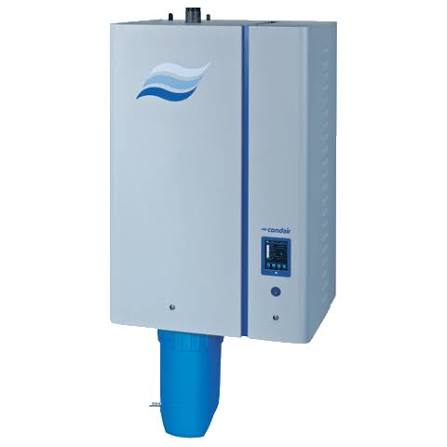
The Condair RS Series Steam Humidifier is a resistance-heated, atmospheric steam humidifier built for precise humidity control in commercial and industrial environments. It is designed for direct room humidification with a blower pack or indirect in-duct humidification with a steam distributor, making it a versatile choice for offices, data centers, healthcare spaces, laboratories, and manufacturing facilities. A major advantage of the RS Series is its broad capacity range, flexible electrical configurations, and support for both mains water and reverse osmosis water, which helps users balance performance, maintenance, and humidity accuracy.
One of the strongest selling points of the Condair RS Series Steam Humidifier is its scalable design. Depending on configuration, it offers output from roughly 10 lb/hr up to 180 lb/hr, with selectable housing sizes and options for single-cylinder, double-cylinder, and master/slave setups. That makes it suitable for both smaller zones and larger facilities that need stable humidity under changing load conditions. It also supports cabinet and outdoor-style installations in certain configurations, expanding its application range.
For buyers comparing steam humidifiers, the RS Series stands out for precision control, durable stainless-steel cylinder options, and integration flexibility. Estimated pricing typically varies widely by capacity, control options, and installation accessories, but many commercial systems fall in the several-thousand-dollar range and can increase significantly for larger custom configurations. Availability is generally through authorized HVAC and humidification dealers, industrial suppliers, and project-based equipment distributors.
Specifications for Condair RS Series Steam Humidifier
- Steam output range: approximately 10 to 180 lb/hr, depending on model and configuration.
- Steam output range in metric: about 5.2 to 86.0 kg/hr across the series.
- Input power: up to 64.2 kW maximum on larger configurations.
- Voltage options: multiple supply options including 208V, 240V, 480V, and higher commercial voltage ranges depending on model.
- Phase options: available in single-phase and three-phase configurations on selected models.
- Housing sizes: small, medium, and large cabinet formats.
- Installation styles: wall-mounted or free-standing, with some versions suited for outdoor conditions.
- Control accuracy: mains water configurations can provide approximately ±3% RH control, while reverse osmosis water systems can reach about ±1% RH control.
- Direct room humidification: available with a top-mounted or remote fan unit on select models.
- Scalability: master/slave configurations support higher combined output for larger facilities.
Compared with many compact electric steam humidifiers, the Condair RS Series Steam Humidifier offers a broader capacity range and more deployment flexibility. Compared with portable residential units, it is built for continuous duty and tight humidity control in demanding commercial spaces.
Troubleshooting Condair RS Series Steam Humidifier Problems
If the unit is not producing steam, first check water supply, electrical power, and control demand from the building automation system or humidistat. A clogged cylinder, low conductivity, or worn electrodes/cylinder assembly can also prevent normal output. If steam output is reduced, inspect the inlet screen, drain function, and steam hose for scale, kinks, or condensation buildup.
Common error and warning issues usually relate to water supply, drainage, cylinder wear, overheating, or control faults. If an error appears on the display, reset it only after correcting the cause. For recurring faults, replace the steam cylinder if it is near end of life, verify water quality, and confirm that all wiring and sensors are properly connected.
Preventive maintenance should include regular cylinder inspection, cleaning of water path components, checking drain valves, and confirming humidifier settings are aligned with actual room load. Using reverse osmosis water where specified can improve control accuracy and reduce mineral buildup.
Warranty coverage and support depend on the distributor and project terms, so owners should retain purchase records and installation documents. For help, contact Condair technical support through the official regional service team or the authorized installer that supplied the system.
Pros and Cons of Condair RS Series Steam Humidifier
Pros
- Wide capacity range, making it suitable for small rooms and large commercial applications.
- Flexible installation options, including wall-mounted, free-standing, in-duct, and direct room configurations.
- Strong humidity control performance, especially with reverse osmosis water.
- Scalable architecture with master/slave capability for higher-demand facilities.
- Commercial-grade build quality designed for continuous operation.
Cons
- Higher upfront cost than basic humidifiers or smaller residential steam units.
- Requires professional installation for best performance and safety.
- Maintenance is more involved than simple portable models.
- Performance depends heavily on water quality and proper system sizing.
Overall value for money is strong for facilities that need dependable humidity control and long-term scalability. Compared with lower-cost alternatives, the Condair RS Series Steam Humidifier offers better integration, output flexibility, and control precision.
Customer Reviews of Condair RS Series Steam Humidifier
Typical user feedback is highly positive, with many commercial buyers rating it around 4.5 out of 5 stars for reliability and control stability. Customers frequently praise the consistent steam output, quiet operation, and compatibility with HVAC systems. One facility manager noted that the unit delivered “steady humidity without constant adjustment,” while another highlighted its “excellent performance in a busy office environment.”
Common complaints focus on installation complexity, higher maintenance expectations, and replacement part costs. Some users also mention that water quality has a major effect on service intervals. For buyers who want a durable industrial steam humidifier and are prepared for professional setup, the Condair RS Series remains a strong recommendation.
Faqs
How do I set up the condair RS Series Steam Humidifier for the first time?
Why is my condair RS Series Steam Humidifier not producing enough humidity?
What maintenance does the condair RS Series Steam Humidifier need to stay reliable?
How do I troubleshoot alarm codes on the condair RS Series Steam Humidifier?
What water quality is best for the condair RS Series Steam Humidifier?
Can the condair RS Series Steam Humidifier work with building automation systems?
How can I improve the energy efficiency of the condair RS Series Steam Humidifier?
What are the most common installation mistakes with the condair RS Series Steam Humidifier?
More condair manuals
- Condair RS-II Series Steam Humidifier User Manual
- How to Use: Condair Pro Series Reverse Osmosis System User Manual
- Condair US Series Ultrasonic Humidifier User Manual
- How to Use: Condair RO Series Reverse Osmosis Water Filtration System User Manual
- Condair RH Series Steam Humidifier User Manual
- Condair BP Series Blower Pack BP II User Manual
Leave a Comment