
Eaton Crouse-Hinds Series Xenon Beacons XB15 User Manual
Content
Introduction to Eaton Crouse-Hinds Series Xenon Beacons XB15
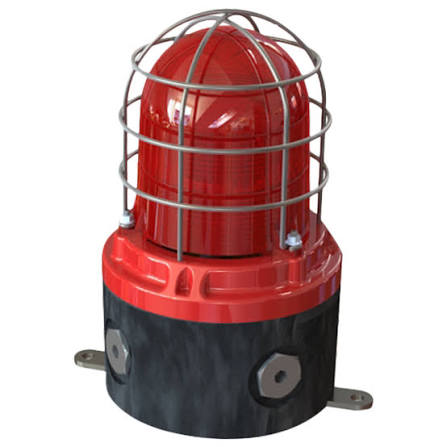
The Eaton Crouse-Hinds Series Xenon Beacons XB15 is a heavy-duty visual signaling solution designed for hazardous locations, industrial facilities, marine environments, and outdoor safety applications. Built for demanding conditions, this xenon beacon delivers high-intensity flashing light for alarm notification, evacuation guidance, process warning, and emergency signaling. Its rugged glass-reinforced polyester housing, corrosion-resistant components, and weatherproof construction make it a dependable choice where durability matters most.
One of the biggest advantages of the Eaton Crouse-Hinds Series Xenon Beacons XB15 is its flexibility. It is available in multiple joule ratings, voltage options, and mounting styles, allowing it to fit a wide range of applications. The beacon is commonly used in oil and gas sites, petrochemical plants, marine platforms, manufacturing plants, and other environments where reliable visual alerts are essential. It is also suited for explosive gas and dust atmospheres, making it a strong fit for safety-critical installations.
In terms of value, the XB15 typically sits in the premium industrial signaling category. Estimated pricing often ranges from around $700 to more than $1,300 depending on configuration, certification, and retailer. Availability is generally good through industrial electrical distributors, authorized Eaton partners, and safety equipment suppliers. For buyers searching for a robust xenon warning light with broad certification coverage, the Eaton Crouse-Hinds Series Xenon Beacons XB15 remains a trusted option.
Technical Specifications and Key Features of the XB15 Xenon Beacon
The Eaton Crouse-Hinds Series Xenon Beacons XB15 is engineered for high visibility and dependable alarm performance in harsh environments. It is widely recognized for its strong output, wide certification support, and rugged enclosure design.
- Available power options: 5J, 10J, 15J, and 21J versions depending on model and market configuration.
- Voltage range: 24V DC, 48V DC, and AC versions including 110V, 120V, 230V, and 240V options.
- Flash rate: Common settings include 60, 80, and 120 flashes per minute.
- Housing material: Glass-reinforced polyester for corrosion resistance and lightweight durability.
- Lens material: Borosilicate glass for improved strength and thermal resistance.
- Ingress protection: IP66/IP67 with NEMA 4X and NEMA 6 protection ratings.
- Operating temperature: Certified ranges can extend from -55°C to +70°C depending on version.
- Tube life: Greater than 1 million flashes for long service life.
- Mounting: Pipe mount and direct mount configurations are available.
Compared with smaller industrial beacons, the XB15 offers stronger light output and better environmental protection. Compared with LED beacons, it provides the classic xenon flash effect and high peak intensity, which can be useful in noisy, high-risk areas where attention-grabbing visibility is required.
Setup Guide for Eaton Crouse-Hinds Series Xenon Beacons XB15
Before installation, confirm the correct voltage rating, flash output, and certification class for your site. The Eaton Crouse-Hinds Series Xenon Beacons XB15 should always be installed by a qualified electrician or safety technician, especially in hazardous areas.
- Disconnect power at the source and verify the circuit is de-energized.
- Select the correct mounting method: pipe mount for overhead or exposed installations, direct mount for flat surfaces.
- Check the cable entries, typically 3/4-inch NPT on standard models, and use approved glands and seals.
- Wire the unit according to the terminal diagram for the selected voltage type.
- Set the flash configuration if your model supports multiple flash rates or tube options.
- Tighten all enclosure components and ensure the lens and guard are properly secured.
- Restore power and test the beacon for correct flash operation and visibility.
Important safety precautions include verifying the area classification, using only approved accessories, and avoiding installation in conditions outside the published temperature or voltage limits. If the beacon does not activate, recheck supply voltage, polarity on DC units, terminal tightness, and fuse protection. For best results, confirm compatibility with fire alarm or control panels before commissioning.
Troubleshooting the XB15 Xenon Beacon
If the beacon fails to flash, the most common causes are incorrect supply voltage, loose wiring, blown fuses, or a damaged flash tube. Start by confirming that the input voltage matches the model rating and that all terminal connections are secure.
- No light output: Check power supply, polarity, and fuse condition.
- Weak or irregular flashing: Inspect the tube, wiring terminals, and control relay.
- Water or dust intrusion: Verify enclosure seals, cable glands, and mounting integrity.
- Overheating: Ensure the unit is operating within the rated ambient temperature range.
- Intermittent operation: Look for unstable supply voltage or poor alarm panel output.
The XB15 typically does not use consumer-style error codes, so diagnosis is usually based on electrical testing and visual inspection. Preventive measures include regular lens cleaning, periodic seal checks, and scheduled functional testing. Warranty coverage and support are generally handled through Eaton or an authorized distributor. For assistance, contact Eaton technical support or the local supplier from whom the unit was purchased.
Pros and Cons of Eaton Crouse-Hinds Series Xenon Beacons XB15
Pros
- High-intensity xenon flash provides excellent visibility in industrial and outdoor environments.
- Rugged GRP housing and corrosion-resistant materials suit harsh conditions.
- Broad voltage and joule options make it adaptable to many systems.
- Strong ingress protection supports use in wet, dusty, and exposed locations.
- Excellent fit for oil, gas, petrochemical, and marine safety applications.
Cons
- Typically more expensive than basic LED beacons.
- Xenon tubes may require more maintenance than solid-state alternatives over time.
- Installation may require specialized knowledge for hazardous-area compliance.
- Not always the best choice where ultra-low power consumption is the top priority.
Overall, the Eaton Crouse-Hinds Series Xenon Beacons XB15 offers strong value for money when reliability, certification, and visibility are more important than lowest purchase price. Compared with budget alternatives, it provides a more robust build and broader industrial suitability.
Customer Reviews for Eaton Crouse-Hinds Series Xenon Beacons XB15
Average user sentiment for the XB15 is generally positive, often landing around 4.5 out of 5 stars in industrial buyer feedback. Customers frequently praise its bright flash, rugged construction, and dependable performance in demanding environments.
Typical praise includes comments such as: “Excellent visibility even in bright daylight,” and “A durable beacon that holds up well in marine conditions.” Common complaints focus on cost, installation complexity, and the need to match the correct model to the application.
Buyers often recommend the XB15 for industrial safety systems, hazardous-area signaling, and long-term outdoor use. Users looking for a lower-cost alternative may prefer simpler LED beacons, but those needing proven xenon performance usually consider this model a strong purchase.
Frequently Asked Questions About the XB15 Xenon Beacon
- What is the Eaton Crouse-Hinds Series Xenon Beacons XB15 used for? It is used for visual alarms, emergency alerts, and industrial safety signaling.
- Is it suitable for hazardous locations? Yes, many versions are designed for explosive gas and dust atmospheres.
- Can it be used outdoors? Yes, its weatherproof design and high ingress protection support outdoor use.
- Which industries use it most? Oil and gas, petrochemical, marine, manufacturing, and heavy industry.
- Is it better than an LED beacon? It depends on the use case; xenon offers a very intense flash, while LED models usually consume less power and need less maintenance.
Faqs
How do I install Eaton Crouse-Hinds Series Xenon Beacons XB15 for the first time?
What should I check if Eaton Crouse-Hinds Series Xenon Beacons XB15 is not flashing?
Which voltage and power options are available for Eaton Crouse-Hinds Series Xenon Beacons XB15?
Can Eaton Crouse-Hinds Series Xenon Beacons XB15 be used in hazardous locations?
How do I choose the right lens color for Eaton Crouse-Hinds Series Xenon Beacons XB15?
What are the main features of Eaton Crouse-Hinds Series Xenon Beacons XB15 that help reduce maintenance?
How often should Eaton Crouse-Hinds Series Xenon Beacons XB15 be inspected or serviced?
How can I improve the performance of Eaton Crouse-Hinds Series Xenon Beacons XB15 in harsh outdoor conditions?
Tags
More eaton manuals
- Eaton Cooper Power Series Reclosers MN280077EN User Manual
- Eaton ES4P Control Relay User Manual
- How to Use: Eaton Green Motion DC EV chargers User Manual
- How to Use: Eaton Green Motion Building EV charger User Manual
- Setup: Eaton Green Motion DC 22 EV charger User Manual
- How to Use: Eaton 3S Uninterruptible Power Supply User Manual
Leave a Comment