
Hh Electronics Tessen Passive PA Cabinet User Manual
Content
hh electronics Tessen Passive PA Cabinet Overview
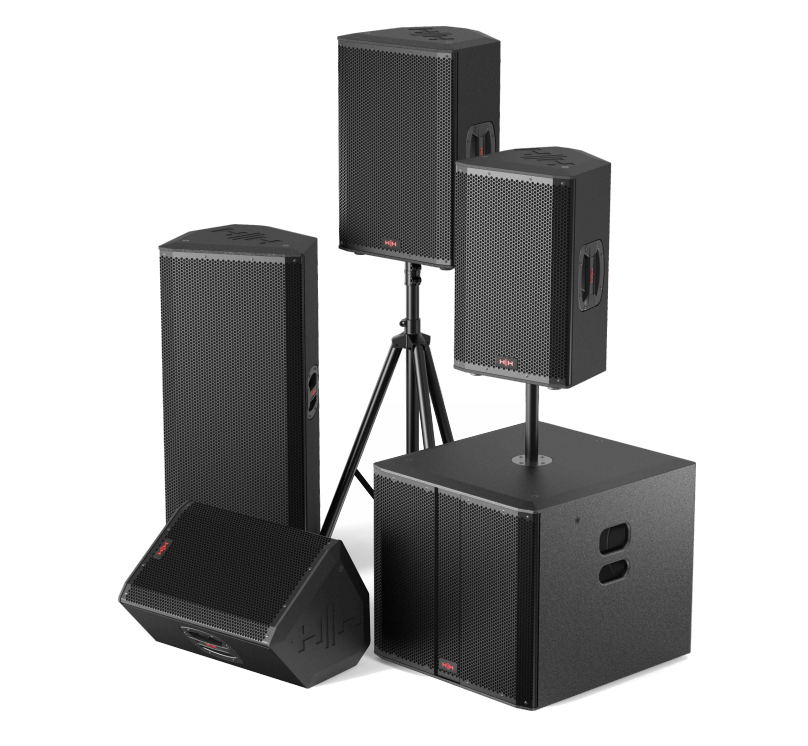
The hh electronics Tessen Passive PA Cabinet is designed for dependable live sound reinforcement, making it a strong choice for bands, DJs, houses of worship, rehearsal rooms, and small-to-medium event venues. Built for users who want a passive loudspeaker that pairs easily with an external power amplifier, this cabinet focuses on clean projection, straightforward operation, and durable construction. It is especially well suited to setups where flexibility matters, since passive PA cabinets can be integrated into larger systems, scaled for different room sizes, and matched with the amplifier and mixer of your choice.
One of the biggest advantages of the hh electronics Tessen Passive PA Cabinet is its practical balance of portability and output. Buyers typically look for this type of speaker when they need reliable vocal clarity, solid midrange response, and enough headroom for live performance without moving into a fully powered speaker system. Depending on the exact Tessen model and dealer stock, estimated pricing generally falls in the mid-range professional PA category, often around the lower-to-mid hundreds for smaller cabinets and higher for larger-format models. Availability may vary by region, but HH Audio and authorized music retailers commonly carry Tessen-related passive models or matching Tessen system components.
For users searching for a versatile passive cabinet for stage monitoring, front-of-house playback, or installed sound applications, the hh electronics Tessen Passive PA Cabinet offers a familiar, no-nonsense design that prioritizes real-world performance and ease of integration.
Detailed Specifications and Performance Features
- System type: passive PA cabinet designed for use with an external amplifier
- Application: live sound, rehearsals, small events, portable PA setups, and installed systems
- Cabinet construction: durable wood-based enclosure for improved rigidity and reduced resonance
- Audio focus: clear vocal reproduction, balanced midrange response, and practical SPL for live use
- Connectivity: standard speaker input connection for amplifier integration
- Deployment: suitable for stand mounting, monitor use, or stacked PA configurations depending on the model
- Typical performance class: professional entry-to-mid level, aimed at musicians, venue owners, and mobile DJs
- Power handling and sensitivity: varies by Tessen model, but generally built for efficient output with suitable external amplification
Compared with compact powered speakers, the hh electronics Tessen Passive PA Cabinet gives users more control over amplifier selection and system scaling. Compared with budget passive boxes, it typically offers better cabinet build quality and more consistent sound delivery. It is a practical alternative to other passive PA cabinets in the same class when the goal is reliable, expandable sound rather than built-in DSP or onboard amplification.
Setup Guide: How to Install and Use a Passive PA Cabinet
Start by placing the cabinet on a stable surface, speaker stand, or monitor position that matches your venue layout. Connect the cabinet to a compatible power amplifier using a proper speaker cable, not an instrument cable. Make sure the amplifier output impedance matches the cabinet’s rated load, and keep the amplifier volume low during the first power-up. If you are running a stereo or dual-speaker setup, confirm left and right polarity is consistent so the sound remains centered and full.
For best results, pair the cabinet with a mixer and amplifier combination that provides clean headroom rather than pushing the system into clipping. If the cabinet is part of a larger setup, you can use EQ at the mixer to reduce harshness or improve vocal clarity. Always avoid overdriving the amplifier, and never connect the speaker to a powered line output. If you hear distortion, reduce the input level immediately and inspect the wiring.
Safety precautions matter with any passive PA cabinet. Do not block ventilation around the amplifier, do not exceed the cabinet’s rated power, and use proper lifting techniques when moving the enclosure. If the speaker is pole-mounted, confirm the stand is rated for the cabinet weight and locked securely before use.
Troubleshooting Common Problems
- No sound: Check amplifier power, speaker cable condition, input routing, and mixer mute settings.
- Weak output: Verify gain staging, confirm correct amplifier-to-speaker matching, and inspect for faulty cabling.
- Distortion: Lower the amplifier level, reduce clipping at the mixer, and make sure the cabinet is not being overpowered.
- Buzzing or hum: Use balanced signal paths upstream, separate audio and power cables, and check ground-related issues in the system.
- Rattling sound: Inspect grille fasteners, cabinet hardware, and nearby stands or mounts for loose parts.
- Intermittent audio: Test with another speaker cable and another amplifier channel to isolate the fault.
Some systems may indicate protection or overload behavior at the amplifier rather than the cabinet itself. If that happens, reduce output immediately and let the system cool before restarting. Preventive care includes storing the cabinet in a dry location, avoiding impact damage, and using quality cabling every time. Warranty coverage and support options depend on the dealer and region, so keep your proof of purchase and contact the retailer or HH Audio support channel for service guidance.
For fast help, provide the model name, purchase date, amplifier model, and a short description of the fault when you contact support.
Pros and Cons of the hh electronics Tessen Passive PA Cabinet
Pros
- Flexible passive design lets users choose their own amplifier and system setup.
- Good choice for venues that already own mixers and external power amps.
- Typically offers clearer upgrade paths than all-in-one powered speakers.
- Suitable for live sound, rehearsal, and installed audio applications.
- Practical value for money when building a scalable PA system.
Cons
- Requires an external amplifier, which increases setup complexity.
- Performance depends heavily on amplifier matching and cabling quality.
- Less convenient than powered speakers for quick plug-and-play use.
- Feature set may be simpler than premium DSP-equipped alternatives.
In value terms, the hh electronics Tessen Passive PA Cabinet makes the most sense for users who prefer control and expandability over convenience. Compared with powered alternatives, it can be more cost-effective in larger systems, but it is not the easiest option for beginners who want instant setup.
Customer Reviews and Real-World Feedback
Typical user feedback for the hh electronics Tessen Passive PA Cabinet is positive, with many buyers praising the dependable build, straightforward operation, and solid vocal performance. Common star ratings often fall around 4 out of 5 stars from users who value practical performance and system flexibility. One frequent comment is that the cabinet feels like a serious working tool rather than a lightweight consumer speaker, which appeals to gigging musicians and venue operators.
Common praise includes clear mids, reliable projection, and good compatibility with existing PA rigs. Common complaints usually center on the need for a matching amplifier and the extra setup steps compared with powered speakers. For buyers who already own the right gear, the cabinet is often recommended as a smart, cost-conscious addition to a live sound system.
Frequently Asked Questions
- Is the hh electronics Tessen Passive PA Cabinet good for live music? Yes, it is well suited to vocals, instruments, and general PA use when paired with the right amplifier.
- Do I need an amplifier? Yes, passive cabinets require an external power amplifier.
- Is it suitable for DJs? Yes, especially for mobile or small-to-medium event setups.
- Can it be used as a monitor? Many passive PA cabinets can serve as stage monitors depending on their enclosure design.
Faqs
How do I set up the hh electronics Tessen Passive PA Cabinet for the first time?
What amplifier size works best with the hh electronics Tessen Passive PA Cabinet?
Why is my hh electronics Tessen Passive PA Cabinet sounding distorted or weak?
Can the hh electronics Tessen Passive PA Cabinet be used with a 70V or 100V system?
How do I improve clarity and output from the hh electronics Tessen Passive PA Cabinet?
What should I check if the hh electronics Tessen Passive PA Cabinet has no sound?
How do I maintain and clean the hh electronics Tessen Passive PA Cabinet safely?
What are the most common setup mistakes with the hh electronics Tessen Passive PA Cabinet?
More hh electronics manuals
- Installation: Hh Electronics MZ Series High Range Amplifiers User Manual
- Hh Electronics SP26 Speaker Processor User Manual
- Installation: Hh Electronics MZ-C2 Wall Controller User Manual
- Hh Electronics HPX Series Active Loudspeakers User Manual
- Installation: Hh Electronics Aptur Range Coaxial Ceiling Loudspeaker User Manual
- Hh Electronics MZ-Series Zone Amplifiers MZ-140D
Leave a Comment