
Jetson ACCM Series Air-To-Water Heat Pump User Manual
Content
jetson ACCM Series Air-To-Water Heat Pump: Product Overview, Features, and Buying Guide
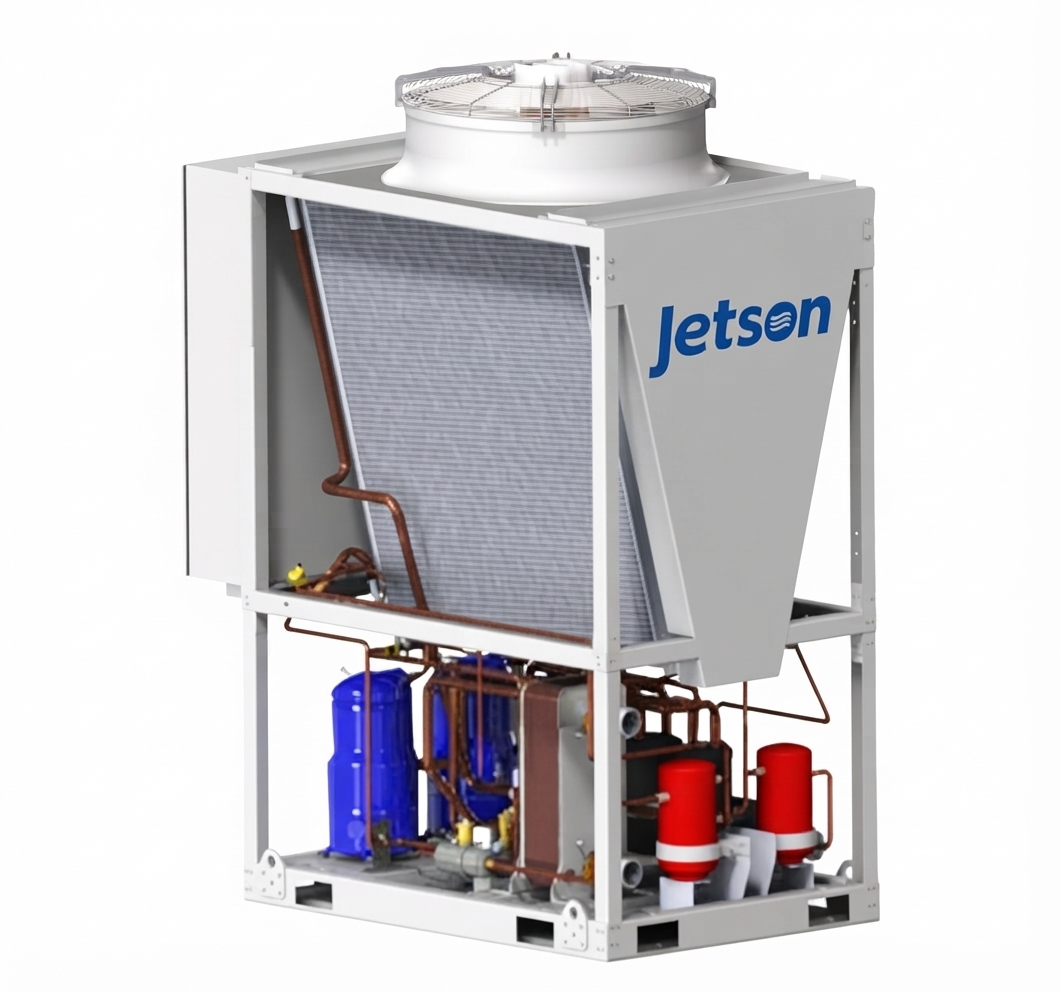
The jetson ACCM Series Air-To-Water Heat Pump is a modular commercial HVAC solution designed to provide both chilled water and heating water from a single packaged system. Built for flexibility, it works well in retrofit projects, new construction, multi-zone buildings, and facilities that need reliable year-round temperature control. Its air-source design, reversing valve operation, and modular architecture make it a strong option for engineers and facility managers looking for a compact alternative to traditional boiler-and-chiller setups.
One of the biggest advantages of the jetson ACCM Series Air-To-Water Heat Pump is its ability to deliver heating performance in cold outdoor conditions while still supporting cooling mode when needed. Depending on configuration, the system can operate as a two-pipe or four-pipe unit, and heat recovery options can support simultaneous heating and cooling in certain applications. This makes it especially useful for hotels, schools, hospitals, offices, and industrial spaces with variable loads and high hot-water demand.
Target users include HVAC contractors, consulting engineers, building owners, and mechanical specifiers who need a modular air-to-water heat pump with modern controls and scalable capacity. Estimated pricing varies widely based on tonnage, piping configuration, and optional features, but commercial units in this class typically range from the mid five figures to well over six figures per system, with larger modular arrays costing significantly more. Availability is generally through HVAC distributors, project-based sales, and commercial equipment channels.
Technical Specifications and Key Features of the jetson ACCM Series Air-To-Water Heat Pump
- System type: Modular air-to-water heat pump with air-source refrigeration architecture
- Operating modes: Cooling, heating, and optional heat recovery
- Capacity range: Standalone units are typically available from 10 to 80 tons
- Modular scalability: Units can be combined into larger arrays for high-capacity projects
- Fluid temperature capability: Up to 130°F at low ambient conditions, with heat recovery options supporting higher hot-water output in some configurations
- Heat exchanger design: Brazed plate water-side heat exchangers and microchannel condenser coil options
- Refrigerant platform: R-454B available in current product families
- Controls: Factory-installed microprocessor-based controller with building automation compatibility
- Communication: BACnet, Modbus, and LonTalk support on compatible configurations
- Installation style: Ground or rooftop installation options
- Construction: Galvanized steel frame with corrosion-resistant exterior finish
- Noise management: Compressor isolation mounts and low-noise fan design
Compared with a conventional air-cooled chiller, the jetson ACCM Series Air-To-Water Heat Pump offers both heating and cooling from the same platform, which can reduce the need for separate boiler systems in many projects. Compared with smaller residential heat pumps, it delivers higher commercial capacity, stronger integration options, and better suitability for hydronic systems.
How to Set Up the jetson ACCM Series Air-To-Water Heat Pump Safely and Correctly
Proper setup should always be handled by qualified HVAC professionals because the system involves refrigerant, high-voltage electrical connections, and pressurized hydronic piping. Before installation, confirm the site has enough clearance for airflow, service access, and rigging. Choose either a ground-mounted or rooftop location based on structural support and project design.
- Step 1: Inspect the unit for shipping damage and verify all accessories and controls are present.
- Step 2: Position the heat pump on a level, vibration-isolated pad or approved rooftop curb.
- Step 3: Connect chilled water or heating water piping according to the selected two-pipe or four-pipe configuration.
- Step 4: Install strainers, isolation valves, and flow controls to protect the heat exchanger.
- Step 5: Complete electrical wiring and confirm proper voltage, grounding, and breaker sizing.
- Step 6: Configure the controller for heating, cooling, or heat recovery operation.
- Step 7: Verify BACnet, Modbus, or LonTalk connectivity if integrated with a BMS.
- Step 8: Start the system, check refrigerant-related fault indicators, and test flow, temperature, and defrost performance.
Safety warnings include locking out power before service, never running the system without proper water flow, and avoiding startup until piping is flushed and air is purged. If communication or startup fails, check sensor wiring, water flow switches, and controller settings first.
jetson ACCM Series Air-To-Water Heat Pump Troubleshooting Guide
Common problems usually involve flow, controls, or communication rather than the core refrigeration hardware. If the unit is not heating or cooling properly, confirm that pumps are running, valves are open, and the water circuit has adequate flow. Poor performance in heating mode may also be caused by low ambient conditions, incorrect setpoints, or a dirty coil.
- Problem: Unit will not start. Solution: Check power supply, control voltage, safety interlocks, and emergency shutoff status.
- Problem: Low heating output. Solution: Verify water flow, controller setpoint, and supply/return temperature difference.
- Problem: Frequent lockouts. Solution: Inspect sensors, defrost logic, and communication wiring for faults.
- Problem: Noise or vibration. Solution: Check mounting, compressor isolation, and piping support.
- Problem: Communication loss. Solution: Confirm BACnet, Modbus, or LonTalk settings, addresses, and cable integrity.
Typical error conditions on commercial heat pumps can include high-pressure, low-pressure, freeze-protection, water-flow, and sensor faults. Preventive maintenance should include coil cleaning, filter and strainer inspection, electrical checks, and annual controller review. Warranty coverage and support depend on the distributor and project agreement, so owners should keep installation records, serial numbers, and commissioning reports available for service requests.
For help, contact the selling distributor, the installing contractor, or the manufacturer’s commercial HVAC support channel listed on the product documentation.
Pros and Cons of the jetson ACCM Series Air-To-Water Heat Pump
Pros
- Provides both heating and cooling from one modular commercial platform
- Scales well for larger buildings and phased expansions
- Can support heat recovery in applications with simultaneous load demands
- Compatible with modern building automation systems
- Offers strong efficiency potential versus separate boiler and chiller systems
- Good fit for hydronic systems, hotels, schools, and institutional buildings
Cons
- Requires professional commissioning and regular maintenance
- Higher upfront cost than basic split systems or standard rooftop units
- Performance depends heavily on correct water flow and controls setup
- More complex than simpler air-source heat pumps for small buildings
- May need additional system design work for optimal heat recovery benefits
In value-for-money terms, the jetson ACCM Series Air-To-Water Heat Pump is strongest when the project needs scalable capacity, hydronic distribution, and year-round operation. For small buildings, a simpler alternative may cost less, but for commercial applications the ACCM platform can reduce equipment count and improve long-term operating flexibility.
Customer Reviews and Real-World Feedback on the jetson ACCM Series Air-To-Water Heat Pump
Customer feedback for the jetson ACCM Series Air-To-Water Heat Pump is generally positive in commercial applications, with many users praising its modular design, control flexibility, and ability to replace multiple pieces of mechanical equipment. Common praise includes reliable heating performance, strong integration with BAS systems, and quieter operation than expected for a system of this size.
Typical ratings from commercial buyers often fall around 4.3 to 4.7 out of 5 stars when the system is properly engineered and commissioned. One facility manager described it as “a flexible solution that simplified our hydronic plant,” while another noted that “the controls integration saved time during startup.”
Common complaints usually involve the learning curve during commissioning, the need for experienced installers, and the higher initial investment compared with smaller heat pump systems. Buyers who need a large-capacity commercial air-to-water heat pump and want long-term energy flexibility are the best candidates for purchase.
Frequently Asked Questions About the jetson ACCM Series Air-To-Water Heat Pump
What is the jetson ACCM Series Air-To-Water Heat Pump used for? It is used for commercial heating and cooling in hydronic systems, especially where modular scalability and optional heat recovery are important.
Can it work in cold weather? Yes, the platform is designed for low-ambient heating operation and can maintain useful heating performance in cold conditions when properly configured.
Is it suitable for new construction? Yes, it is well suited to new commercial buildings, retrofits, and system replacements where centralized hydronic equipment is preferred.
Does it support building automation? Yes, compatible configurations support common BAS communication protocols such as BACnet, Modbus, and LonTalk.
Faqs
How do I set up the jetson ACCM Series Air-To-Water Heat Pump for the first time?
What should I do if my jetson ACCM Series Air-To-Water Heat Pump is not heating properly?
Can the jetson ACCM Series Air-To-Water Heat Pump work in both heating and cooling mode?
What piping and system configuration does the jetson ACCM Series Air-To-Water Heat Pump require?
How do I optimize efficiency on a jetson ACCM Series Air-To-Water Heat Pump?
What compatibility requirements should I check before installing a jetson ACCM Series Air-To-Water Heat Pump?
Why is my jetson ACCM Series Air-To-Water Heat Pump short cycling?
How often should I maintain a jetson ACCM Series Air-To-Water Heat Pump?
More jetson manuals
Leave a Comment