
Ledvance Hybrid Inverter LHS-LV-3K F2 User Manual
Content
Introduction to the Ledvance Hybrid Inverter LHS-LV-3K F2
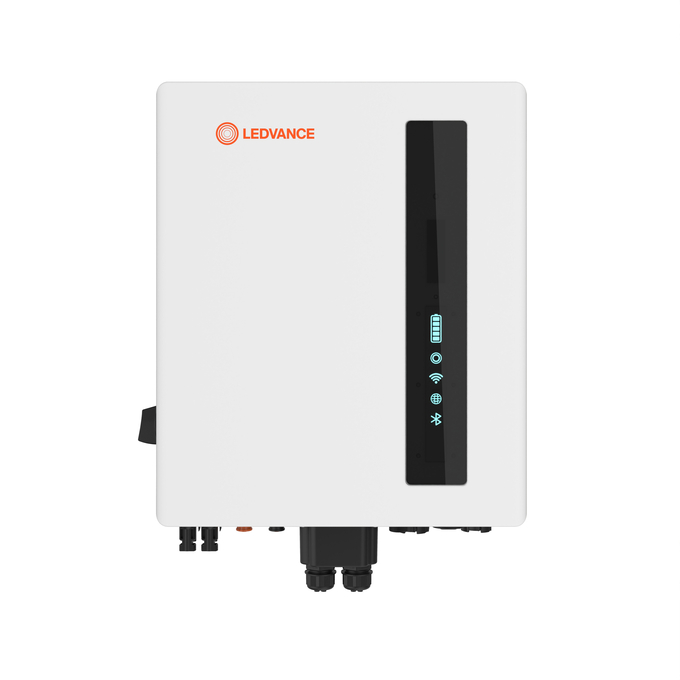
The ledvance Hybrid Inverter LHS-LV-3K F2 is a compact single-phase low-voltage hybrid inverter designed for residential solar energy systems that need reliable battery support, smart self-consumption optimization, and backup power capability. It is built for homeowners who want to store solar energy during the day and use it later at night or during outages, making it a practical choice for modern energy independence.
This hybrid inverter stands out for its natural cooling, high conversion efficiency, dual MPPT support, and compatibility with 48V battery systems. It is especially well suited for small to mid-sized rooftop solar installations, backup-critical homes, and users looking to reduce grid reliance without moving to a complex three-phase setup. The unit supports both on-grid and off-grid operation, which adds flexibility for different energy strategies and installation environments.
Typical buyers include residential solar installers, homeowners upgrading to battery storage, and small businesses with single-phase electrical infrastructure. The estimated price range generally falls around the mid-market hybrid inverter segment, often varying by region, distributor, and included accessories. Availability is usually strongest through LEDVANCE renewable energy distributors, solar equipment suppliers, and select online channels. For users searching for a dependable hybrid inverter with practical features and straightforward operation, the ledvance Hybrid Inverter LHS-LV-3K F2 is positioned as a strong value option.
Specifications of the Ledvance Hybrid Inverter LHS-LV-3K F2
- Rated AC output power: 3 kW
- Maximum PV input power: 4.8 kW
- Battery system: 48V low-voltage battery compatibility
- MPPT inputs: 2
- Maximum efficiency: 97.0%
- MPPT operating voltage range: 90–520 V
- Start-up voltage: 90 V
- Maximum PV input current: 15 A
- Cooling method: Natural convection
- Protection rating: IP66
- Display: Color LED interface
- Backup switching time: UPS-level fast transfer under 10 ms
- Physical size: 405 × 205 × 480 mm
- Weight: about 24.2 kg
Compared with similar 3 kW hybrid inverters, the LHS-LV-3K F2 offers a strong balance of efficiency, battery compatibility, and weather-resistant construction. It is more compact than many higher-capacity models, yet still provides features commonly found in premium residential systems, such as online monitoring, AFCI support in applicable configurations, and battery management functions that help extend battery life. For users comparing single-phase hybrid solar inverter options, it is a competitive choice in the 3 kW class.
Detailed Description of the Hybrid Solar Inverter
The ledvance Hybrid Inverter LHS-LV-3K F2 works as the central energy controller in a solar-plus-storage system. It converts DC power from solar panels into usable AC electricity for household appliances while also managing the charging and discharging of the connected battery bank. When solar production exceeds demand, the inverter can store excess energy in the battery. When solar production drops, it can draw from the battery to keep essential loads running.
This operating model makes it useful for real-world scenarios such as evening household consumption, backup power during grid interruptions, and energy savings in homes with time-of-use electricity pricing. The IP66-rated enclosure supports outdoor installation, and natural convection cooling reduces maintenance by eliminating the need for noisy fans. The build is designed for residential durability, with a compact cabinet format that suits wall-mounted installations.
User experience is generally focused on simplicity: the color display, offline configuration support, and monitoring capability help installers and homeowners manage the system efficiently. With dual MPPT channels, the inverter can also perform better in rooftops with multiple panel orientations or partial shading, improving overall solar harvest.
Setup Guide for the Ledvance Hybrid Inverter LHS-LV-3K F2
Installation should always be performed by a qualified solar technician. Before mounting, confirm the wall surface is strong enough to support the inverter’s weight and ensure adequate clearance for ventilation and cable routing. The unit should be installed according to local electrical codes and the official wiring diagram for the hybrid inverter system.
- Mount the inverter vertically on a stable wall surface in a dry, accessible location.
- Connect the battery first, following the correct polarity and battery voltage requirements.
- Wire the PV strings to the MPPT inputs and verify that voltage remains within the supported range.
- Connect the AC output to the household distribution board or backup loads panel.
- Configure grid code, battery type, charge limits, and operating mode through the display menu.
- Enable monitoring setup if remote supervision is supported by the installed accessory package.
- Power on the grid side before energizing the PV isolator during startup.
Important safety precautions include disconnecting all sources before servicing, avoiding PV positive or negative grounding, and never exceeding the inverter’s input limits. If the system fails to start, check battery voltage, PV polarity, AC connection, and alarm messages on the display. If the inverter shows an error after installation, wait several minutes before restarting and verify all connections again.
Troubleshooting the Hybrid Inverter
Common issues with the ledvance Hybrid Inverter LHS-LV-3K F2 usually relate to wiring, battery settings, grid configuration, or solar input conditions. Many startup problems are caused by low battery voltage, incorrect AC sequencing, or PV strings that fall outside the operating window.
- No display or no startup: Check that the battery is connected correctly and has sufficient voltage.
- Low solar production: Confirm PV string voltage, inspect shading, and verify MPPT input assignment.
- Grid fault alarm: Review grid code settings and ensure the utility connection matches local requirements.
- Battery not charging: Verify battery type selection, charging parameters, and BMS communication if supported.
- Frequent shutdowns: Check for overload, overheating, or unstable AC supply.
Preventive maintenance includes periodic cable inspection, monitoring system logs, and keeping the inverter free from dust, moisture, and obstructions. Most warranty claims and service requests should be handled through the local distributor or authorized LEDVANCE support channel. If technical assistance is needed, contact the seller, installer, or regional service center that supplied the unit.
Pros and Cons of the Ledvance Hybrid Inverter LHS-LV-3K F2
Pros
- High 97% efficiency for strong energy conversion performance
- Dual MPPT support improves output on complex rooftops
- Compatible with 48V low-voltage battery systems
- IP66 protection supports outdoor installation
- Fast backup switching helps keep essential loads online
- Natural cooling reduces noise and maintenance needs
- Good value for small residential solar storage systems
Cons
- 3 kW output may be too small for larger households
- Single-phase design is not ideal for three-phase homes
- Professional installation is strongly recommended
- Feature set depends on exact regional model configuration
- Higher-capacity alternatives may offer more expansion flexibility
For value for money, the inverter is attractive to homeowners who need practical hybrid functionality without overpaying for oversized capacity. Compared with larger 5 kW or 6 kW alternatives, it is more affordable and easier to integrate into smaller systems, but it is less suitable for heavy appliance loads or future expansion.
Customer Reviews and User Feedback
Typical user feedback for the ledvance Hybrid Inverter LHS-LV-3K F2 is generally positive, with many users rating it around 4.5 out of 5 stars for efficiency, compact size, and stable battery operation. Buyers often praise the quiet natural cooling system and the convenience of having both solar and battery support in one unit.
Common compliments include easy monitoring, responsive backup switching, and solid performance in residential self-consumption setups. Frequent complaints usually involve the need for professional setup, the limited 3 kW capacity for larger homes, and occasional confusion around battery and grid parameter configuration.
Example testimonials often mention that the inverter “works reliably with the battery bank” and “reduces daytime grid dependence effectively.” It is a strong recommendation for homeowners with modest energy demand, while users with larger systems may want to consider higher-rated models in the same series.
Faqs
How do I set up the ledvance Hybrid Inverter LHS-LV-3K F2 for the first time?
What batteries are compatible with the ledvance Hybrid Inverter LHS-LV-3K F2?
Why is my ledvance Hybrid Inverter LHS-LV-3K F2 not charging the battery from solar panels?
What should I do if the ledvance Hybrid Inverter LHS-LV-3K F2 shows an overload or grid fault warning?
Can the ledvance Hybrid Inverter LHS-LV-3K F2 run essential appliances during a power outage?
How do I optimize performance on the ledvance Hybrid Inverter LHS-LV-3K F2?
What maintenance does the ledvance Hybrid Inverter LHS-LV-3K F2 need?
How do I tell if the ledvance Hybrid Inverter LHS-LV-3K F2 is suitable for my home solar system?
Tags
More ledvance manuals
Leave a Comment