
Midea EasyFit II Series VRF Outdoor Unit User Manual
Content
Midea EasyFit II Series VRF Outdoor Unit: Complete Product Manual and Buyer Guide
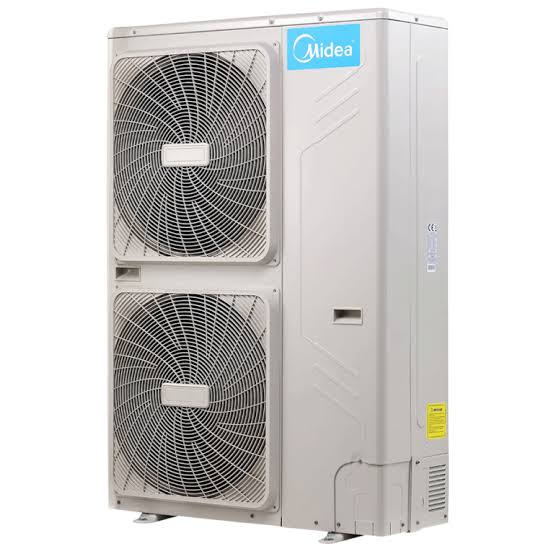
The Midea EasyFit II Series VRF Outdoor Unit is a commercial-grade variable refrigerant flow solution designed for small to medium-sized buildings that need flexible zoning, efficient operation, and easier installation. It is widely used in offices, hotels, retail spaces, schools, restaurants, and mixed-use properties where multiple indoor units must run from a single outdoor system. With a wide capacity range, compact outdoor footprint, and advanced inverter-driven control, this VRF outdoor unit is built to handle demanding cooling and heating loads while reducing installation complexity.
One of the biggest advantages of the Midea EasyFit II Series VRF Outdoor Unit is its ability to support long piping runs and multiple indoor units, making it a strong fit for projects with challenging layouts. The system is also known for features such as non-polarity communication wiring, standby power savings, energy management settings, and winter performance support down to very low outdoor temperatures. These capabilities help contractors and facility managers achieve reliable comfort control without the bulky infrastructure associated with traditional HVAC systems.
For buyers, the estimated price range typically varies by capacity, configuration, region, distributor, and installation scope. In practice, system cost is usually quoted as a project package rather than a fixed retail price. Availability is generally best through Midea commercial HVAC distributors, regional dealers, and authorized installers, with model availability depending on local market standards and voltage requirements. The Midea EasyFit II Series VRF Outdoor Unit is a practical choice for projects that need high flexibility, lower operating costs, and a scalable solution that can grow with the building.
Specifications: Midea EasyFit II Series VRF Outdoor Unit Technical Details
- System type: VRF outdoor unit for commercial multi-zone air conditioning
- Capacity range: Approximately 8HP to 24HP for standard EasyFit series configurations, with related EasyFit variants extending higher in some markets
- Power supply: 380-415V, 3-phase, 50Hz in common commercial configurations
- Indoor unit support: Up to 36 indoor units on a single outdoor system in supported configurations
- Maximum piping length: Up to 560m total piping length
- Height difference: Up to 50m between indoor and outdoor units
- Indoor-to-indoor height difference: Up to 30m
- Communication wiring: 2-core non-polarity wiring for simplified installation
- Standby power consumption: As low as 3.5W in supported configurations
- Energy management: 60-step control with output adjustment from 40% to 100% in 1% increments
- Operating range: Designed for wide seasonal performance, including low-temperature heating and high-ambient cooling environments
- Key technologies: Full DC inverter control, enhanced vapor injection, intelligent monitoring, silent mode, automatic dust/snow cleaning
Compared with conventional multi-split systems, the Midea EasyFit II Series VRF Outdoor Unit offers much larger piping flexibility, more indoor unit capacity, and better centralized control. Against similar commercial VRF units, its strengths are compact installation, low standby power, and a strong balance between efficiency and maintainability. For projects that need a scalable VRF outdoor unit, this model is positioned as a flexible mid-market commercial solution.
Detailed Description: How the Midea EasyFit II Series VRF Outdoor Unit Works
The Midea EasyFit II Series VRF Outdoor Unit uses inverter-driven compressor technology to continuously modulate refrigerant output according to the cooling or heating demand of each connected zone. Instead of cycling on and off at full power, the outdoor unit adjusts capacity in real time, which helps maintain steadier temperatures and reduces energy waste. This makes it especially effective in buildings where occupancy changes throughout the day.
The outdoor unit distributes refrigerant to multiple indoor units over a long piping network, allowing different rooms or zones to be controlled independently. This is ideal for real-world applications such as office floors with private rooms, hotels with mixed room occupancy, retail spaces with varied heat loads, and schools with classrooms that need different comfort settings. The compact outdoor design also helps when roof or ground space is limited.
Build quality is focused on commercial durability, with weather-resistant construction, heavy-duty outdoor components, and service-friendly layout considerations. Users generally benefit from lower visible equipment clutter, quieter operation compared with older HVAC platforms, and simpler system expansion. The Midea EasyFit II Series VRF Outdoor Unit is best suited to projects that value flexibility, efficient zoned control, and long-term operational stability.
Setup Guide: Installation and Configuration for Midea EasyFit II Series VRF Outdoor Unit
Installation should always be handled by qualified HVAC technicians because refrigerant piping, electrical work, and commissioning require specialized tools and compliance with local codes. Start by selecting a stable outdoor location with enough airflow, service clearance, and structural support for the unit weight. Avoid areas with excessive snow accumulation, direct obstructions, or poor drainage.
- Mount the outdoor unit on a level base or frame designed for commercial HVAC equipment.
- Connect refrigerant piping according to the manufacturer’s piping limits and branch layout rules.
- Use the non-polarity communication wiring to reduce connection errors between indoor and outdoor units.
- Configure indoor unit addressing and system topology during commissioning.
- Perform leak testing, vacuum dehydration, and refrigerant charging before startup.
- Verify voltage, phase, and breaker size before energizing the system.
Safety precautions are essential. Do not power the unit until all piping and wiring are confirmed complete. Keep clear of moving fan components and live electrical terminals. If communication errors or startup failures occur, check wiring polarity assumptions, indoor unit addresses, and refrigerant charge status first. Proper commissioning is the key to reliable operation.
Troubleshooting: Common Problems, Error Checks, and Maintenance Tips
Like most VRF systems, the Midea EasyFit II Series VRF Outdoor Unit may report faults related to sensors, communication, refrigerant pressure, or compressor protection. Common symptoms include poor heating performance, outdoor unit shutdown, abnormal noise, or one or more indoor units failing to respond. Basic checks should focus on power supply stability, terminal connections, refrigerant piping integrity, and sensor placement.
- Communication fault: Verify indoor-outdoor wiring, confirm system addressing, and inspect terminal tightness.
- Sensor-related fault: Check for loose or damaged temperature sensor connections.
- Insufficient performance: Inspect refrigerant charge, airflow obstruction, and piping layout.
- Noise or vibration: Confirm mounting stability and check fan or compressor-related issues.
- Startup failure: Review power supply, phase sequence, and breaker capacity.
Preventive maintenance should include regular coil cleaning, inspection of electrical terminals, refrigerant leak checks, and verification of drainage and airflow around the outdoor unit. In many markets, warranty coverage depends on installation by authorized personnel and proper maintenance records. For support, buyers should contact their local Midea commercial HVAC distributor or authorized service center for model-specific assistance, spare parts, and commissioning help.
Pros and Cons of the Midea EasyFit II Series VRF Outdoor Unit
Pros
- Supports large multi-zone buildings with a single outdoor platform.
- Long piping lengths make it suitable for complex floor plans and tall buildings.
- Non-polarity communication wiring simplifies installation and reduces wiring mistakes.
- Low standby power and energy management features improve operating efficiency.
- Compact outdoor footprint helps save rooftop or yard space.
- Good fit for offices, hotels, retail sites, and educational facilities.
Cons
- Requires professional installation and commissioning, increasing upfront project cost.
- Not ideal for small residential applications where simple split systems are sufficient.
- Performance depends heavily on correct design, piping, and refrigerant charging.
- Spare parts and service access may vary by region.
- Initial investment is usually higher than conventional split AC systems.
For value for money, this VRF outdoor unit performs best in projects where zoning flexibility and long-term efficiency matter more than the lowest purchase price. Compared with basic HVAC alternatives, the Midea EasyFit II Series VRF Outdoor Unit offers much better scalability and system control.
Customer Reviews: What Users Say About the Midea EasyFit II Series VRF Outdoor Unit
Average user feedback typically centers on efficiency, flexibility, and installation convenience. Many commercial users rate the system around 4.5 out of 5 stars for its ability to serve many indoor units from one outdoor platform and for its stable temperature control across multiple zones.
- Praise: “It handles our office layout well and keeps different rooms comfortable without constant adjustment.”
- Praise: “The piping flexibility made the installation much easier than expected.”
- Complaint: “Commissioning took longer than a standard AC system, but the performance was worth it.”
- Complaint: “Service availability depends on the local dealer network.”
Most buyers recommend it for commercial projects with multiple zones, especially where energy control and space savings are priorities. Frequently mentioned issues include the need for expert setup, careful design, and proper maintenance. For project owners who want a modern VRF outdoor unit with strong scalability, this model is generally viewed as a solid investment.
Faqs
How do I set up the midea EasyFit II Series VRF Outdoor Unit for the first time?
What should I check if the midea EasyFit II Series VRF Outdoor Unit is not cooling properly?
Which indoor units are compatible with the midea EasyFit II Series VRF Outdoor Unit?
How many indoor units can a midea EasyFit II Series VRF Outdoor Unit support?
What makes the midea EasyFit II Series VRF Outdoor Unit different from a standard split outdoor unit?
How do I troubleshoot communication errors on the midea EasyFit II Series VRF Outdoor Unit?
How often should the midea EasyFit II Series VRF Outdoor Unit be maintained?
What installation requirements should be checked before mounting the midea EasyFit II Series VRF Outdoor Unit?
More midea manuals
- Midea W11330506 Front-Loading Washer User Manual
- Midea MLH27N4AWWC Front Loading Washer User Manual
- Midea MPPDB Series Portable Air Conditioner User Manual
- Midea Hi-Wall Series Split-Type Air Conditioner User Manual
- Midea RG51B Remote Controller User Manual
- Midea DLFEHA High Wall Ductless System User Manual
Leave a Comment